
Tart Lemon Curd
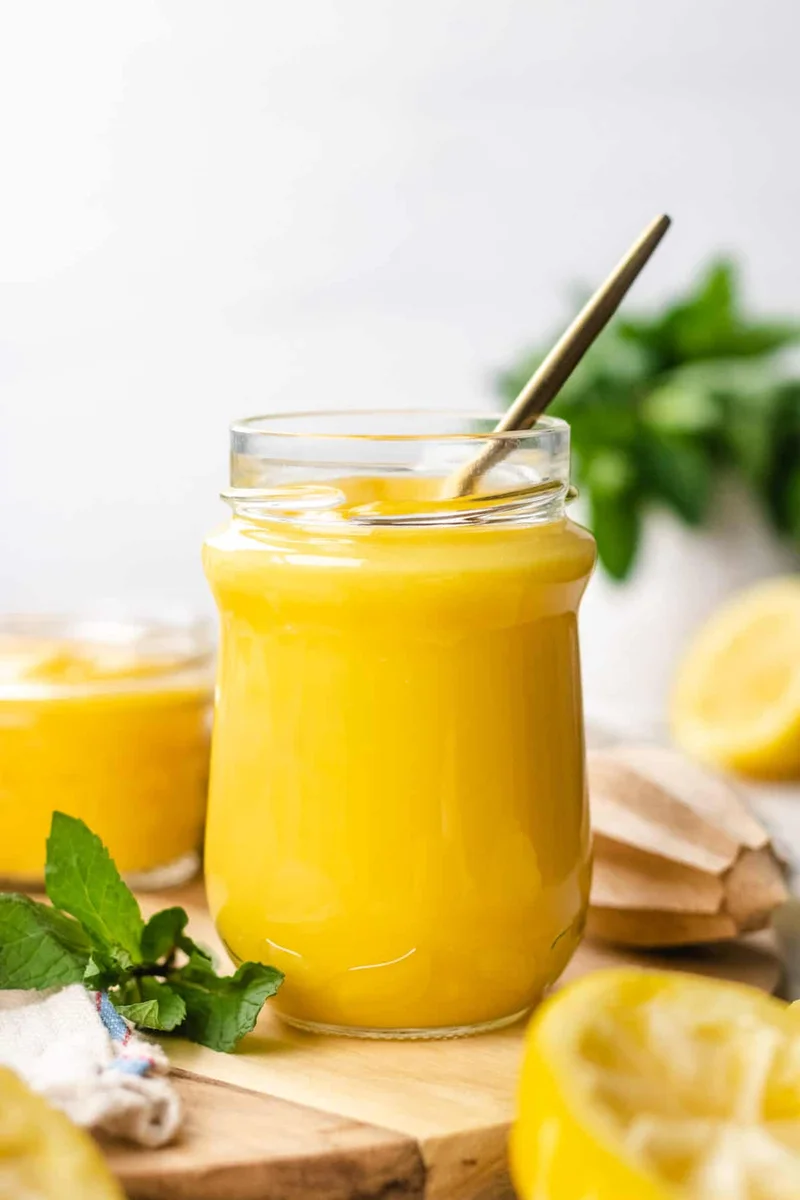
This smooth, tangy lemon curd is made on the hob with eggs, sugar, fresh lemon and butter. It takes about 15 minutes and adds a bright, creamy layer to cakes, scones and tarts.
Ingredients
- 4 largeeggs, at room temperature
- 100 g (½ cup)granulated sugar
- 120 ml (½ cup)freshly squeezed lemon juice (about 2 lemons)
- 15 ml (1 tablespoon)lemon zest (from 1 lemon)
- 1.25 ml (¼ teaspoon)salt
- 113 g (½ cup)unsalted butter, cubed
Instructions
- 1
Beat eggs and sugar
In a medium saucepan, beat together the 4 eggs and 100 g sugar.
- 2
Add lemon
Add the 120 ml lemon juice, 15 ml lemon zest and 1.25 ml salt, then beat again.
- 3
Cook until thick
Set the saucepan over low to medium heat and cook for about 5 minutes, whisking continuously, until the curd reaches your preferred thickness.
- 4
Stir in butter
Turn off the heat, add the 113 g cubed butter and stir until it has fully melted into the curd.
- 5
Strain and chill
Pass the curd through a fine-mesh sieve into a bowl and leave it to cool. Transfer it to a jar and refrigerate.
What is lemon curd?
Lemon curd is a smooth, spoonable preserve made by gently cooking citrus juice, eggs, sugar and butter. Though it is now used in many American-style desserts, it has roots in British cookery, where it has long been served with scones and used as a filling.
This version relies on fresh lemon juice and zest for a sharp citrus flavour, while butter gives it a rich, creamy finish.
Nutrition and macros by portion
The nutrition label shows one serving as written: 741 calories, 12g protein, 55g carbs, 55g fat.
| Portion | Adjustment | kcal | Protein | Carbs | Fat |
|---|---|---|---|---|---|
| Lighter | Use a smaller spoonful | 519 kcal | 8g | 39g | 39g |
| This serving | As written | 741 kcal | 12g | 55g | 55g |
| Hungry | Serve with extra scones | 1112 kcal | 18g | 83g | 83g |
The eggs contribute protein, while sugar and lemon juice supply most of the carbohydrates; butter accounts for much of the fat. Serve a modest spoonful with fruit or a plain scone to add freshness and contrast to the rich curd.
The key ingredients
Eggs: They thicken the mixture as it cooks and give the curd its soft, custard-like body. Room-temperature eggs are easier to combine evenly with the sugar.
Lemon: Freshly squeezed juice provides the tartness, and zest adds fragrant citrus oils. Zest only the yellow outer peel, avoiding the bitter white pith.
Butter: Cubes melt into the cooked curd off the heat, bringing richness and a glossy texture.
Keep the heat gentle
Low to medium heat gives the eggs time to thicken the mixture without scrambling. Whisk constantly, including around the base and sides of the pan, where the curd can heat fastest.
The recipe gives about 5 minutes as a guide; the visual cue is a noticeably thickened mixture. Avoid turning the heat up to speed things along.
Straining for a smooth finish
Fine-mesh straining catches small bits of cooked egg or zest, leaving the curd silky. Pour it through the sieve while it is still warm, using a spoon to help it pass through if needed.
The curd will become firmer as it cools, so it may seem more fluid in the saucepan than it will be after refrigeration.
How to serve it
Scones: Spoon lemon curd over split scones, on its own or alongside cream. Its tartness makes a good contrast to a plain, buttery bake.
Cakes and tarts: Use it as a filling or spread a thin layer between cake layers. It also works as a topping for simple desserts that benefit from a sharp citrus note.
Timing and doneness
The stated cooking time is about 5 minutes, but the rate of thickening depends on the pan and heat. Stay by the saucepan and whisk throughout rather than relying on the clock alone.
Once the curd has thickened to your preferred consistency, take the pan off the heat and stir in the butter. Straining and cooling are the final steps before chilling.
Recipe notes & tips
- Use a heavy-based saucepan to help the curd heat evenly.
- Have the butter cubed before you begin so it is ready to stir in.
- Whisk continuously, reaching into the corners of the pan.
- Zest the lemon before juicing it for easier handling.
- Let the curd cool before closing the jar and refrigerating it.
Variations
- Lime curd: Replace the lemon juice and zest with lime for a sharper, floral citrus flavour.
- Orange curd: Use orange juice and zest for a milder, sweeter result.
- Mixed citrus: Combine lemon with a little grapefruit or orange juice while keeping the total juice amount the same.
- Extra tang: Add a little more lemon zest for a more pronounced citrus aroma.
- Layered dessert: Spoon the curd between cake layers or into tart shells once it has cooled.
Common mistakes to avoid
- Heat too high: The eggs can form lumps; keep the pan over low to medium heat and whisk constantly.
- Stopping the whisking: The base may thicken or catch unevenly; keep the whisk moving across the whole pan.
- Cooking by time alone: The curd may need a little longer or less; use its thickened appearance as the cue.
- Adding butter too early: It is meant to go in after the heat is turned off; stir it in then until fully melted.
- Skipping the sieve: Small bits can remain in the curd; strain it through a fine-mesh sieve for a smoother texture.
How to store
Keep the cooled curd in a clean, sealed jar in the refrigerator and use it within about 1 week. Stir it before serving; it is usually served chilled, so reheating is not necessary.
Frequently asked questions
How can I tell when the curd is thick enough?
It should look noticeably thicker after about 5 minutes of cooking, with a smooth, cohesive texture. It will firm up further as it cools.
Why did my lemon curd turn lumpy?
The mixture may have heated too quickly or gone without constant whisking. Straining can remove small lumps, but gentle heat and steady whisking help prevent them.
Can I use bottled lemon juice?
Freshly squeezed juice is specified here and gives the curd a brighter flavour. Bottled juice can be used, but it will not provide the zest's aromatic citrus oils.
Does lemon curd thicken in the fridge?
Yes. It becomes firmer as it cools, so judge the final texture after refrigeration rather than expecting it to be as thick in the pan.
What can I serve with lemon curd?
Try it with scones, cake, toast or tart shells. It also makes a bright topping for a simple dessert.
Cook it from the original
This recipe comes from veronikaskitchen.com. Their page has the author’s own photos, notes and tips — the best place to cook it from.
Open the recipe on veronikaskitchen.com