
Goats Cheese Tart Recipe
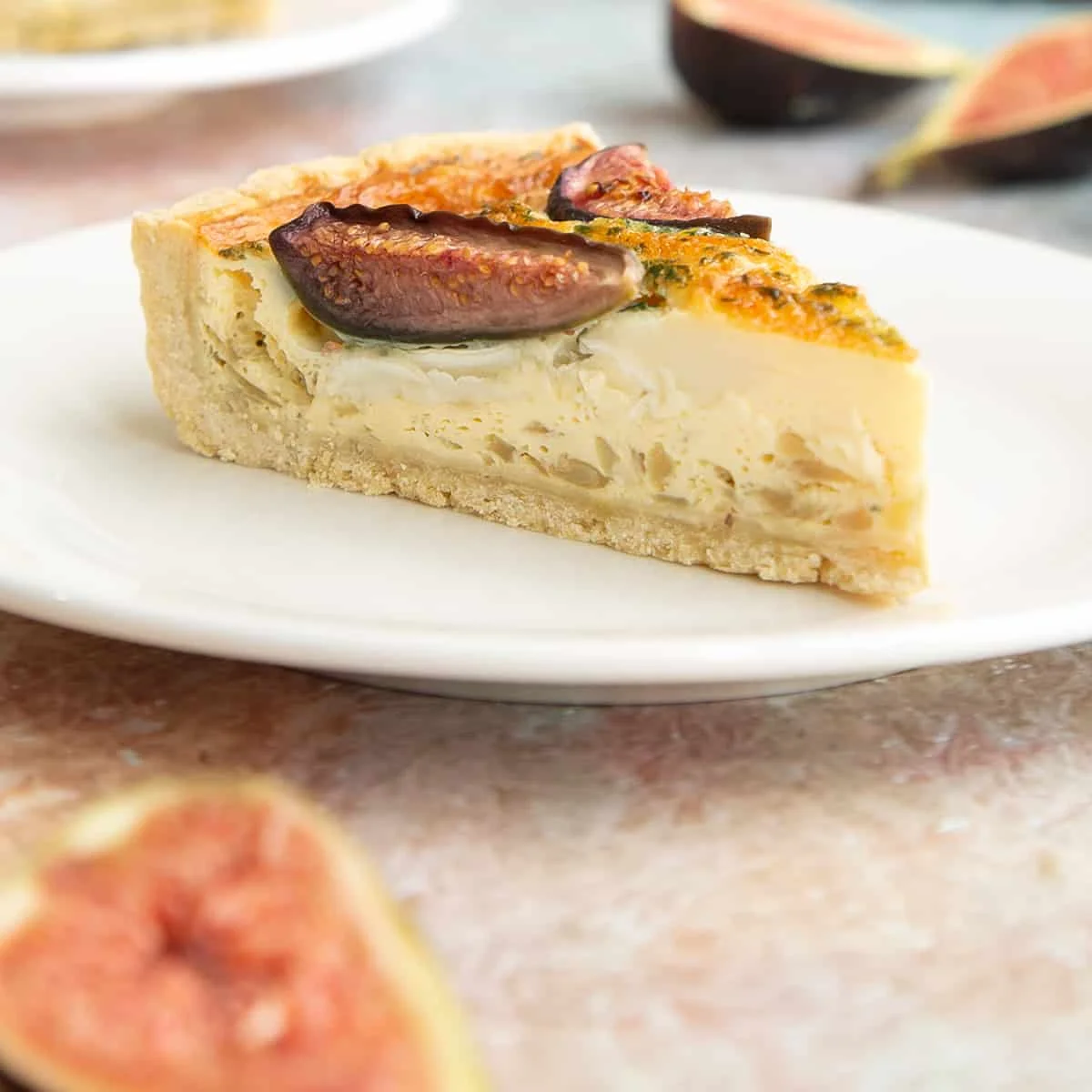
This British-style goat’s cheese tart pairs a crisp, buttery shortcrust case with a creamy egg filling, soft onion and sweet figs. Serve it warm or cold for a satisfying lunch, light supper or centrepiece for a buffet.
Ingredients
- 100 gsalted butter, cold and cubed
- 200 gplain white flour
- 2 tbspcold water
- 1 tbspolive oil
- 1brown onion, finely chopped
- 200 mldouble cream
- 6 mediumfree-range eggs
- 1 tspdried parsley
- 150 ggoat’s cheese, cut into pieces
- 5figs, halved
- to tastesalt and black pepper
Instructions
- 1
Heat the oven
Preheat the oven to 200°C (180°C fan, 390°F).
- 2
Rub in butter
Put the flour and cold, cubed butter in a bowl. Rub them together, or pulse in a food processor, until the mixture forms an even crumb with no lumps.
- 3
Bring dough together
Add 2 tbsp cold water and cut it through with a round-bladed knife, or pulse the processor, until the mixture starts to clump. Gather it into a ball; if it feels warm, wrap it and chill for 15 minutes.
- 4
Line the tin
On a lightly floured surface, roll the pastry until it is a few centimetres wider than the tart tin. Lift it in using the rolling pin, ease it into the corners and up the sides, then trim level with the top of the tin.
- 5
Prick the base
Prick the pastry base all over with a fork. Line it with baking paper and fill with baking beans.
- 6
Blind bake pastry
Bake for 15 minutes, then remove the paper and baking beans. Return the case to the oven for a further 5 minutes, until the base looks dry.
- 7
Soften the onion
Heat the olive oil over a medium-low heat. Add the onion with a pinch of salt and pepper, and fry for 10–12 minutes until soft and lightly coloured.
- 8
Layer the cheese
Tip the cooked onion into the pastry case and scatter the goat’s cheese over it.
- 9
Mix the custard
Put the eggs, cream, dried parsley and a pinch of salt and pepper in a jug. Whisk together, then pour into the pastry case, leaving about 1.5 cm (½ inch) of space at the top.
- 10
Arrange the figs
Place the halved figs on top, cut side facing upwards. Carefully add more filling if there is room without risking an overflow; it is fine not to use it all.
- 11
Bake the tart
Bake for 35–40 minutes, until the filling is firm. Leave it to cool for a few minutes, then release it carefully from the tin once it is cool enough to handle. Serve warm or cold.
What is a goat’s cheese tart?
A savoury tart is made by baking a pastry case with a set filling, often based on eggs and cream. This British-inspired version brings together tangy goat’s cheese, softly cooked onion and sweet figs.
The recipe works because the pastry is baked before the filling goes in, helping it stay crisp beneath the creamy custard. Figs add a soft, fruity contrast to the savoury cheese.
Nutrition and macros by portion
The nutrition label shows one serving as written: 271 calories, 8g protein, 18g carbs, 19g fat.
| Portion | Adjustment | kcal | Protein | Carbs | Fat |
|---|---|---|---|---|---|
| Lighter | Smaller tart slice | 190 kcal | 6g | 13g | 13g |
| This serving | As written | 271 kcal | 8g | 18g | 19g |
| Hungry | Larger tart slice | 407 kcal | 12g | 27g | 29g |
The eggs and goat’s cheese provide much of the protein, while the flour contributes most of the carbohydrate. Butter, olive oil, double cream and cheese are the main sources of fat. Pair a slice with salad or vegetables to add freshness alongside the rich tart.
Making a crisp pastry case
Cold butter: rub it into the flour until the mixture is an even crumb, then add the measured cold water to bring it together. Handle the dough as little as possible so it stays easy to roll.
Blind baking: lining the pastry with baking paper and baking beans helps the sides hold their shape. Removing them for the final 5 minutes lets the base dry before the filling is added.
Building the filling
Soft onion: cooking it over a medium-low heat for 10–12 minutes gives it time to soften and take on a little colour without rushing. Spread it over the pastry base before adding the cheese.
Cream and eggs: whisk them with the parsley and seasoning, then pour carefully so the filling sits below the rim. Leave out any excess rather than risk an overflow.
Getting the texture right
Set centre: bake for 35–40 minutes, checking that the filling is firm before taking the tart out. The recipe does not give a more precise visual test, so begin checking towards the earlier end of the time range.
Flaky pastry: easing the dough into the tin rather than stretching it helps it fit neatly. Pricking the base and baking it until dry also helps keep the finished case crisp.
Choosing and arranging the figs
Fig topping: halve the figs and arrange them cut side up so their fruit is visible across the surface. Their sweetness complements the tangy goat’s cheese.
Cheese pieces: scatter the 150 g of goat’s cheese over the onions before pouring in the egg mixture. This layers the filling rather than blending everything together.
Timing and serving
Allow time for the pastry to chill if it feels warm, as well as for its two-stage blind bake and the final bake with filling. The tart needs a few minutes to cool before you release it from the tin.
Serve it warm or cold, as the method suggests. A crisp green salad or simply dressed vegetables make a fresh accompaniment to the rich filling.
Recipe notes & tips
- Keep the butter cold when rubbing it into the flour for an even pastry crumb.
- If the dough feels warm after mixing, chill it for 15 minutes before rolling.
- Roll the pastry a few centimetres wider than the tin so it reaches up the sides.
- Cook the onion gently for the full 10–12 minutes until soft and lightly coloured.
- Pour the filling carefully and stop short of the rim to avoid spills.
- Let the tart cool enough to handle before releasing it from the tin.
Variations
- Fresh parsley: use chopped fresh parsley in place of dried parsley.
- Thyme: swap the dried parsley for dried thyme for a different herbal note.
- Pear topping: use sliced pear instead of figs for a similarly sweet fruit topping.
- Red onion: replace the brown onion with a finely chopped red onion.
- Cheese mix: replace some of the goat’s cheese with another crumbly cheese.
Common mistakes to avoid
- Warm pastry: chill the dough for 15 minutes if it feels warm before rolling.
- Stretched pastry: ease the dough into the corners rather than pulling it to fit.
- Skipped blind bake: bake the case with beans, then without them, until the base looks dry.
- Overcooked onion: keep the heat medium-low and cook until soft with only a touch of colour.
- Overfilled case: leave about 1.5 cm at the top and do not use filling that would risk spilling.
- Early unmoulding: allow the tart to cool for a few minutes and handle it carefully when releasing it.
How to store
Store leftover tart covered in the fridge and eat within 3 days. Reheat slices in the oven until warmed through, or serve them cold.
Frequently asked questions
Can I make the pastry ahead?
Yes. Wrap the dough and chill it before rolling; the method also recommends chilling it for 15 minutes if it feels warm.
Do I need to blind bake the pastry?
Yes. Bake it with baking paper and baking beans for 15 minutes, then remove them and bake for a further 5 minutes until the base looks dry.
How do I know when the tart is cooked?
The method says to bake for 35–40 minutes, until the filling is firm. Start checking near the earlier end of that range.
Can I serve the tart cold?
Yes. The recipe says it can be served warm or cold, so it works for a prepared lunch or buffet as well as a warm meal.
What can I serve with goat’s cheese tart?
A green salad or simply prepared vegetables make a fresh accompaniment to the creamy filling.
What if I have extra filling?
Add more only if there is room without risking an overflow. The recipe notes that it is fine not to use all the filling.
Cook it from the original
This recipe comes from amummytoo.co.uk. Their page has the author’s own photos, notes and tips — the best place to cook it from.
Open the recipe on amummytoo.co.uk