
Uzbek Lagman
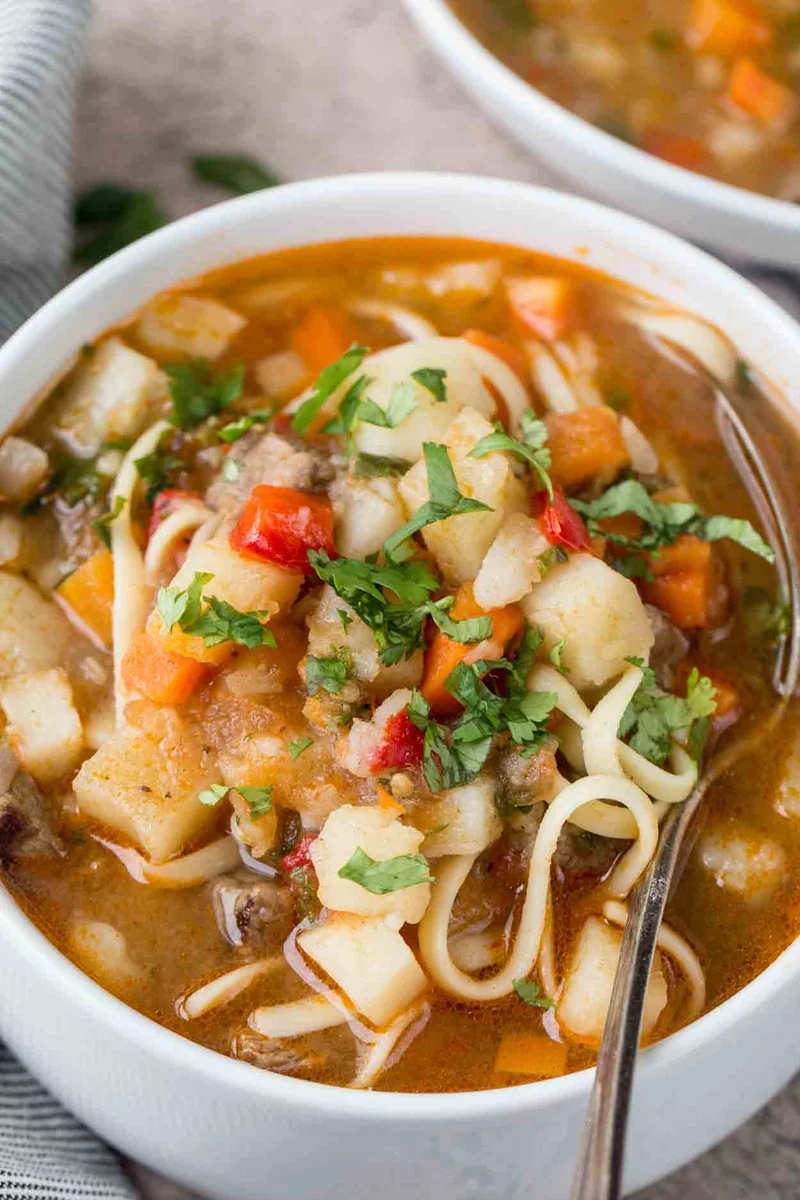
Uzbek lagman is a hearty, spiced beef and vegetable soup served over linguine. It makes a warming, filling meal, with the pasta cooked separately so you can add it to each bowl just before serving.
Ingredients
- 45 ml (3 Tbsp)canola oil
- 454 g (1 lb)beef
- 1 mediumonion, chopped
- 1 largecarrot, cubed
- 300 g (2 cups)potatoes, cubed
- 1/2 largered pepper, cubed
- 2 largetomatoes, finely diced
- 3 clovesgarlic, minced
- 2 1/2 tspsalt
- 1/2 tspground black pepper
- 1 1/4 tspground coriander
- 1 1/4 tspground cumin
- 1 smallstar anise (if large, cut in half)
- 2bay leaves
- 1.4 litres (6 cups)water
- 227 g (8 oz)linguine pasta
- to tastegreen onion, optional
Instructions
- 1
Cook the pasta
Cook the pasta according to the packet instructions. Drain and rinse it with cold water, then keep it covered until needed so it does not dry out.
- 2
Brown the beef
Cut the beef into small cubes. Heat the oil in a Dutch oven; when it is hot, add the beef and cook for about 5 minutes.
- 3
Prepare the vegetables
Meanwhile, finely chop the onion and finely dice the tomatoes. Cut the carrot and pepper into even-sized cubes, and cut the potatoes into small cubes.
- 4
Soften the onion
Add the onion to the beef in the Dutch oven. Reduce the heat to medium and cook until the onion is tender.
- 5
Add tomato and garlic
Stir in the tomatoes and garlic and cook for 2 minutes, stirring as needed.
- 6
Add the vegetables
Add the potatoes, carrots and pepper, then mix well.
- 7
Simmer the soup
Pour in the water and add the salt, black pepper, coriander, cumin, bay leaves and star anise. Cook for about 20–25 minutes, until all the vegetables are tender, then remove the star anise.
- 8
Reheat the pasta
Pour boiling water over the pasta to reheat it, then drain.
- 9
Assemble and serve
Put pasta in a bowl, ladle the hearty soup over it and serve.
What is Uzbek lagman?
Lagman is a noodle dish associated with Central Asian cuisines, including Uzbek cooking. It is often served with noodles alongside a savoury mixture of meat and vegetables.
This version turns that combination into a brothy meal, with beef, potatoes, peppers and warming spices. Cooking the linguine separately keeps it easy to portion into bowls.
Nutrition and macros by portion
The nutrition label shows one serving as written: 410 calories, 22g protein, 43g carbs, 16g fat.
| Portion | Adjustment | kcal | Protein | Carbs | Fat |
|---|---|---|---|---|---|
| Lighter | Less pasta, more vegetables | 287 kcal | 15g | 30g | 11g |
| This serving | As written | 410 kcal | 22g | 43g | 16g |
| Hungry | Larger pasta portion | 615 kcal | 33g | 65g | 24g |
The pasta and potatoes provide most of the carbohydrates, while beef contributes much of the protein. Canola oil adds fat, with additional fat coming from the beef. For a more balanced plate, serve a generous portion of the soup with a side salad or extra non-starchy vegetables.
Build flavour with the beef and spices
Beef: Cut it into small, similarly sized cubes so it cooks evenly and is easy to eat with the pasta. Give it about 5 minutes in the hot oil before adding the onion.
Spices: Cumin and coriander bring earthy warmth, while star anise adds a distinct aromatic note. Remove the star anise after simmering so its flavour does not become too strong.
Cut the vegetables evenly
Small cubes: Keep the potatoes, carrot and pepper in fairly even pieces. This helps them become tender at a similar pace during the 20–25-minute simmer.
Tomato and garlic: Finely dicing the tomatoes helps them blend into the broth, while minced garlic distributes its flavour throughout the soup.
Keep the pasta separate
Rinse and cover: After cooking, rinse the linguine with cold water and keep it covered as directed. This stops it drying out while the soup finishes.
Reheat to serve: Pour boiling water over the pasta, then drain it before adding it to bowls. Keeping it out of the soup pot helps prevent it from soaking up too much broth.
Check the soup as it simmers
The vegetables are ready when a knife or fork can pierce the potato and carrot cubes without much resistance. Begin checking around the 20-minute mark, as the size of the pieces affects how quickly they cook.
Taste a spoonful near the end and adjust the seasoning if needed, bearing in mind that the recipe already includes 2 1/2 tsp salt.
Serve it in bowls
Add pasta to each bowl first, then ladle the soup and its vegetables over the top. Optional green onion can be added at the table.
This filling soup works well as a meal on its own. If you want something alongside it, serve bread for dipping or a simple salad for a fresh contrast.
Recipe notes & tips
- Cut the vegetables into similar-sized pieces so they cook at roughly the same rate.
- Let the beef brown in the hot oil before adding the onion.
- Keep the cooked pasta covered while the soup simmers.
- Check the potatoes and carrots for tenderness from about 20 minutes.
- Remove the star anise before serving.
- Reheat only the pasta you plan to serve, then drain it well.
Variations
- Use another pasta: Swap linguine for a similar long pasta and cook it according to its packet instructions.
- Add green onion: Scatter it over the bowls just before serving.
- Adjust the heat: Add chilli at the table if you want a spicier bowl.
- Use beef broth: Replace the water with beef broth for a deeper savoury flavour.
- Make it meat-free: Leave out the beef and use vegetable broth, allowing for a different, less protein-rich result.
Common mistakes to avoid
- Uneven vegetable pieces: Cut them to a similar size so some do not turn soft before others are tender.
- Adding pasta too early: Keep it separate until serving to reduce the chance of soggy noodles.
- Skipping the pasta rinse: Rinse it with cold water as directed so it does not continue cooking while it waits.
- Overcooking the vegetables: Start checking at about 20 minutes and stop simmering once they are tender.
- Leaving the star anise in: Remove it after the soup cooks to keep its flavour from becoming overpowering.
How to store
Store the soup and pasta separately in covered containers in the fridge for up to 3 days. Reheat the soup until hot and warm the pasta with boiling water, then drain before assembling the bowls.
Frequently asked questions
Can I make the soup ahead?
Yes. Cook the soup ahead and refrigerate it separately from the pasta. Reheat the soup until hot and warm the pasta with boiling water just before serving.
Can I use a different cut of beef?
Yes, use beef suitable for cubing and simmering. Cut it into small, even pieces so it cooks consistently.
How do I know when the vegetables are done?
The potatoes and carrots should be tender when pierced with a knife or fork. Check them from about 20 minutes into the simmer.
Can I leave out the star anise?
Yes. The soup will still work without it, though the flavour will be less aromatic. If you use it, remove it after cooking.
Why is the pasta cooked separately?
Keeping it separate helps it hold its texture instead of absorbing broth as the soup sits. Add it to bowls when you are ready to serve.
Can I freeze the leftovers?
The soup can be frozen in a suitable airtight container, though the vegetables may soften after thawing. Freeze the pasta separately or cook fresh pasta when serving.
Cook it from the original
This recipe comes from valentinascorner.com. Their page has the author’s own photos, notes and tips — the best place to cook it from.
Open the recipe on valentinascorner.com