
Easy Spaghetti Bolognese Recipe
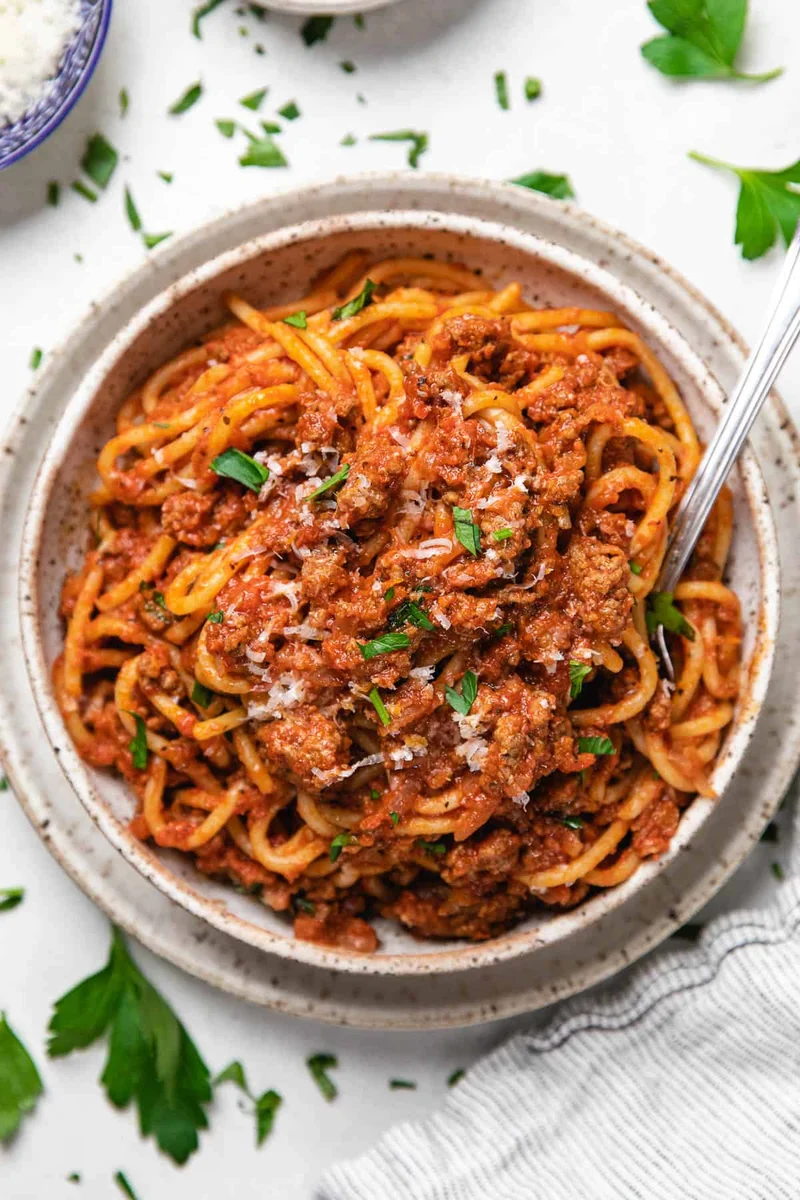
This spaghetti Bolognese pairs pasta with a slow-simmered tomato and beef sauce, gently flavoured with basil, chilli and a Parmesan rind. It makes a hearty, comforting dinner from straightforward ingredients.
Ingredients
- 1onion, finely chopped
- 2 clovesgarlic, minced
- 454 g (1 lb)ground beef (85–90% lean)
- 794 g (28 oz)crushed tomatoes
- 30 ml (2 tablespoons)olive oil
- 30 ml (2 tablespoons)tomato paste
- ½ teaspoonsalt
- ¼ teaspoonblack pepper
- 15 ml (1 tablespoon)dried basil
- ¼ teaspoonred pepper flakes
- 1Parmesan rind
- 283 g (10 oz)spaghetti, uncooked
- 1 cupstarchy pasta water, reserved
- to tastesalt for the pasta water
- to tastegrated Parmesan, to serve
- to tastechopped parsley, to serve
Instructions
- 1
Soften the onion
Heat a large skillet over medium-high heat and add 30 ml (2 tablespoons) olive oil. Once hot, add the chopped onion and cook for about 10 minutes, until softened and beginning to caramelise. Stir in the minced garlic for about 30 seconds.
- 2
Brown the beef
Add the ground beef and break it into smaller pieces. Cook for about 10 minutes, or until it is cooked through with no red or pink remaining.
- 3
Add the tomatoes
Stir in the crushed tomatoes and tomato paste. Bring the sauce to a gentle simmer, then turn the heat down to low.
- 4
Season the sauce
Stir in the salt, black pepper, dried basil and red pepper flakes.
- 5
Simmer with Parmesan
Add the Parmesan rind and stir. Simmer the sauce for about 20 minutes, stirring frequently.
- 6
Cook the spaghetti
While the sauce simmers, bring a pot of water to the boil and season the water with salt. Add the spaghetti and cook according to the packet instructions until al dente.
- 7
Combine pasta and sauce
Drain the spaghetti, reserving 1 cup of starchy water. Add the pasta to the sauce and stir until evenly coated. If the sauce is too thick, mix in a couple of tablespoons of the reserved pasta water.
- 8
Finish and serve
Sprinkle with grated Parmesan and chopped parsley before serving.
What is spaghetti Bolognese?
Spaghetti Bolognese is a familiar pasta dish of spaghetti served with a savoury meat-and-tomato sauce. Its name refers to Bologna in Italy, though this home-style version is designed as an easy, hearty meal rather than a claim to a single traditional formula.
Beef, crushed tomatoes and tomato paste form the base, while a Parmesan rind adds savoury depth as the sauce simmers. Dried basil and a little chilli round out the flavour without complicating the method.
Nutrition and macros by portion
The nutrition label shows one serving as written: 637 calories, 33g protein, 73g carbs, 24g fat.
| Portion | Adjustment | kcal | Protein | Carbs | Fat |
|---|---|---|---|---|---|
| Lighter | Less pasta, more salad | 446 kcal | 23g | 51g | 17g |
| This serving | As written | 637 kcal | 33g | 73g | 24g |
| Hungry | Larger portion | 956 kcal | 50g | 110g | 36g |
The spaghetti and tomatoes provide most of the carbohydrates, while the beef contributes protein and much of the fat. For a more balanced plate, serve a portion with a green salad or another vegetable side.
Build flavour from the base
Onion first: give it the full 10 minutes to soften and begin to caramelise before adding the garlic. Garlic cooks quickly, so stirring it for only about 30 seconds helps keep it from browning too much.
Beef next: break it up as it cooks so it browns evenly and there are no large chunks. Cook until no red or pink remains before adding the tomatoes.
Why the Parmesan rind matters
Parmesan rind: let it simmer in the sauce to lend a rounded, savoury flavour. Remove it before serving if it has not dissolved or softened enough to eat.
Tomato paste: stir it in with the crushed tomatoes to give the sauce a deeper tomato taste. The seasoning is added after the sauce reaches a gentle simmer, so it can disperse through the pan.
Keep the sauce at a gentle simmer
Low heat: once the tomatoes begin to simmer, reduce the heat so the sauce bubbles gently rather than boiling hard. Stir frequently during the 20-minute simmer to help prevent sticking.
Timing: the sauce and pasta can be prepared alongside one another. Keep an eye on the spaghetti and use the packet timing as a guide, since the exact cooking time depends on the pasta.
Look for these doneness cues
The beef should be fully cooked, with no red or pink visible. The sauce should be hot and gently bubbling after its simmer, with the flavours blended.
Al dente: the spaghetti should be cooked through but still have a slight firmness at the centre. A little reserved pasta water can loosen the sauce and help it coat the strands.
Serving and finishing
Tossing the spaghetti directly into the sauce distributes it more evenly than spooning sauce over plain pasta. Add reserved pasta water a couple of tablespoons at a time if the mixture seems too thick.
Finish with grated Parmesan and chopped parsley. A crisp green salad or a simple serving of vegetables makes a fresh contrast to the rich sauce.
Recipe notes & tips
- Chop the onion finely so it softens evenly in the pan.
- Break the beef into small pieces as it cooks for an even texture.
- Keep the sauce at a low simmer and stir it frequently.
- Reserve the pasta water before draining the spaghetti.
- Add pasta water gradually so the sauce does not become too loose.
- Check the pasta early and stop cooking when it is al dente.
Variations
- More heat: increase the red pepper flakes to suit your taste.
- Fresh basil: replace the dried basil with chopped fresh basil near the end of cooking.
- Extra vegetables: soften finely chopped carrot or celery with the onion.
- Pasta swap: use another pasta shape and cook it according to its packet instructions.
- Herb finish: use extra chopped parsley or basil to finish the dish.
Common mistakes to avoid
- Rushing the onion: it may stay sharp and firm; give it about 10 minutes to soften and begin to caramelise.
- Crowding the beef: large clumps cook unevenly; break the meat into smaller pieces as you stir.
- Boiling the sauce hard: it can stick and reduce too quickly; turn the heat down to a gentle simmer.
- Forgetting the pasta water: it helps loosen a thick sauce; reserve 1 cup before draining.
- Overcooking the spaghetti: it can turn soft when tossed with the sauce; cook it only until al dente.
How to store
Refrigerate leftover sauce and pasta in an airtight container for up to 3 days. Reheat gently in a pan or microwave until piping hot, adding a splash of water if the sauce has thickened; store pasta and sauce separately if possible.
Frequently asked questions
Can I make the sauce ahead?
Yes. Cook the sauce, cool it promptly and refrigerate it in an airtight container. Reheat it gently before combining with freshly cooked spaghetti.
Do I need to use the Parmesan rind?
No, but it adds savoury depth as the sauce simmers. If you do not have one, leave it out.
How do I stop the sauce from getting too thick?
Reserve the starchy pasta water before draining. Stir in a couple of tablespoons at a time until the sauce coats the spaghetti as you like.
How do I know the spaghetti is al dente?
Taste a strand near the end of the packet cooking time. It should be cooked through but retain a slight firmness in the centre.
Can I leave out the chilli flakes?
Yes. They add a little heat, so you can omit them for a milder sauce.
Cook it from the original
This recipe comes from veronikaskitchen.com. Their page has the author’s own photos, notes and tips — the best place to cook it from.
Open the recipe on veronikaskitchen.com