
Lifafa Paratha | Mixed Vegetable Lifafa Paratha
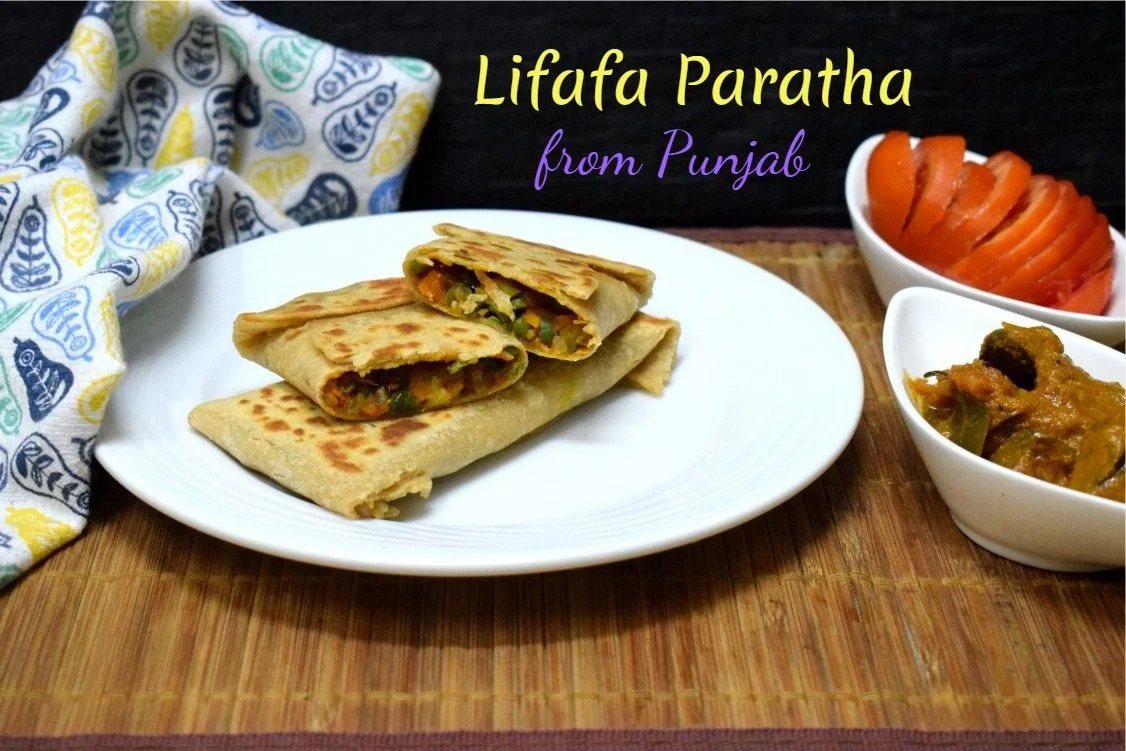
Lifafa paratha is a crisp, folded flatbread filled with spiced mixed vegetables and sealed like an envelope. It makes a satisfying breakfast or light meal, especially with yoghurt and pickle on the side.
Ingredients
- 120 g (1 cup)wholemeal wheat flour
- to tastesalt
- 5 g (1 tsp)ghee
- 1 tspajwain
- 30 g (1/4 cup)green beans
- 30 g (1/4 cup)carrot
- 45 g (1/4 cup)potato
- 30 g (1/4 cup)onion
- 2green chillies
- 1/2 tspred chilli powder
- 1/2 tspground cumin
- to tastesalt
- 5 ml (1 tsp)cooking oil
- 3 g (1 tsp)plain flour
- 5 ml (1 tsp)water
Instructions
- 1
Knead the dough
Work the flour, salt and ghee together with enough water to make a soft dough. Leave it to rest for 10 minutes.
- 2
Chop the vegetables
Finely chop all the vegetables.
- 3
Microwave vegetables
Microwave the beans, carrots and potatoes for 6 minutes.
- 4
Cook the aromatics
Heat the oil in a non-stick pan and sauté the onions and green chillies.
- 5
Mix the filling
Coarsely mash the cooked vegetables, add them to the pan and mix. Add the spice powders and combine thoroughly, then remove the filling from the heat and set it aside.
- 6
Roll the dough
Divide the dough into equal balls. Dust each with flour and roll it into a thin 15 cm (6-inch) roti.
- 7
Part-cook the rotis
Cook each roti lightly on both sides, then take it off the heat.
- 8
Make the paste
Mix the plain flour with the water to make a paste.
- 9
Fill and fold
Set a roti on a plate and place some filling in the centre. Fold one side over the vegetables, brush the flour paste on it, then fold the opposite side over like an envelope.
- 10
Seal the edges
Brush the paste along the sides of the roti and seal the filling inside.
- 11
Cook and serve
Cook the folded paratha over a low flame with oil, turning it to cook both sides. Serve with pickle and curds.
What is lifafa paratha?
Lifafa means “envelope” in Hindi, describing the way the flatbread is folded around its filling. Parathas are a South Asian flatbread, and this version uses a soft wheat dough around a spiced mixture of vegetables.
The filling is cooked before it goes into the bread, while the lightly cooked roti is folded and sealed for a final pan-cooking. That two-stage approach helps the parcel hold together and gives the outside time to brown.
Nutrition and macros by portion
The nutrition label shows one serving as written: 152 calories, 5g protein, 29g carbs, 4g fat.
| Portion | Adjustment | kcal | Protein | Carbs | Fat |
|---|---|---|---|---|---|
| Lighter | Use less ghee and oil | 106 kcal | 3g | 20g | 3g |
| This serving | As written | 152 kcal | 5g | 29g | 4g |
| Hungry | Make larger parathas | 228 kcal | 7g | 44g | 6g |
Most of the carbohydrates come from the wheat flour and potato, while the ghee and cooking oil provide most of the fat. The vegetables contribute some fibre, and the flour provides a modest amount of protein. Serve with curds and a generous salad or extra vegetables to round out the plate.
Building the dough
Soft dough: knead the flour with salt and ghee, adding water as needed to bring it together. Resting it for 10 minutes makes it easier to roll without springing back.
Ajwain: the ingredient list includes ajwain for the dough, though the method does not say when to add it. Mix it in while kneading so its flavour is distributed through the bread.
Preparing the vegetable filling
Fine chopping: small, even pieces cook and fit into the roti more easily. Microwave the beans, carrots and potato as directed, then mash them coarsely rather than turning them into a smooth paste.
Aromatics and spices: sauté the onion and green chillies before adding the vegetables. Stir in the chilli powder and cumin so they season the filling evenly.
Folding a neat parcel
Partial cooking: cook the rolled rotis lightly on both sides, just until they are flexible and no longer raw. They will finish cooking after they have been filled.
Sealing: keep the filling in the centre and avoid overfilling. Brush the flour paste onto the folds and edges to help the envelope stay closed in the pan.
Checking the finish
Low heat: cook the sealed paratha gently on both sides so the outside has time to brown without scorching before the dough cooks through. Turn it carefully to keep the filling inside.
Ready to eat: look for a cooked, lightly coloured surface and a firm parcel. If a fold opens, press it gently back against the pan while it cooks.
Serving the parathas
The recipe suggests pickle and curds, a tangy and cooling contrast to the chilli-spiced filling. Serve the parathas hot, while the outside is at its crispest.
For a fuller meal, add a simple salad or extra vegetables alongside. Keep accompaniments separate so each person can adjust the sharpness and heat.
Recipe notes & tips
- Rest the dough for the full 10 minutes so it is easier to roll.
- Chop the vegetables finely to make the filling easier to enclose.
- Let the cooked filling cool briefly before placing it on the roti.
- Use the flour paste sparingly but cover the folds and edges.
- Keep the pan over a low flame while the sealed parathas finish cooking.
- Serve soon after cooking for the best contrast between the browned outside and soft filling.
Variations
- Add peas: replace some of the potato with peas for another vegetable in the filling.
- Adjust the heat: use fewer green chillies for a milder version.
- Add coriander: stir chopped fresh coriander through the cooked filling.
- Change the spices: add a pinch of garam masala alongside the cumin.
- Serve with raita: pair the parathas with a yoghurt dip instead of plain curds.
Common mistakes to avoid
- Large vegetable pieces: they make the filling difficult to fold; chop everything finely.
- Overfilling the roti: it can split during folding; use a modest amount and leave room around the edges.
- Skipping the partial cook: a raw roti may tear when filled; cook it lightly on both sides first.
- Loose folds: the filling can spill out; apply flour paste to the folds and seal the edges.
- High heat: the outside may brown before the bread cooks through; finish the parathas over a low flame.
How to store
Refrigerate cooled parathas in an airtight container for up to 2 days. Reheat in a covered pan over low heat, turning once, until hot throughout.
Frequently asked questions
Can I make the filling ahead?
Yes. Cook it ahead and refrigerate it in a covered container, then let it cool before filling the rotis.
How do I stop the paratha from opening?
Avoid overfilling and brush flour paste over the folds and edges before sealing. Cook the seam side down first to help it hold.
Can I cook the parathas without a microwave?
Yes. Cook the chopped beans, carrots and potatoes in a pan or steam them until tender, then mash them coarsely.
What should I serve with lifafa paratha?
Serve it with pickle and curds, as suggested in the recipe. Salad or other fresh vegetables also work well alongside.
Can I freeze these parathas?
They are best freshly cooked, but you can freeze cooled parathas in a sealed container. Defrost in the fridge and reheat in a covered pan until hot.
Cook it from the original
This recipe comes from spicingyourlife.com. Their page has the author’s own photos, notes and tips — the best place to cook it from.
Open the recipe on spicingyourlife.com