
Zafrani Meetha Paratha
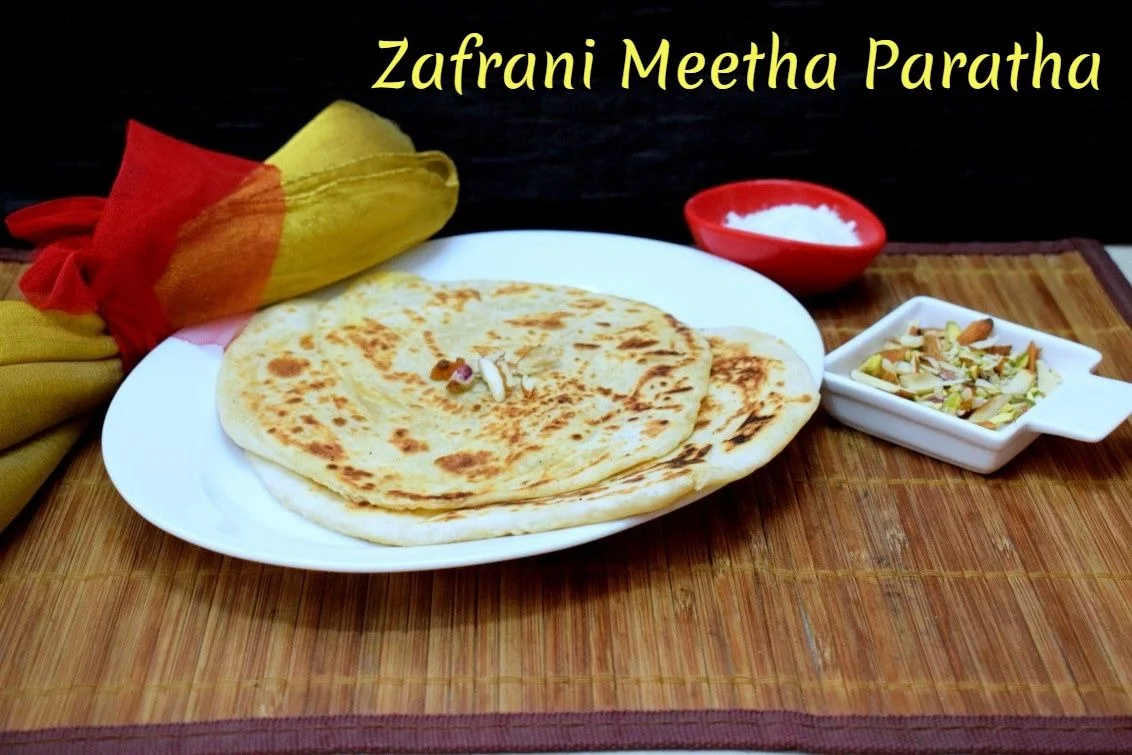
Zafrani Meetha Paratha is a sweet Indian flatbread with saffron folded through a soft, milk-kneaded dough. Sugar is mixed into the dough, while ghee helps create its layered texture and rich finish.
Ingredients
- 2 cups (250 g)plain flour (maida)
- 1 cup (240 ml), plus more as neededmilk
- 1 handfulsaffron
- 3 tbsp (about 38 g)icing sugar
- A pinchsalt
- 3 tsp (15 ml)ghee
Instructions
- 1
Soak the saffron
Soak the saffron in warm milk.
- 2
Make the dough
Put the flour in a bowl and add the salt, icing sugar and soaked saffron. Add the milk and knead to make a soft dough, adding more milk as required. Leave it to rest for 20 minutes.
- 3
Shape the layers
Dust the dough well with flour and roll it out. Spread over ghee and flour, then pleat the dough in the style of a laccha paratha or parotta.
- 4
Cook the paratha
Cook on a hot tawa, using ghee on both sides.
- 5
Serve hot
Serve the paratha hot.
- 6
Finish with toppings
For an extra-rich finish, drizzle with melted ghee and nuts, then roll the paratha over.
What is Zafrani Meetha Paratha?
Paratha is a layered flatbread from the Indian subcontinent, with many regional versions ranging from savoury to sweet. Zafrani Meetha Paratha takes its name from zafran, or saffron, and puts sweetness directly into the dough.
Here, milk brings the dough together and saffron adds fragrance and colour. Pleating the dough with ghee and flour creates layers that turn tender and rich on the tawa.
Nutrition and macros by portion
The nutrition label shows one serving as written: 325 calories, 8g protein, 58g carbs, 8g fat.
| Portion | Adjustment | kcal | Protein | Carbs | Fat |
|---|---|---|---|---|---|
| Lighter | Use less finishing ghee | 227 kcal | 6g | 41g | 6g |
| This serving | As written | 325 kcal | 8g | 58g | 8g |
| Hungry | Serve an extra paratha | 488 kcal | 12g | 87g | 12g |
The flour and sugar provide most of the carbohydrates, while milk contributes protein and some fat; ghee is the main source of added fat. Pair a paratha with fruit or another fresh side to make the plate more varied.
Saffron and milk
Saffron soak: warm milk helps the threads release their aroma and colour before they go into the dough. Use some of the measured milk for soaking, then add it with the saffron.
Milk dough: add the milk gradually and use only as much extra as needed to make a soft dough. The exact amount can vary with the flour.
The sweet dough
Sugar: icing sugar is mixed into the dough, so the sweetness is spread throughout rather than added as a filling. Mixing it in with the flour and salt helps distribute it evenly.
Rest: the 20-minute rest gives the dough time to relax, making it easier to roll and pleat. Keep it covered while it rests so the surface does not dry out.
Making the layers
Flouring: dust the surface and dough well before rolling to reduce sticking. Brush or spread the ghee over the rolled dough, then add flour as directed.
Pleating: fold the dough into pleats as you would for laccha paratha or parotta, then roll it into shape. Keep the folds reasonably even so the layers cook at a similar rate.
Cooking on the tawa
Heat: cook the paratha on a hot tawa with ghee on both sides. If the surface is not hot enough, the bread may cook slowly without developing its characteristic browned patches.
Doneness: look for a cooked-through centre and golden spots on the outside. Turn as needed, taking care not to let the sweet dough darken too quickly.
Serving ideas
Fresh from the pan: serve hot, while the ghee-brushed layers are at their softest. The recipe also suggests a drizzle of melted ghee and nuts, followed by rolling the paratha over.
On the plate: serve it as a sweet breakfast or snack, or alongside a mild meal. A portion of fresh fruit can add a fresh contrast to the rich flatbread.
Recipe notes & tips
- Use warm rather than hot milk to soak the saffron.
- Add the milk gradually so the dough stays soft rather than sticky.
- Cover the dough during its 20-minute rest to prevent a dry surface.
- Dust generously before rolling and pleating to help prevent sticking.
- Keep an eye on the paratha as it cooks, since the sweet dough can brown quickly.
Variations
- Nut topping: scatter chopped nuts over the melted-ghee finish before rolling the paratha.
- Saffron infusion: let the saffron sit in the warm milk for longer before mixing it into the dough.
- Sweeter finish: add a little extra melted ghee and icing sugar at the table.
- Smaller breads: divide the dough into smaller portions for individual parathas.
- Milder saffron: use fewer saffron threads for a more delicate aroma.
Common mistakes to avoid
- Adding all the milk at once: the dough may become sticky; add it gradually and stop when the dough is soft.
- Skipping the rest: the dough can be harder to roll; leave it for the full 20 minutes.
- Rolling without flour: the dough may cling to the surface; dust the worktop and dough well.
- Uneven pleats: some layers may cook faster than others; make the folds as even as you can.
- Leaving it unattended: sugar can make the bread brown quickly; watch it closely on the hot tawa.
How to store
Store cooled parathas in an airtight container in the fridge and use within 2 days. Reheat on a tawa over a low heat, turning until warmed through.
Frequently asked questions
Can I use regular granulated sugar?
The recipe calls for powdered sugar, which blends readily into the dough. If using granulated sugar, mix thoroughly and expect a slightly different texture.
How much extra milk should I add?
Add it a little at a time until the dough is soft. The recipe does not specify a fixed extra amount.
Can I prepare the dough ahead?
You can make it ahead and keep it covered in the fridge. Bring it closer to room temperature before rolling so it is easier to shape.
How do I know the paratha is cooked?
Look for golden patches on both sides and a centre that is cooked through. Turn it as needed while it cooks.
What can I use instead of a tawa?
A heavy frying pan can stand in for a tawa. Heat it well before adding the paratha.
Are the nuts part of the ingredient list?
No nuts are listed among the measured ingredients. They are mentioned as an optional topping in the serving instruction.
Cook it from the original
This recipe comes from spicingyourlife.com. Their page has the author’s own photos, notes and tips — the best place to cook it from.
Open the recipe on spicingyourlife.com