
Vegan Macarons
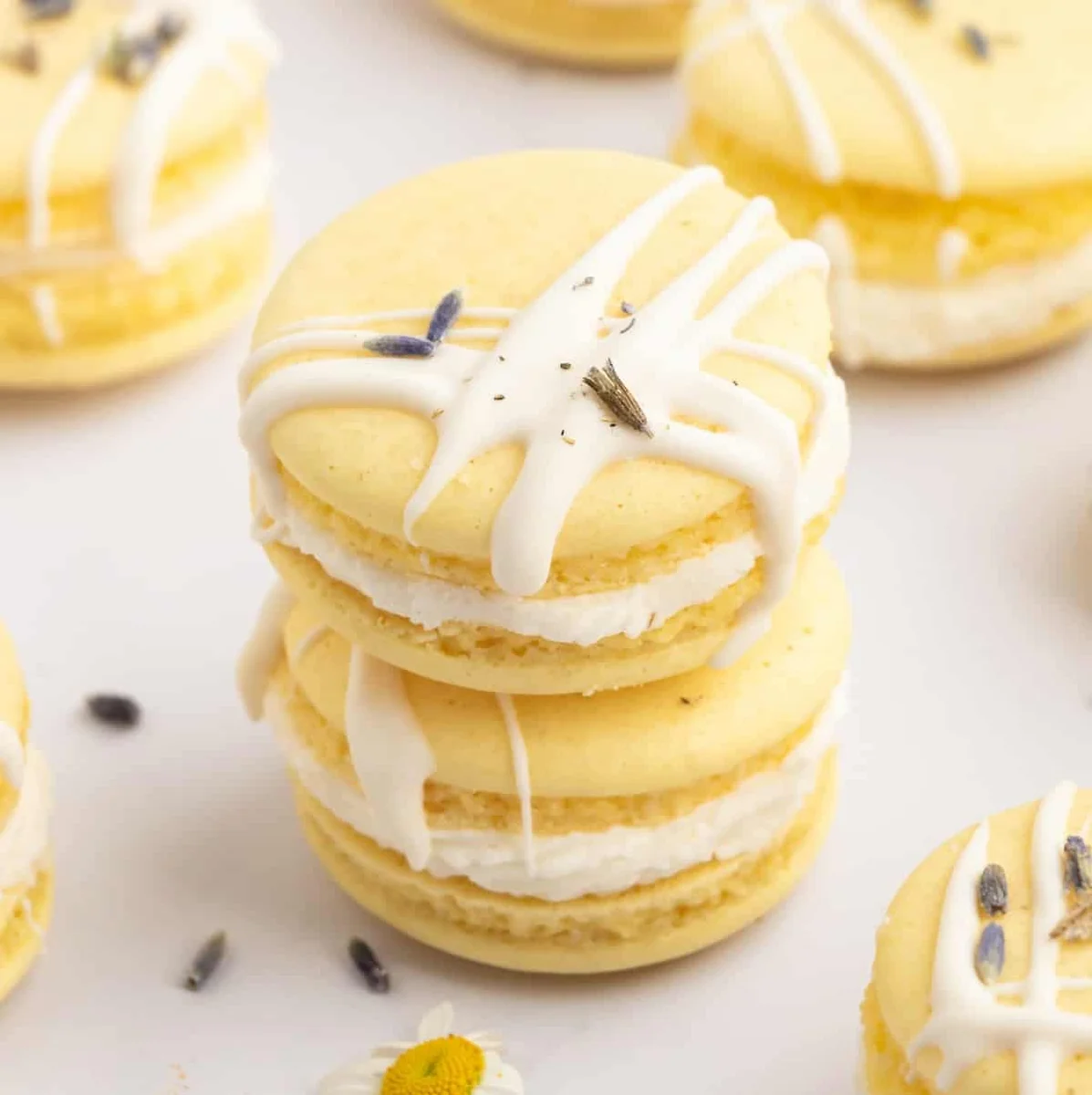
These vegan French macarons pair crisp, delicate shells made with aquafaba meringue with a smooth vegan buttercream filling. Careful folding, resting and baking help create the characteristic feet and tender centres.
Ingredients
- 100 gaquafaba (liquid from a can of chickpeas)
- 1.25 ml (¼ teaspoon)cream of tartar
- 0.6 ml (⅛ teaspoon)salt
- 3 dropsvegan gel food colouring (optional)
- 1.25 ml (¼ teaspoon)vanilla extract (optional)
- 90 gcaster sugar (or extra-fine granulated sugar)
- 125 galmond flour
- 125 gicing sugar
- 113 g (½ cup)vegan butter
- 180 g (1½ cups)icing sugar
- 2.5 ml (½ teaspoon)vanilla extract
- To tastevegan gel food colouring (optional)
Instructions
- 1
Prepare ingredients
Refrigerate the can or cans of chickpeas for at least 2 hours beforehand. Line two large baking trays with baking parchment, trimming it so it lies flat. Draw 3.8 cm circles about 2.5 cm apart on each sheet, then turn the paper over so the pencil marks are underneath. Fit a large piping bag with a No. 12 round tip. Wipe a clean glass or metal mixing bowl and whisk with a little vinegar on a clean towel to remove grease and help stabilise the aquafaba.
- 2
Whip aquafaba
Weigh 100 g aquafaba into the clean bowl and add the cream of tartar and salt. Whisk on low speed to combine, then on high for about 3–4 minutes, until foamy and forming soft peaks.
- 3
Whisk the meringue
Add the caster sugar gradually while whisking at medium speed, then turn the mixer to high and whisk for a further 3–4 minutes, until stiff peaks form. Add the optional vanilla extract and 3–4 drops of colouring if using, and whisk for another 30–60 seconds. Set aside.
- 4
Sift dry ingredients
Sift the icing sugar and almond flour into a large bowl and whisk them together. Sift the mixture again to remove lumps, pushing soft remaining bits through with the back of a spoon; discard any hard lumps that will not pass through.
- 5
Fold the batter
Add the almond mixture to the aquafaba meringue in three additions, gently folding each one in with a rubber spatula. Sweep around the inside of the bowl and fold through the centre. Continue folding until the batter flows in a continuous ribbon from the spatula and can form a figure eight that remains visible for about 10 seconds before sinking back in. It should be slightly thicker than cake batter; stop as soon as it reaches this consistency.
- 6
Pipe the shells
Set the piping bag tip-down in a tall glass and fold the top over the rim. Fill it with batter, twist the top closed, then lift the four corners of the parchment and pipe a small dot of batter onto the tray beneath each corner to hold the paper in place. Smooth the parchment flat. Hold the bag upright and pipe into the centre of each marked circle until filled. Tap each tray on the counter several times, rotating it as you go, to release air bubbles and smooth the peaks.
- 7
Rest the shells
Leave the piped shells at room temperature for 60–90 minutes, until a dry skin forms on top. In humid conditions, allow closer to 90 minutes. They are ready when you can gently run a finger over a shell without the batter sticking.
- 8
Bake and cool
Preheat the oven to 121°C (250°F). Bake one tray at a time on the lower rack for 20–25 minutes, rotating the tray at the 7-minute mark for even baking. If both trays fit side by side on the same rack, they can be baked together. The shells are ready when they have risen slightly, developed feet and lift easily from the parchment. Leave them on the tray for 15 minutes, then transfer to a cooling rack to cool completely before filling.
- 9
Make buttercream
Bring the vegan butter to room temperature in a mixing bowl. If you want to speed this up, place it near the oven and watch it closely so it does not melt. Once softened, whip it with a hand mixer or stand mixer for a couple of minutes, until creamy and smooth. Add the icing sugar gradually, ½ cup at a time, mixing well after each addition until frosting-like. Mix in the vanilla extract and optional vegan colouring, then whip until silky and evenly blended.
- 10
Fill the macarons
Match shells of similar shape and size. Using a piping bag fitted with a No. 12 tip, pipe buttercream onto the flat side of one shell from each pair. Gently place the matching shell on top to make a sandwich. Serve at room temperature.
What are vegan macarons?
Macarons are French sandwich biscuits made from almond flour and sugar, with a delicate shell and a filling between two halves. In this version, aquafaba—the liquid from canned chickpeas—takes the place of egg whites in the meringue.
The method relies on a firm aquafaba meringue and careful folding to create shells that rise with feet while keeping a tender centre. Vegan buttercream gives the finished macarons a smooth, sweet filling.
Nutrition and macros by portion
The nutrition label shows one serving as written: 91 calories, 1g protein, 22g carbs, 7g fat.
| Portion | Adjustment | kcal | Protein | Carbs | Fat |
|---|---|---|---|---|---|
| Lighter | Use less buttercream | 64 kcal | 1g | 15g | 5g |
| This serving | As written | 91 kcal | 1g | 22g | 7g |
| Hungry | Serve an extra macaron | 137 kcal | 2g | 33g | 11g |
The almond flour and sugars provide most of the carbohydrates, while the vegan butter contributes much of the fat. Aquafaba and almond flour contribute some protein, but the filling and shells are primarily a sweet treat. Pair a portion with fresh fruit for a more varied plate.
Aquafaba and meringue
Chilled aquafaba: refrigerating the chickpeas beforehand is part of the recipe’s preparation. Weigh the liquid rather than estimating from the can, and keep any unused chickpeas for another meal.
Clean equipment: grease can interfere with whipping, so wipe the bowl and whisk with vinegar before starting. Add the sugar gradually and keep whisking until the meringue holds stiff peaks.
Getting the fold right
Three additions: fold the sifted almond flour mixture into the meringue in thirds, sweeping around the bowl and through the middle. This helps combine the ingredients without knocking out too much air at once.
Ribbon test: stop folding when batter lifted on the spatula falls in a continuous ribbon and forms a figure eight that takes about 10 seconds to sink back in. If it is still stiff, fold a little more; if it runs freely, it has been over-mixed.
Piping and resting
Even circles: use the traced guides and hold the piping bag upright as you fill each one. Tapping the tray helps release trapped air and settle small peaks.
Dry skin: let the shells rest until a gentle touch does not stick. Humidity can lengthen this stage, so use the surface test rather than relying only on the clock.
Baking cues
Gentle heat: bake at 121°C for 20–25 minutes, rotating the tray at 7 minutes. The shells should rise slightly and form their characteristic feet.
Easy release: the recipe’s doneness cue is that shells lift easily from the parchment. Let them cool on the tray for 15 minutes, then cool completely on a rack before adding buttercream.
Filling and serving
Softened butter: whip the vegan butter until creamy before adding icing sugar in half-cup portions. Add the vanilla and optional colouring once the frosting has taken shape, then whip until smooth.
Matching pairs: choose shells of similar size and shape so the filling sits evenly. Serve the assembled macarons at room temperature, when the buttercream is soft enough to enjoy with the crisp shells.
Recipe notes & tips
- Chill the chickpeas for at least 2 hours before measuring the aquafaba.
- Make sure the parchment lies flat so the shells pipe evenly.
- Sift the almond flour and icing sugar twice to remove lumps.
- Use the figure-eight test to judge when the batter is ready rather than folding to a fixed number.
- In humid conditions, allow the piped shells closer to 90 minutes to form a skin.
- Cool the shells completely before piping on the buttercream.
Variations
- Tinted shells: add the optional vegan gel colouring to the meringue before folding in the dry ingredients.
- Tinted filling: whip vegan gel colouring into the buttercream until evenly coloured.
- Vanilla shells: include the optional vanilla extract in the aquafaba meringue.
- Different extract: replace the filling’s vanilla with another extract that suits a sweet buttercream.
- Unfilled shells: serve the cooled shells plain if you want to skip the buttercream sandwich.
Common mistakes to avoid
- Greasy bowl: wipe the bowl and whisk with vinegar before whipping the aquafaba.
- Lumpy dry mix: sift the almond flour and icing sugar twice before folding.
- Over-mixing: stop once the batter passes the figure-eight test, or the shells may spread too much.
- Sticky shells: wait until the tops have formed a skin before baking.
- Uneven baking: rotate the tray at the 7-minute mark as directed.
- Filling warm shells: let them cool fully first so the buttercream does not soften.
How to store
Store filled macarons in an airtight container in the refrigerator and bring them to room temperature before serving. The recipe does not specify a storage duration; avoid leaving them at room temperature for extended periods because the filling contains vegan butter. Do not microwave to reheat.
Frequently asked questions
How do I know when the aquafaba meringue is ready?
After adding the sugar, whisk for 3–4 minutes on high until the mixture holds stiff peaks. Add the optional vanilla and colouring, then whisk for another 30–60 seconds.
How can I tell if the macaron batter has been folded enough?
Lift some batter with the spatula: it should fall in a continuous ribbon and form a figure eight that remains visible for about 10 seconds before sinking in.
How long should I leave the shells to dry?
Rest them for 60–90 minutes at room temperature. In a humid place, wait closer to 90 minutes, or until a gentle touch does not stick.
Why do the shells need to cool before filling?
The recipe calls for completely cooled shells before adding buttercream. Warm shells can soften the filling and make assembly messy.
Can I use both baking trays at once?
The method recommends baking one tray at a time on the lower rack unless both trays fit side by side on the same rack. Rotate the tray at the 7-minute mark.
What does it mean if the shells have feet?
Feet are the small, ruffled bases that form as the shells rise during baking. The recipe also uses easy release from the parchment as a sign that the shells are baked.
Cook it from the original
This recipe comes from worldofvegan.com. Their page has the author’s own photos, notes and tips — the best place to cook it from.
Open the recipe on worldofvegan.com