
Sweet Potato and Swede Mash
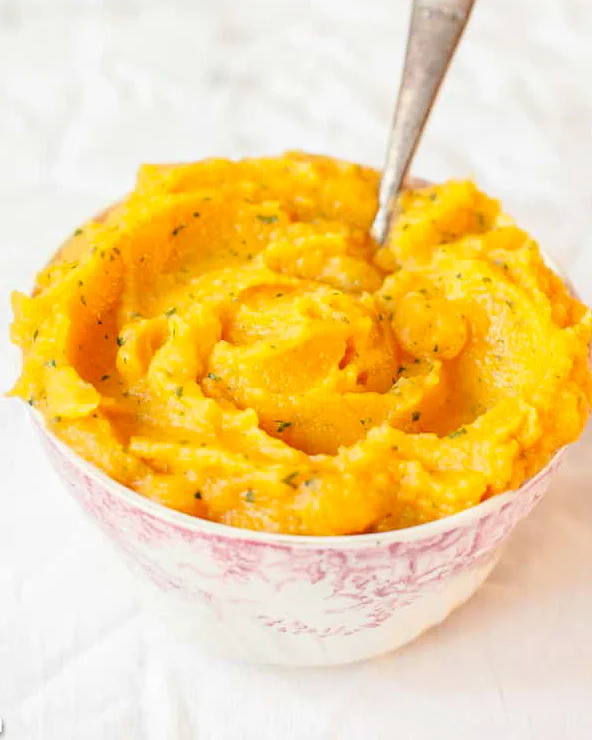
A simple British-style mash combining sweet potatoes and swede with thyme, parsley and butter. It makes a colourful, gently sweet side dish for a roast or a weekday supper.
Ingredients
- 500 g / 1 lb (1 large)swede
- 800 g / 1 3/4 lb (3 medium)sweet potatoes
- 4–5 sprigs (leaves only)fresh thyme
- 1 tbspflat-leaf parsley, chopped
- 3 tbspbutter
- to tastesalt
Instructions
- 1
Peel and chop
Peel the sweet potatoes and swede, then cut them into cubes. Make the swede pieces smaller than the sweet potato pieces, as swede takes longer to cook.
- 2
Boil the vegetables
Put both vegetables in the same pan with 1 tsp of fresh thyme leaves. Boil for 15 minutes, until fork tender.
- 3
Mash and season
Mash the vegetables with a potato masher until smooth. Add the butter, chopped parsley and salt to taste, then stir to combine.
What is sweet potato and swede mash?
Swede is a root vegetable commonly used in British cooking, often mashed or served alongside roast dinners. Here it is combined with sweet potato for a mash that brings together swede’s earthy flavour and the sweet potato’s natural sweetness.
Thyme adds a savoury herbal note, while parsley and butter finish the mash. Cutting the swede smaller helps both vegetables become tender at about the same time.
Nutrition and macros by portion
The nutrition label shows one serving as written: 197 calories, 3g protein, 34g carbs, 6g fat.
| Portion | Adjustment | kcal | Protein | Carbs | Fat |
|---|---|---|---|---|---|
| Lighter | Use less butter | 138 kcal | 2g | 24g | 4g |
| This serving | As written | 197 kcal | 3g | 34g | 6g |
| Hungry | Serve a larger portion | 296 kcal | 5g | 51g | 9g |
The sweet potatoes and swede provide most of the carbohydrates, while the butter is the main source of fat. There is a modest amount of protein in the vegetables; serve the mash with a protein-rich main and greens for a more balanced plate.
Choosing and preparing the vegetables
Swede: peel it thoroughly and cut it into smaller cubes than the sweet potato, since it takes longer to soften.
Sweet potatoes: use medium ones and cut them into evenly sized cubes so they cook consistently. The recipe uses 800 g in total.
Getting the texture right
Fork tender: after 15 minutes of boiling, a fork should pass easily through the pieces. If the swede is still firm, continue cooking until it is tender before mashing.
Smooth mash: mash with a potato masher, stopping when the texture is even. Stir in the butter after mashing so it combines with the hot vegetables.
Using the herbs
Thyme: add 1 tsp of fresh thyme leaves to the pan with the vegetables, as directed in the method. Strip the leaves from the sprigs and leave out the woody stems.
Parsley: stir in the chopped flat-leaf parsley with the butter at the end, so its fresh flavour remains noticeable.
Serving the mash
Serve it hot as a side with roast meat, sausages or a savoury pie. It also works alongside lentils or beans for a meat-free meal.
If serving with a rich main, add a green vegetable such as cabbage or peas to give the plate a fresh contrast.
Timing and doneness
The vegetables boil together for 15 minutes, and the stated total time is 30 minutes. Have the herbs and butter ready while they cook so the mash can be finished promptly.
Use the fork test rather than relying only on the clock: the pieces should be soft enough to mash without leaving firm lumps.
Recipe notes & tips
- Cut the swede smaller than the sweet potato to help them cook at a similar pace.
- Use a pan large enough for the vegetables to sit comfortably in the water.
- Check tenderness with a fork before draining or mashing.
- Strip the thyme leaves from the sprigs and avoid adding the woody stems.
- Season with salt gradually, tasting as you stir in the butter and parsley.
Variations
- Extra thyme: add a little more fresh thyme if you want a stronger herbal note.
- Black pepper: grind some over the mash just before serving for a gentle savoury edge.
- Creamier finish: replace part of the butter with a splash of warm milk.
- Dairy-free: use a dairy-free butter alternative in place of the butter.
- Chunkier texture: mash briefly and leave a few small pieces of vegetable intact.
Common mistakes to avoid
- Equal-sized cubes: swede cooks more slowly; cut it smaller than the sweet potato.
- Undercooked swede: it can leave the mash lumpy; boil until a fork passes through easily.
- Adding thyme stems: woody stems are unpleasant to eat; use the leaves only.
- Mashing too early: firm pieces will not mash smoothly; check both vegetables for tenderness first.
- Over-seasoning at the start: salt levels vary; add it to taste when finishing the mash.
How to store
Cool leftovers promptly, store in a covered container in the fridge and use within 3 days. Reheat until piping hot, adding a small splash of water or milk if the mash has thickened.
Frequently asked questions
Can I prepare the vegetables ahead?
You can peel and cube them ahead, then keep them covered in cold water in the fridge. Drain them before boiling.
How do I know when the vegetables are cooked?
A fork should slide easily into both the swede and sweet potato after about 15 minutes of boiling. Cook for longer if the swede is still firm.
Can I make the mash without a potato masher?
A sturdy fork can mash the vegetables, though it may leave a less smooth texture. Mash while the vegetables are hot.
Can I freeze this mash?
Yes, freeze it in an airtight container once cooled. Thaw in the fridge and reheat thoroughly, stirring well to bring the texture back together.
What can I serve with it?
It pairs well with roast meat, sausages or pie, as well as a green vegetable. Beans or lentils make a suitable meat-free accompaniment.
Cook it from the original
This recipe comes from vikalinka.com. Their page has the author’s own photos, notes and tips — the best place to cook it from.
Open the recipe on vikalinka.com