
Lefse
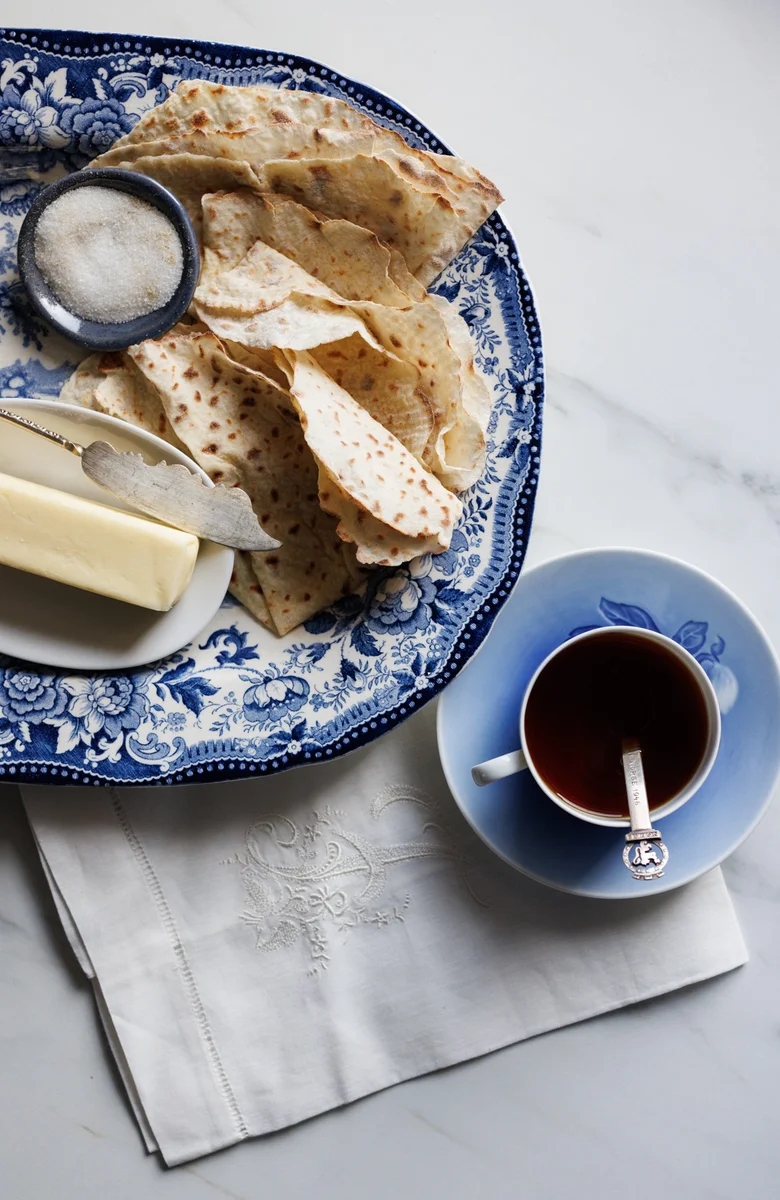
Lefse is a soft, thin potato flatbread with Norwegian roots, made here from riced potatoes, butter and flour. This family recipe makes a generous batch for sharing, serving warm or saving for later.
Ingredients
- 3.63 kg (8 lb)russet potatoes
- 142 g (10 Tbsp)butter
- 50 g (4 Tbsp)granulated sugar
- 22.5 ml (1 1/2 Tbsp)salt
- 250 g (2 cups)flour
Instructions
- 1
Cook the potatoes
Peel the potatoes, boil them until tender, then rice them.
- 2
Mix and cool
Measure 10 cups of riced potatoes and mix them with the butter, sugar and salt. Leave the mixture to cool.
- 3
Add the flour
Mix in two cups of flour, then continue cooling the mixture.
- 4
Roll and fry
Shape the mixture into balls a scant 1/4 cup in size. Roll each one thin and fry it.
What is lefse?
Lefse is a traditional Norwegian flatbread, often made with potatoes and cooked on a hot surface. It is also a familiar part of Norwegian-American family and community cooking.
This version uses riced potatoes with butter, a little sugar and flour. The recipe was shared by Deb Simon of the historic Trondhjem church and is her sister Barb’s well-loved family recipe.
Nutrition and macros by portion
The nutrition label shows one serving as written: 117 calories, 2g protein, 21g carbs, 3g fat.
| Portion | Adjustment | kcal | Protein | Carbs | Fat |
|---|---|---|---|---|---|
| Lighter | Smaller lefse portion | 82 kcal | 2g | 14g | 2g |
| This serving | As written | 117 kcal | 2g | 21g | 3g |
| Hungry | Serve extra lefse | 176 kcal | 4g | 31g | 4g |
The potatoes and flour provide most of the carbohydrates, while the butter supplies most of the fat; the recipe contains only a modest amount of protein. Pair a portion with eggs, beans or another protein-rich dish and vegetables for a more balanced plate.
Why rice the potatoes?
Riced potatoes: this step breaks the cooked potatoes into fine, even pieces, helping the dough stay smooth rather than lumpy.
Measure after ricing: the method calls for 10 cups of riced potato, not all the potatoes by weight. Use that measured amount when mixing in the butter, sugar and salt.
Cooling before rolling
Cool the mixture: the recipe calls for cooling it after mixing in the butter, sugar and salt, then continuing to cool after adding the flour. Follow both rests so the mixture is easier to handle.
Keep the flour measured: work in the specified two cups rather than adding extra by habit. Too much flour can make the finished lefse less tender.
Rolling and frying
Thin rounds: form scant 1/4-cup balls and roll each one thinly for the characteristic flat shape. Aim for an even thickness so each round cooks consistently.
Hot surface: fry each round until cooked through, turning as needed. The recipe does not specify a cooking temperature or time, so use the colour and feel of the lefse as your cues.
Serving and timing
Batch size: this recipe makes 42 portions, so it suits a gathering or a cooking day when you want extras to keep. The total preparation and cooking time is not provided.
To serve: lefse can be enjoyed warm on its own or alongside soups and other savoury dishes. For a simple sweet serving, spread it with butter and a little sugar.
Recipe notes & tips
- Rice the potatoes while they are cooked and tender so they break down evenly.
- Measure 10 cups of riced potatoes for the mixture, as specified in the method.
- Let the potato mixture cool before rolling to make it easier to handle.
- Roll each scant 1/4-cup ball thinly and evenly.
- Fry the rounds in batches so you can keep an eye on their doneness.
Variations
- Sweet finish: spread cooked lefse with butter and sprinkle with sugar before serving.
- Cinnamon sugar: add a light dusting of cinnamon sugar as a topping.
- Savoury filling: roll the lefse around sliced cheese or leftover meat.
- Herb note: serve alongside a savoury meal with chopped fresh herbs.
- Smaller rounds: divide the dough into smaller balls for easier-to-handle portions.
Common mistakes to avoid
- Using all the potatoes: measure 10 cups after ricing, as directed, rather than assuming the full batch goes into the dough.
- Skipping the cooling: allow the mixture to cool at both stages so it is less difficult to roll.
- Adding extra flour: stick to the two cups in the recipe to avoid making the lefse unnecessarily firm.
- Rolling too thick: flatten each ball thinly so it cooks through as a flatbread.
- Uneven rounds: roll to a consistent thickness for more even frying.
How to store
Cool the lefse, then store it in an airtight container in the refrigerator for up to 3 days. Reheat briefly in a dry frying pan or warm it in the oven until heated through.
Frequently asked questions
How many portions does this recipe make?
The recipe lists 42 servings. The number of rounds may vary depending on how large you shape them.
How much riced potato goes into the mixture?
Use 10 cups of riced potatoes, measured after cooking and ricing.
Do I need to cool the potato mixture?
Yes. The method says to cool it after mixing in the butter, sugar and salt, then continue cooling after adding the flour.
How thin should I roll the lefse?
Roll each scant 1/4-cup ball thinly. The recipe does not give a specific thickness.
How long should I fry each round?
The recipe does not specify a time or temperature. Fry each round until cooked through, watching its colour and texture.
Can I freeze lefse?
Yes. Once cooled, stack the rounds with baking paper between them, seal in a freezer-safe bag and freeze. Thaw before reheating.
Cook it from the original
This recipe comes from zoebakes.com. Their page has the author’s own photos, notes and tips — the best place to cook it from.
Open the recipe on zoebakes.com