
Pumpkin Crème Brûlée
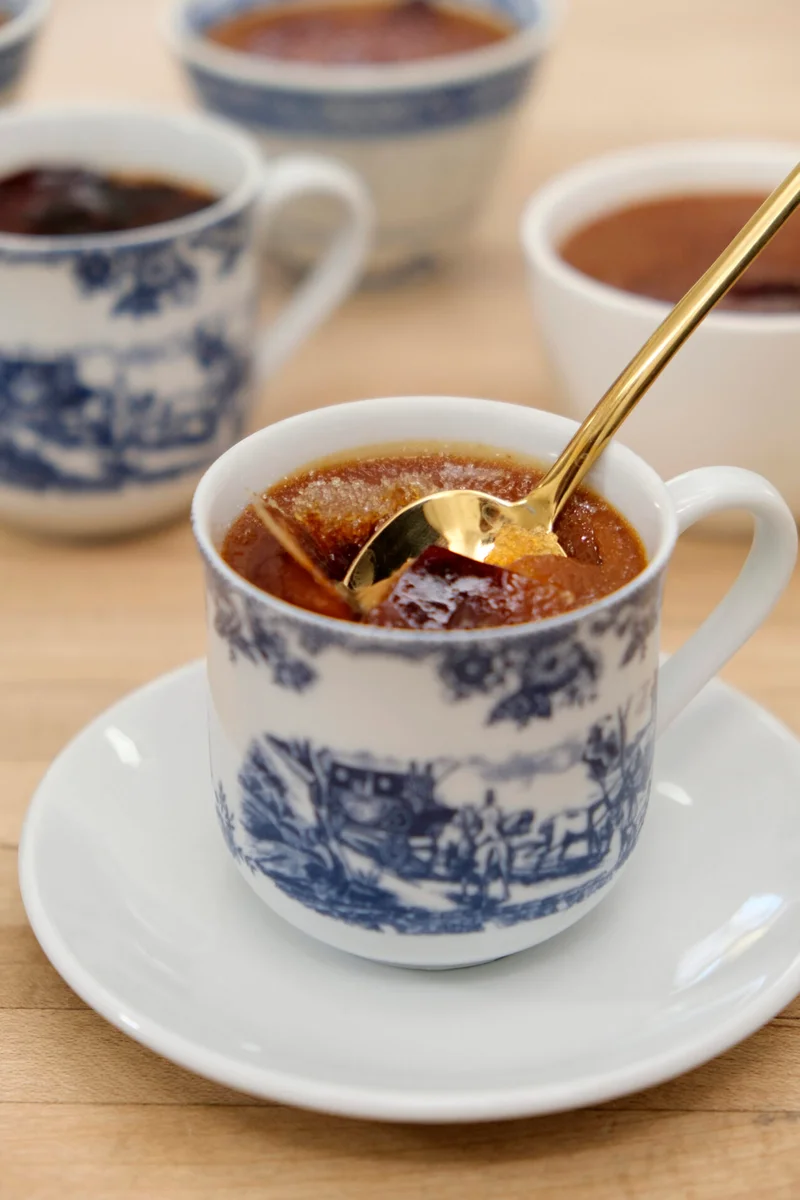
This pumpkin crème brûlée combines a silky, spiced pumpkin custard with a crisp layer of caramelised sugar. It is a make-ahead dessert, with the final torching best done just before serving.
Ingredients
- 200 glightly packed brown sugar
- 56 gunsalted butter
- 720 mldouble cream
- ½ tspkosher salt
- 1vanilla pod, split lengthways
- 8large egg yolks
- 281 gpumpkin purée
- 1 tsppumpkin pie spice
- 50 ggranulated sugar
Instructions
- 1
Melt sugar and butter
In a medium, heavy-based saucepan, cook the brown sugar and butter over a medium heat, stirring with a wooden spoon or whisking carefully. They may separate at first; keep stirring as the sugar melts and they come together. Continue until the mixture just begins to brown and smoke slightly.
- 2
Add the cream
Pour in the cream slowly, adding it one cup (240 ml) at a time. The cold cream may make the hot mixture sputter and seize; keep cooking until the hardened sugar dissolves again. Add the salt and split vanilla pod.
- 3
Mix the custard
Whisk the egg yolks in a medium bowl. Slowly whisk in enough hot butterscotch cream to warm the yolks slightly, then pour them back into the pan and whisk gently to combine. Stir in the pumpkin purée and pumpkin pie spice, then strain the mixture into another bowl.
- 4
Heat the oven
Preheat the oven to 160°C (325°F).
- 5
Fill the ramekins
Divide the custard among 8 to 12 small ramekins, espresso cups or teacups. Arrange them in a roasting tin and pour in hot water until it reaches halfway up their sides. Cover the tin loosely with aluminium foil.
- 6
Bake until set
Bake for 25 to 40 minutes, checking after 25 minutes; the time depends on the custard's starting temperature and the size of the containers. Gently tap each ramekin: a watery ripple means it needs longer, while a movement like set jelly means it is ready. Avoid overbaking, which can make the custard grainy and eggy.
- 7
Cool and chill
Remove the roasting tin from the oven and let the custards cool completely in the water bath. Lift them out, cover with cling film and refrigerate for at least 1 hour and up to 3 days.
- 8
Caramelise the tops
Just before serving, sprinkle an even layer of granulated sugar over each custard. Use a kitchen torch in a slow, steady motion to brown the sugar lightly.
What is pumpkin crème brûlée?
Crème brûlée is a French-style baked custard served beneath a thin, crisp layer of caramelised sugar. This version adds pumpkin purée and warm spice to the cream-and-yolk base.
Brown sugar melted with butter gives the cream a butterscotch note, while straining helps leave the finished custard smooth. The contrast between the cool, tender centre and freshly torched top is part of the appeal.
Nutrition and macros by portion
The nutrition label shows one serving as written: 545 calories, 5g protein, 38g carbs, 43g fat.
| Portion | Adjustment | kcal | Protein | Carbs | Fat |
|---|---|---|---|---|---|
| Lighter | Use smaller ramekins | 382 kcal | 4g | 27g | 30g |
| This serving | As written | 545 kcal | 5g | 38g | 43g |
| Hungry | Serve a larger ramekin | 818 kcal | 8g | 57g | 65g |
Most of the energy and fat come from the double cream, butter and egg yolks; the sugars and pumpkin provide most of the carbohydrates. The custard offers some protein from the yolks, but it is a rich dessert, so serve a smaller ramekin with fruit if you want a lighter finish to the meal.
Building the butterscotch base
Brown sugar and butter: stir them together as they melt, even if they look separated at first. Stop when the mixture just starts to brown; letting it darken too far can give it a bitter, burnt taste.
Cream: add it gradually, since the cold liquid makes the hot sugar sputter and seize. Keep heating until the hardened sugar dissolves back into the cream.
Tempering the yolks
Warm gradually: whisk a little hot cream into the yolks before returning them to the pan. This brings their temperature up gently and helps prevent them from scrambling.
Strain the mixture after adding the pumpkin and spice. This catches any small cooked egg pieces and helps give the custard a more even texture.
Using a water bath
Hot water: pour it into the roasting tin until it reaches halfway up the sides of the ramekins. Starting with hot rather than cool water helps the custards bake evenly.
Foil cover: tent the tin with aluminium foil as directed. Keep the ramekins steady while moving the filled tin into the oven.
Checking when they are done
Start checking at 25 minutes, as small cups may finish sooner than larger ramekins. The exact time varies with both the container size and the temperature of the custard when it goes into the oven.
Look for a gentle wobble like set jelly when you tap the side. A liquid ripple needs more time; baking until completely firm can leave the custard grainy.
Chilling and serving
Cool the ramekins fully in the water bath before covering and refrigerating. This gives the custard time to settle, and the chilling period makes it practical to prepare the dessert ahead.
Torch the sugar just before serving so the top is crisp against the cold custard. Serve as it is, or alongside fresh fruit or a small biscuit.
Recipe notes & tips
- Use a roasting tin deep enough to hold hot water halfway up the ramekins.
- Add the cream slowly to reduce spluttering when it meets the hot sugar and butter.
- Whisk continuously while tempering the yolks with the hot cream.
- Check the custards from 25 minutes, as smaller containers can set more quickly.
- Let the custards chill for at least 1 hour before serving.
- Apply the torch in a slow, even motion to brown the sugar without scorching one spot.
Variations
- Mini pumpkins: bake the custard in small hollowed pumpkins if they are suitable for serving.
- Extra spice: add a little more pumpkin pie spice for a more pronounced warm-spice flavour.
- Individual sizes: divide the mixture among 12 smaller cups rather than 8 large ramekins.
- Citrus note: add a little finely grated orange zest to the custard mixture.
- No kitchen torch: use the oven grill briefly to caramelise the sugar, watching closely.
Common mistakes to avoid
- Adding cream too quickly: it can sputter and seize the sugar; pour it in gradually and keep cooking until the sugar dissolves.
- Skipping the tempering: hot custard can scramble the yolks; whisk in a little at a time before combining everything.
- Using cool water: the custards may bake unevenly; fill the water bath with hot water.
- Overbaking: the texture can turn grainy and eggy; remove the custards when they wobble like set jelly.
- Torching too early: the sugar topping can lose its crispness; caramelise it shortly before serving.
How to store
Cover the cooled custards and refrigerate for up to 3 days. Add and torch the sugar topping just before serving; once caramelised, it will not keep its crisp texture as well.
Frequently asked questions
Can I make pumpkin crème brûlée ahead?
Yes. Bake, cool and cover the custards, then refrigerate for up to 3 days. Add and torch the sugar just before serving.
How do I know when the custards are baked?
Tap the side of a ramekin gently. The centre should move like set jelly rather than ripple like liquid.
Why does the sugar mixture seize when I add the cream?
The cooler cream can make the hot sugar harden temporarily. Keep cooking and stirring until it dissolves again.
Can I use smaller cups instead of ramekins?
Yes. The recipe can be divided among 8 to 12 small ramekins, espresso cups or teacups. Smaller containers may need less time, so start checking at 25 minutes.
Can I caramelise the top without a kitchen torch?
You can briefly use the oven grill, but watch the sugar closely because it can brown quickly and unevenly.
Cook it from the original
This recipe comes from zoebakes.com. Their page has the author’s own photos, notes and tips — the best place to cook it from.
Open the recipe on zoebakes.com