
Veggie Bolognese Sauce
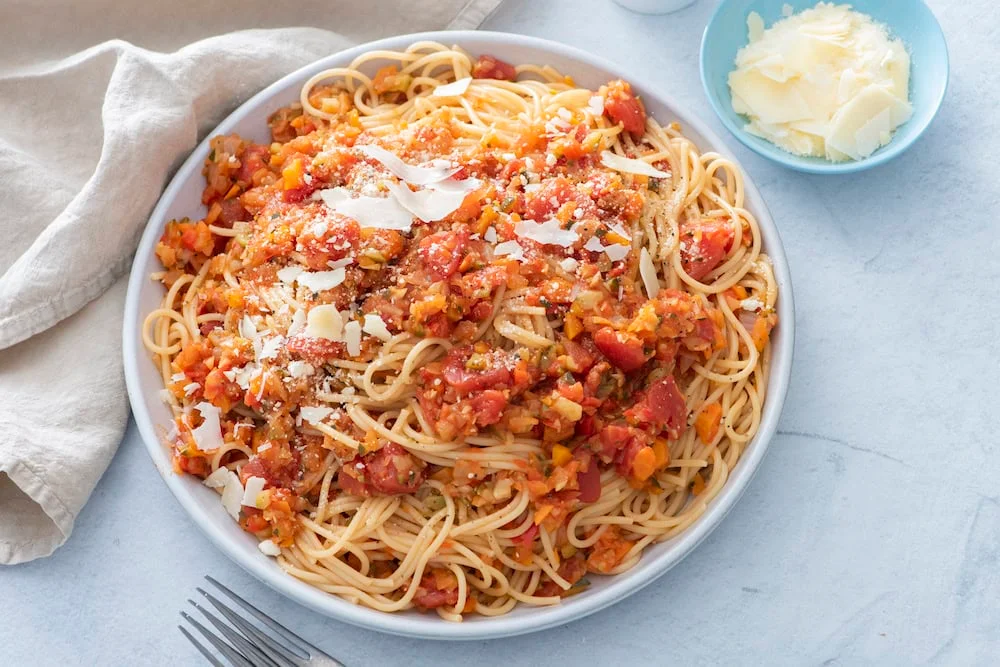
This quick vegetable-rich tomato sauce takes its cue from Italian Bolognese, with finely chopped vegetables simmered until tender. Spoon it over pasta or rice, or serve it with grilled chicken.
Ingredients
- 1red pepper
- 2 mediumcarrots, peeled and chopped into chunks
- 2 smallcourgettes, chopped into chunks
- 1 smallonion, chopped into chunks
- 2 smallgarlic cloves
- 15 ml (1 tablespoon)olive oil
- 1dried bay leaf
- 15 ml fresh thyme or 2.5 ml dried thyme (1 tablespoon fresh or 1/2 teaspoon dried)thyme
- 1 teaspoonkosher salt
- 30 ml (2 tablespoons)tomato purée
- 1 teaspoonsugar
- 411 g (14.5-ounce can)unsalted chopped tomatoes
- 120 ml (1/2 cup)water
Instructions
- 1
Chop onion
Put the onion chunks and garlic in a food processor and pulse until finely chopped. Remove the mixture and set it aside.
- 2
Chop vegetables
Add the carrots, courgettes and red pepper to the food processor and pulse until they are in small pieces.
- 3
Cook aromatics
Heat 15 ml (1 tablespoon) of olive oil in a large pot over a medium heat. Add the onion and garlic and sauté for 3 minutes.
- 4
Add vegetables
Stir in the chopped vegetable mixture and cook for a further 3 minutes.
- 5
Season the mixture
Mix in the thyme, bay leaf and salt.
- 6
Stir in purée
Add the tomato purée and stir until it coats all the ingredients.
- 7
Simmer the sauce
Add the remaining ingredients and stir. Bring the mixture to a simmer, cover and cook for 30 minutes, stirring occasionally.
- 8
Serve the sauce
Toss the sauce with pasta, or serve it over rice or chicken.
What is veggie Bolognese sauce?
Bolognese is an Italian-style sauce traditionally associated with a slow-cooked meat and tomato base. This vegetable version uses chopped carrots, courgettes, pepper, onion and garlic for a quick, hearty sauce.
The food processor cuts the vegetables into small pieces, helping them cook evenly and blend into the tomatoes during the simmer.
Nutrition and macros by portion
The nutrition label shows one serving as written: 100 calories, 3g protein, 16g carbs, 4g fat.
| Portion | Adjustment | kcal | Protein | Carbs | Fat |
|---|---|---|---|---|---|
| Lighter | Use less olive oil | 70 kcal | 2g | 11g | 3g |
| This serving | As written | 100 kcal | 3g | 16g | 4g |
| Hungry | Serve over pasta | 150 kcal | 5g | 24g | 6g |
The carrots and tomatoes provide most of the carbohydrates, while olive oil supplies most of the fat; the vegetables contribute a modest amount of protein. For a more balanced plate, serve the sauce with a protein source such as grilled chicken or beans alongside pasta or rice.
Why the vegetables are chopped finely
A fine chop: pulsing the onion and garlic separately from the other vegetables gives you better control over their size. Use short pulses and check the texture often so the vegetables are chopped, not puréed.
Even pieces: carrots are firmer than courgettes, so smaller pieces help the whole mixture soften in the same simmering time.
Building the flavour
Onion and garlic: sautéing them first in olive oil gives the sauce its savoury starting point. Keep the heat moderate and stir so they soften without catching.
Tomato purée: stirring it through before adding the remaining ingredients helps distribute its concentrated tomato flavour throughout the vegetables.
The simmering stage
Covered cooking: the sauce simmers for 30 minutes with the lid on, giving the vegetables time to become tender. Stir occasionally to prevent sticking and check that it is still gently simmering.
Doneness: the carrots should be soft when tested, and the sauce should look cohesive rather than watery. If the vegetables need longer, continue cooking until tender.
Balancing the tomato flavour
Tomatoes and sugar: the sugar is added with the chopped tomatoes and water to balance their acidity. Taste the sauce near the end and adjust the salt if needed.
Bay and thyme: the bay leaf infuses the sauce as it cooks, while thyme adds a savoury herbal note. Remove the bay leaf before serving.
Ways to serve it
Pasta: toss the sauce through cooked pasta so the finely chopped vegetables cling to each piece. A little pasta cooking water can help it coat the pasta.
Other plates: spoon it over rice or serve it with grilled chicken, as suggested in the recipe. It also works as a vegetable-forward sauce for a simple supper.
Recipe notes & tips
- Pulse the vegetables in short bursts so they stay finely chopped rather than turning into a purée.
- Use a large pot to give the vegetables room to cook evenly.
- Stir the tomato purée through the vegetables before adding the tomatoes and water.
- Keep the sauce at a gentle simmer and stir occasionally during the 30-minute cook.
- Remove the bay leaf before serving.
Variations
- Add mushrooms: pulse them with the other vegetables for another savoury layer.
- Use dried thyme: measure 2.5 ml (1/2 teaspoon) instead of the fresh thyme.
- Make it spicy: add chilli flakes to the pot with the thyme and bay leaf.
- Add beans: stir in cooked beans near the end for a more substantial sauce.
- Blend the texture: briefly blend some of the finished sauce if you prefer it smoother.
Common mistakes to avoid
- Over-processing: the vegetables can become watery and paste-like; pulse in short bursts and check between them.
- Crowding the food processor: the pieces may chop unevenly; process the vegetables in batches if needed.
- Cooking over high heat: the onion and garlic may catch; keep the pot at a medium heat and stir.
- Skipping the occasional stir: sauce can stick to the base; stir from time to time while it simmers.
- Serving with the bay leaf: remove it from the pot before portioning.
How to store
Cool the sauce and refrigerate it in a covered container for up to 3 days. Reheat gently in a saucepan, stirring occasionally, until piping hot; add a splash of water if it has thickened.
Frequently asked questions
Can I make this sauce without a food processor?
Yes. Finely chop the onion, garlic, carrots, courgettes and pepper by hand. Aim for small, fairly even pieces so they cook through in the stated time.
Can I use dried thyme instead of fresh?
Yes. The recipe specifies 2.5 ml (1/2 teaspoon) of dried thyme as an alternative to 15 ml (1 tablespoon) of fresh thyme.
How can I tell when the sauce is ready?
After the 30-minute simmer, the vegetables should be tender and the sauce should look cohesive. If the carrots are still firm, cook a little longer and check again.
What can I serve with veggie Bolognese?
Toss it with pasta or spoon it over rice or chicken. The sauce can also accompany another protein of your choice.
Can I freeze the sauce?
Yes. Once cooled, freeze it in a suitable airtight container. Thaw it in the fridge and reheat gently until piping hot.
Cook it from the original
This recipe comes from weelicious.com. Their page has the author’s own photos, notes and tips — the best place to cook it from.
Open the recipe on weelicious.com