
Dates and Nuts Halwa
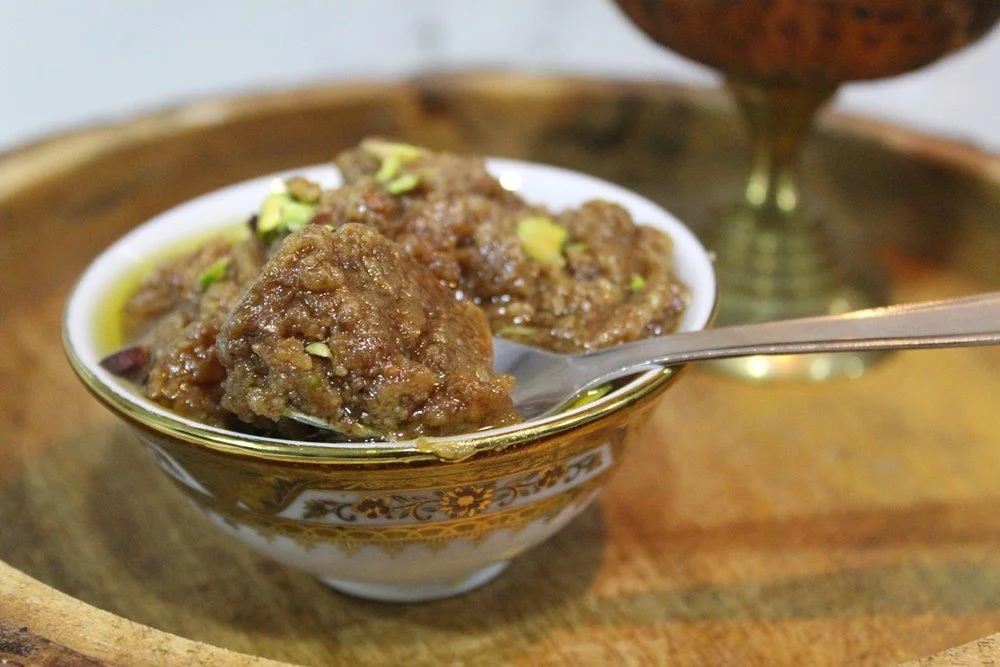
This dates and nuts halwa is a rich Indian sweet made by blending soaked nuts and dates with milk, then cooking the mixture with sugar and ghee until thick. It makes a warming festive dessert, particularly for Diwali, and can be served straight from the pan.
Ingredients
- About 280 g (2 cups)mixed nuts, such as cashews, pistachios, walnuts, almonds and hazelnuts
- 10dates
- About 100 g (½ cup)brown sugar or palm sugar
- 360 ml (1½ cups)warm milk
- 60 ml (¼ cup)ghee
Instructions
- 1
Soak the mixture
Put the nuts and dates in a bowl, pour over the warm milk and leave to soak for 30 minutes.
- 2
Blend until smooth
Transfer the soaked nuts, dates and milk to a blender and purée until smooth.
- 3
Cook the purée
Heat 15 ml (1 tablespoon) of the ghee in a kadai. Add the purée and cook over a low heat for 5 minutes, stirring, until the raw smell has gone.
- 4
Add the sugar
Stir in the brown sugar or palm sugar. Continue cooking over a low heat until the sugar melts and the halwa thickens.
- 5
Finish with ghee
Add the remaining ghee a little at a time, continuing to cook until the halwa pulls away from the sides of the pan. This should take about 8–10 minutes.
- 6
Serve warm
Serve the halwa warm.
What is dates and nuts halwa?
Halwa is a broad family of South Asian sweets, with recipes and textures that vary by region and ingredients. This version is a dense, spoonable sweet made from dates, mixed nuts, milk, sugar and ghee.
The dates give the mixture sweetness and body, while the nuts bring a rounded, toasted flavour. Soaking softens both before blending, helping them cook into a cohesive halwa.
Nutrition and macros by portion
The nutrition label shows one serving as written: 350 calories, 0g protein, 0g carbs, 0g fat.
| Portion | Adjustment | kcal | Protein | Carbs | Fat |
|---|---|---|---|---|---|
| Lighter | Use less ghee | 245 kcal | 0g | 0g | 0g |
| This serving | As written | 350 kcal | 0g | 0g | 0g |
| Hungry | Serve a larger portion | 525 kcal | 0g | 0g | 0g |
The nuts and ghee contribute most of the fat, while the dates, added sugar and milk provide carbohydrates; the nuts and milk also contribute protein. Serve a modest piece alongside fruit or after a meal with a lighter main course to balance the richness.
Choosing the nuts and dates
Mixed nuts: Cashews, pistachios, walnuts, almonds and hazelnuts are suggested, but the balance is flexible. A mixture gives the halwa a more layered flavour than relying on just one nut.
Dates: Remove any stones before soaking. Soft dates will blend readily; firmer dates benefit from the full 30-minute soak in warm milk.
Get a smooth base
Soaking: Give the nuts and dates the stated 30 minutes in warm milk so they soften before blending. Use the soaking milk in the purée rather than draining it.
Blending: Aim for a smooth purée before it goes into the pan. A smooth base cooks more evenly and makes it easier to judge when the halwa has thickened.
Cook gently and watch the texture
Low heat: Cook the purée gently for the initial 5 minutes, stirring so it does not catch on the bottom of the kadai. The raw aroma should fade before you add the sugar.
Doneness: Once the sugar has melted, keep cooking until the mixture thickens. After adding the ghee gradually, look for the halwa to pull away from the sides of the pan; the final stage takes about 8–10 minutes.
Serving and timing
Timing: The recipe takes 40 minutes in total, including the 30-minute soak. Have the sugar and ghee ready before you start cooking, as the mixture needs attention once it is in the pan.
To serve: This halwa is intended to be served warm. Offer it as a small dessert after a meal or as part of a festive spread.
The role of milk and ghee
Milk: Warm milk softens the dates and nuts, and becomes part of the blended base. The recipe relies on it for the mixture’s soft, smooth starting texture.
Ghee: Some ghee is used to begin cooking the purée, while the rest is added gradually near the end. Adding it little by little helps it blend into the thickening halwa.
Recipe notes & tips
- Use warm rather than cold milk to help soften the dates and nuts during soaking.
- Scrape down the blender as needed so the purée is smooth throughout.
- Keep the heat low while cooking the purée and stir regularly to prevent it catching.
- Add the remaining ghee gradually rather than pouring it in all at once.
- Use a wide, heavy-based pan if available to give the mixture room to cook evenly.
Variations
- Change the nut mix: Use different proportions of the suggested nuts to shift the flavour and texture.
- Choose palm sugar: Use palm sugar in place of brown sugar for a different sweetener.
- Use only cashews: Make the mixture with cashews alone for a simpler nut profile.
- Keep it rustic: Blend the soaked mixture briefly if you prefer a little more texture.
- Adjust the sweetness: Use either brown sugar or palm sugar and tailor the amount to taste.
Common mistakes to avoid
- Skipping the soak: The nuts and dates may be harder to blend; allow the full 30 minutes in warm milk.
- Draining the milk: The recipe uses the soaking liquid as part of the purée; blend it with the nuts and dates.
- Cooking over high heat: The mixture can catch before it thickens; keep the heat low and stir regularly.
- Adding all the ghee at once: It may not incorporate as evenly; add it a little at a time.
- Stopping too early: If the halwa has not pulled away from the sides, continue cooking and check again.
How to store
Cool the halwa, transfer it to an airtight container and refrigerate for up to 3 days. Reheat gently in a pan over a low heat, stirring until warm; add a small splash of milk if it seems too firm.
Frequently asked questions
Can I use just one kind of nut?
Yes. The recipe calls for mixed nuts, but you can use one type, such as cashews or almonds, while keeping the total quantity the same.
Do I need to remove the date stones?
Yes, remove any stones before soaking and blending.
Can I use brown sugar instead of palm sugar?
Yes. The recipe gives brown sugar and palm sugar as alternatives, so use either one.
How do I know when the halwa is ready?
It should be thick, and after the ghee is added it should pull away from the sides of the pan. The final cooking stage takes about 8–10 minutes.
Can I make the halwa ahead?
Yes. Refrigerate it in an airtight container and reheat gently before serving.
Cook it from the original
This recipe comes from yummytummyaarthi.com. Their page has the author’s own photos, notes and tips — the best place to cook it from.
Open the recipe on yummytummyaarthi.com