
Coconut Halwa Recipe | Nariyal Ka Halwa Recipe | Thengai Halwa Recipe
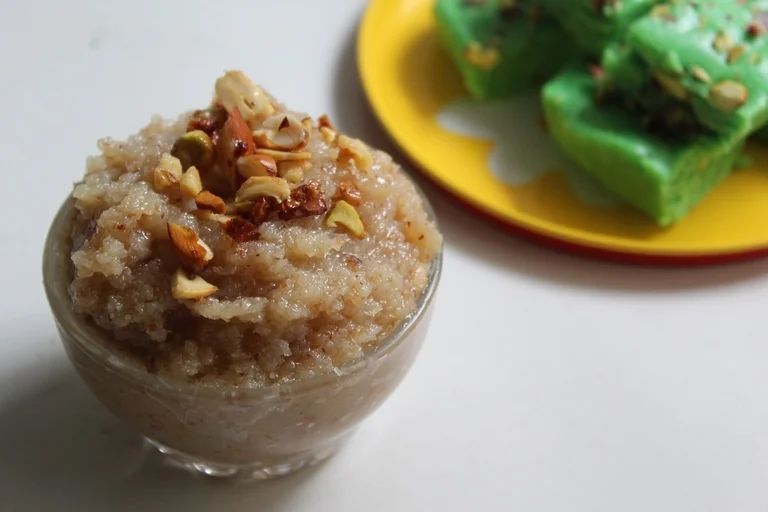
Coconut halwa is a rich Indian sweet made by cooking desiccated coconut with milk, sugar, ghee and nuts until thick. This version adds a smooth almond paste and comes together in about 40 minutes.
Ingredients
- 80 g (1 cup)desiccated coconut
- 240 ml (1 cup)milk
- 45 ml (3 tbsp)ghee
- 67 g (⅓ cup), or to tastesugar
- 22 g (3 tbsp), finely choppedcashews
- 30 g (3 tbsp)raisins
- 35 g (¼ cup)almonds
- 120 ml (½ cup)milk
- 2.5 ml (½ tsp)ground cardamom
Instructions
- 1
Blend almonds
Put the almonds in a blender and grind them. Add 120 ml (½ cup) milk and blend into a smooth paste, then set aside.
- 2
Fry the nuts
Heat 15 ml (1 tbsp) ghee in a pan. Fry the nuts, then take them out and set aside.
- 3
Toast coconut
Add the desiccated coconut to the same pan and stir-fry for 1 minute.
- 4
Cook with milk
Pour in 240 ml (1 cup) milk and cook for 2–3 minutes.
- 5
Add almond paste
Stir in the almond paste and cook until the mixture thickens.
- 6
Add sugar and ghee
Mix in the sugar and cook until the mixture leaves the sides of the pan. Add the remaining ghee a little at a time, mixing well.
- 7
Finish the halwa
Stir in the ground cardamom and fried nuts until evenly combined.
- 8
Serve
Serve the halwa.
What is coconut halwa?
Halwa is a broad family of South Asian sweets, with recipes and textures that vary from place to place. This coconut version cooks desiccated coconut with milk and sugar, then enriches it with ghee, almonds and cardamom.
The almond paste gives this recipe extra body, while the fried nuts and raisins add contrast to the soft, thick mixture.
Nutrition and macros by portion
The nutrition label shows one serving as written: 450 calories, 8g protein, 50g carbs, 29g fat.
| Portion | Adjustment | kcal | Protein | Carbs | Fat |
|---|---|---|---|---|---|
| Lighter | Use less ghee and sugar | 315 kcal | 6g | 35g | 20g |
| This serving | As written | 450 kcal | 8g | 50g | 29g |
| Hungry | Serve a larger portion | 675 kcal | 12g | 75g | 44g |
Most of the carbohydrates come from the sugar, coconut and raisins, while ghee, coconut and almonds contribute much of the fat. Almonds, cashews and milk provide some protein. Balance a small serving with fresh fruit or enjoy it after a meal with a savoury main.
Preparing the almonds
Almond paste: blending the almonds with milk first helps them mix smoothly into the coconut. Keep blending until the paste looks even, then set it aside while you fry the nuts.
Toasting the coconut
Coconut: a brief stir-fry in the pan starts to warm and toast it before the milk goes in. Stir continuously for the stated minute so it heats evenly without catching.
Milk: cook the coconut in the first portion of milk for 2–3 minutes before adding the almond paste. This gives the coconut time to soften.
Getting the right thickness
Almond paste: after it is mixed in, cook until the halwa thickens before adding the sugar. Keep stirring so the mixture cooks evenly.
Sugar and ghee: the key cue is that the mixture pulls away from the sides of the pan. Add the remaining ghee gradually at this stage, mixing it in as you go.
Nuts and cardamom
Fried nuts: the recipe does not specify which nuts to fry; the chopped cashews and raisins are the likely garnish. Set them aside after frying, then stir them back in at the end.
Cardamom: add it with the fried nuts after the mixture has thickened. This keeps its fragrance noticeable in the finished sweet.
Serving the halwa
Serve the halwa warm or at room temperature in small portions, as it is rich and sweet. A few extra toasted nuts on top can make the garnish more distinct.
For a more balanced dessert plate, pair a modest serving with fresh fruit or serve it after a savoury meal.
Recipe notes & tips
- Blend the almonds thoroughly with the second portion of milk for a smooth paste.
- Keep the coconut moving as it toasts so it heats evenly.
- Stir regularly after adding the almond paste to help prevent sticking.
- Add the remaining ghee gradually rather than pouring it in all at once.
- Taste the halwa before adding all the sugar if you prefer it less sweet.
Variations
- Extra cardamom: add a little more ground cardamom for a stronger aroma.
- Pistachio garnish: replace some of the cashews with chopped pistachios.
- Less sweet: start with less sugar and add more to taste.
- Saffron: stir in a few saffron strands with the cardamom for a different fragrance.
Common mistakes to avoid
- Over-toasting the coconut: it can catch quickly, so stir it continuously for the stated minute.
- Lumpy almond paste: blend the almonds thoroughly with the milk before adding them to the pan.
- Adding sugar too early: follow the method and wait until the almond mixture has thickened.
- Pouring in all the ghee at once: add it little by little and mix well.
- Stopping before the mixture thickens: cook until it pulls away from the sides of the pan.
How to store
Cool the halwa, cover it and refrigerate for up to 3 days. Reheat gently in a pan or microwave, stirring as needed; add a small splash of milk if it seems too firm.
Frequently asked questions
Can I make coconut halwa ahead?
Yes. Refrigerate it in a covered container for up to 3 days, then reheat gently before serving.
How do I know when the halwa is ready?
After the sugar and ghee are mixed in, cook until the mixture leaves the sides of the pan.
Can I use fresh coconut instead?
This method is written for desiccated coconut, which has a different moisture level from fresh coconut. Changing it may affect the cooking time and texture.
Which nuts should I fry?
The method simply says to fry the nuts. The chopped cashews and raisins are the likely garnish; the almonds are blended into the paste.
Can I adjust the sweetness?
Yes. The ingredient list allows sugar to taste, so start with less and add more as needed.
Cook it from the original
This recipe comes from yummytummyaarthi.com. Their page has the author’s own photos, notes and tips — the best place to cook it from.
Open the recipe on yummytummyaarthi.com