
Pork Fried Rice
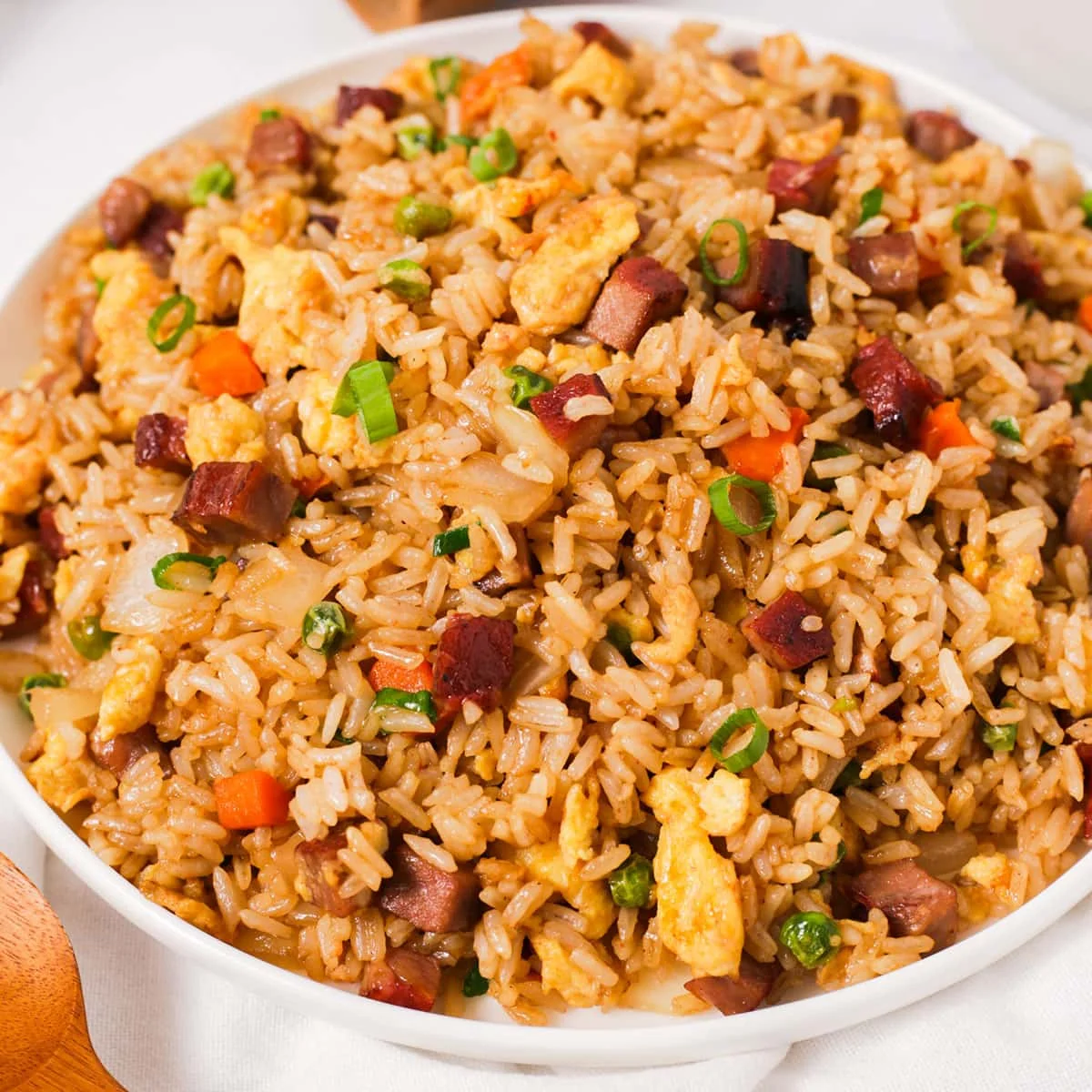
This quick Chinese-style fried rice combines day-old rice with char siu, egg and vegetables in a savoury, lightly smoky sauce. It is a handy way to turn cooked rice into a filling meal in about 15 minutes.
Ingredients
- 300 g (2 cups)cooked white rice, preferably long-grain and a day old
- 113 g (4 oz)Chinese barbecue roast pork, finely diced (char siu; homemade or shop-bought)
- 2 largeeggs, beaten
- ¼ largeyellow onion, diced
- 45 ml (3 tablespoons)frozen peas and carrots, thawed (or fresh peas and diced carrots)
- 15 ml (1 tablespoon)Shaoxing rice wine (optional)
- 30 ml (2 tablespoons)reduced-sodium light soy sauce
- 15 ml (1 tablespoon)oyster sauce
- 5 ml (1 teaspoon)sesame oil (optional)
- 1 stalkspring onion, thinly sliced (optional)
- As neededneutral oil, for cooking
Instructions
- 1
Loosen the rice
Gently rub the cooked rice between your hands to break up any clumps. You can wear gloves or place the rice in a resealable bag; set it aside once separated.
- 2
Heat the pork
Set a wok or large pan over medium-high heat and add about 15 ml (1 tablespoon) of oil. When hot, add the diced roast pork and stir-fry for 10–15 seconds, just to warm it through.
- 3
Cook the vegetables
Add the onion, peas and carrots, then stir-fry for 10–15 seconds, until the onion is just translucent. Push the pork and vegetables to one side; if possible, shift that side of the wok or pan off the heat to help prevent the slightly sweet pork from burning.
- 4
Scramble the eggs
If needed, add about 15–30 ml (1–2 tablespoons) of oil to the empty side of the pan. Once hot, pour in the beaten eggs and scramble until just cooked, then mix them with the pork and vegetables.
- 5
Fry the rice
Add the prepared rice and stir-fry for a few seconds to combine. Drizzle the Shaoxing wine around the pan and stir-fry for 15–30 seconds, until the rice smells fragrant and the alcohol has cooked off.
- 6
Add the sauces
Pour in the soy sauce and oyster sauce. Stir and toss until the ingredients are evenly combined and the rice has an even colour.
- 7
Finish the rice
If using, add the sesame oil and sliced spring onion. Stir-fry for a few more seconds.
- 8
Serve while hot
Serve the fried rice straight away, with extra sliced spring onion on top if you like.
What is pork fried rice?
Pork fried rice is a Chinese-style dish of cooked rice quickly stir-fried with pork, egg, vegetables and seasonings. Fried rice has many regional and household versions, and this one uses char siu, the sweet-savoury Chinese barbecue pork often used in rice dishes.
Day-old rice, a hot pan and a short cooking time help keep the grains distinct. Char siu brings plenty of seasoning, while egg and vegetables make the dish a satisfying meal on its own.
Nutrition and macros by portion
The nutrition label shows one serving as written: 443 calories, 27g protein, 59g carbs, 10g fat.
| Portion | Adjustment | kcal | Protein | Carbs | Fat |
|---|---|---|---|---|---|
| Lighter | Use less oil | 310 kcal | 19g | 42g | 7g |
| This serving | As written | 443 kcal | 27g | 59g | 10g |
| Hungry | Serve a larger portion | 665 kcal | 41g | 89g | 14g |
The rice supplies most of the carbohydrates, while the char siu and eggs contribute much of the protein. Oil, egg yolk and the sauces account for much of the fat and sodium. To balance the plate, serve the rice with a generous portion of vegetables such as bok choy.
Choose and prepare the rice
Day-old rice: chilled, cooked rice is usually drier than freshly made rice, so it is less likely to turn sticky in the pan. Break up clumps gently before you start cooking, and have all the other ingredients ready to go.
Fresh rice: if that is what you have, spread it out to let steam escape and cool it before frying. Handle it gently so the grains do not mash together.
Keep the char siu from burning
Sweet glaze: char siu can brown quickly because its surface may contain sugar. Warm it briefly rather than leaving it in the hottest part of the wok for too long.
Pan space: push the pork and vegetables aside before adding the egg. If your pan allows, move them away from the heat while the egg cooks.
Cook the egg just until set
Hot oil: add the beaten egg to the oiled side of the pan once the oil is hot. Scramble it until it has just set; it will be mixed with the other ingredients and cooked further as you toss the rice.
Room to move: a large pan makes it easier to scramble the egg without pushing everything out of the wok. If the pan is crowded, keep tossing so the ingredients heat evenly.
Season and judge the finish
Sauce: soy sauce and oyster sauce season the rice and coat it with a savoury flavour. Toss thoroughly so there are no concentrated patches of sauce.
Fragrance: the rice should smell aromatic after the wine cooks briefly in the hot pan. Add sesame oil and spring onion at the end to preserve their fragrance.
Keep the cooking brisk
Short stages: the pork and vegetables need only seconds before the egg and rice go in. Have the sauces measured and nearby so the rice can be served hot without delay.
Serving idea: serve it as a main meal, or alongside bok choy with oyster sauce for a vegetable side. It also pairs with sesame chicken or Mongolian beef as part of a larger spread.
Recipe notes & tips
- Measure the sauces and slice the spring onion before heating the wok.
- Use a large wok or pan so the rice can be tossed rather than packed together.
- Break the rice into separate grains before it goes into the pan.
- Keep the pork moving and briefly warm it to avoid scorching its glaze.
- Add the Shaoxing wine around the hot pan so it cooks quickly and perfumes the rice.
- Taste before adding extra soy sauce, as the pork and oyster sauce are already seasoned.
Variations
- Add more vegetables: Increase the peas and carrots for extra colour and texture.
- Use fresh vegetables: Swap the thawed mixture for fresh peas and finely diced carrots.
- Skip the wine: Leave out the Shaoxing rice wine if you do not have it.
- Leave out sesame oil: Omit it for a less pronounced toasted sesame aroma.
- Make it meat-free: Replace the char siu with diced firm tofu and use a vegetarian oyster-style sauce.
Common mistakes to avoid
- Using clumped rice: Break it apart before frying so it heats evenly.
- Overcooking the pork: Stir-fry it only briefly, as the sweet glaze can burn.
- Adding egg to a cold pan: Heat the oil first so the egg begins to set promptly.
- Crowding the pan: Use a large wok or pan so the rice can be tossed and heated evenly.
- Pouring in too much sauce at once: Measure it and toss well to coat the rice without leaving wet patches.
How to store
Cool leftovers promptly and refrigerate in a sealed container for up to 2 days. Reheat until piping hot throughout, stirring partway through; avoid reheating more than once.
Frequently asked questions
Can I use freshly cooked rice?
Yes, but let it cool and allow steam to escape first. Drier rice is easier to stir-fry without becoming clumpy.
What is char siu?
Char siu is Chinese barbecue roast pork, typically known for its savoury, sweet glaze. Use homemade or shop-bought pork, diced small for quick heating.
Can I make this without a wok?
Yes. Use the largest frying pan you have and cook over medium-high heat, tossing the ingredients frequently.
Is the Shaoxing wine essential?
No, it is optional. The rice will still be seasoned by the soy and oyster sauces without it.
How do I stop the pork from burning?
Warm the diced char siu for only 10–15 seconds, then push it aside with the vegetables. If possible, move that part of the pan away from the heat while you cook the egg.
Cook it from the original
This recipe comes from twoplaidaprons.com. Their page has the author’s own photos, notes and tips — the best place to cook it from.
Open the recipe on twoplaidaprons.com