
Stuffed Eggplant with Vegan Pork
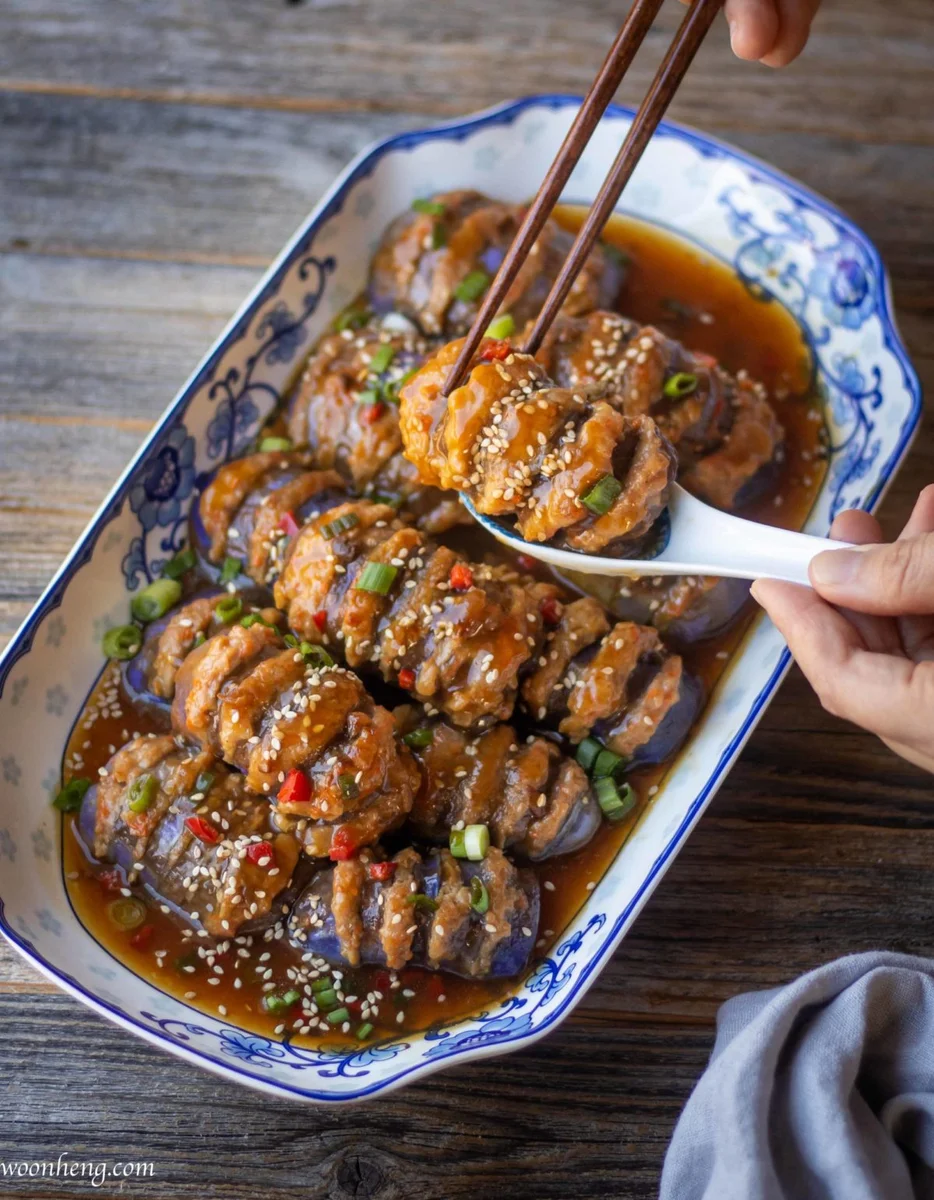
Chinese eggplant is slit, filled with a savoury vegan pork mixture, then pan-fried and braised in a fermented bean sauce. Inspired by Hakka yong tau foo, it makes a flavourful main to serve with warm rice.
Ingredients
- 680 g (1.5 lb)Chinese eggplant
- 1 packageOmniPork Ground
- 2.5 ml (½ teaspoon)ginger juice
- 45 ml (3 tablespoons)finely minced carrot
- 15 ml (1 tablespoon)vegan oyster sauce
- 15 ml (1 tablespoon)light soy sauce
- A drizzlesesame oil
- A dashpepper
- As neededcooking oil
- 30 ml (2 tablespoons)light soy sauce
- 30 ml (2 tablespoons)vegan oyster sauce
- 30 ml (2 tablespoons)doubanjiang (fermented bean sauce)
- 710 ml (3 cups), plus more as neededwater
- 30 ml (2 tablespoons) for coating, 15 ml (1 tablespoon) for dusting, and 10 ml (2 teaspoons) for the slurrycornflour
- 15 ml (1 tablespoon)chopped red jalapeños
- A handfulchopped spring onions
- A sprinklingtoasted sesame seeds
Instructions
- 1
Mix the filling
Put the OmniPork Ground in a bowl. Add the carrot, ginger juice, 15 ml (1 tablespoon) each of vegan oyster sauce and light soy sauce, the sesame oil and pepper. Mix until the filling is thoroughly combined and thick and sticky.
- 2
Cut the eggplant
Wash and dry the eggplant. Trim off the ends, then cut it crosswise into sections about 5 cm (2 inches) long. Stand each section upright and halve it vertically, then place it cut-side down with the skin facing you.
- 3
Make the slits
Use two fork handles as guides to stop the knife cutting right through the eggplant. Make 4–5 slits, each about 5 mm deep, in each piece. The recipe yields about 22 eggplant halves.
- 4
Fill the eggplant
Put 30 ml (2 tablespoons) of cornflour in a small bowl and rub it generously into the slits. Use the handle of a spoon or a butter knife to press the filling into each opening, then smooth the top and set the pieces on a baking tray. Dust them with a further 15 ml (1 tablespoon) of cornflour passed through a fine-mesh sieve.
- 5
Brown the pieces
Pour a thin layer of cooking oil into a large non-stick frying pan, enough to cover its base. Arrange the eggplant in a single layer, filling-side up, working in two batches if needed. Fry over medium-low heat until the underside is lightly browned, then carefully turn and cook for about 3–5 minutes, until a thin crust forms.
- 6
Braise in sauce
Turn the eggplant filling-side up again. Add 15 ml (1 tablespoon) each of light soy sauce, vegan oyster sauce and doubanjiang per batch; the recipe halves the sauce quantities when cooking in two batches. Slowly pour in 355 ml (1½ cups) of water, bring to the boil, cover and braise over medium heat for 2–3 minutes, until the eggplant is cooked through and the flavours have melded.
- 7
Thicken the sauce
While the eggplant braises, mix 10 ml (2 teaspoons) of cornflour with 15 ml (1 tablespoon) of water to make a slurry. Uncover the pan and swirl in the slurry to thicken the sauce. Transfer the eggplant to a plate and repeat the cooking process with the remaining pieces if working in batches.
- 8
Garnish and serve
Top with the chopped red jalapeños, spring onions and toasted sesame seeds. Serve warm with rice.
What is stuffed eggplant with vegan pork?
This dish takes inspiration from Hakka yong tau foo, a style of stuffed food often associated with tofu and other vegetables. Here, Chinese eggplant holds a savoury vegan pork filling and is finished in a rich, fermented bean sauce.
The method brings together two useful textures: a lightly browned outside and tender, saucy eggplant. Rice is a natural partner for the savoury sauce.
Nutrition and macros by portion
The nutrition label shows one serving as written: 300 calories, 17g protein, 34g carbs, 12g fat.
| Portion | Adjustment | kcal | Protein | Carbs | Fat |
|---|---|---|---|---|---|
| Lighter | Use less cooking oil | 210 kcal | 12g | 24g | 8g |
| This serving | As written | 300 kcal | 17g | 34g | 12g |
| Hungry | Add more rice | 450 kcal | 26g | 51g | 18g |
The eggplant and cornflour provide much of the carbohydrate, while the vegan pork contributes most of the protein and some of the fat. The cooking oil and sesame oil add fat, and the soy, oyster-style and bean sauces contribute much of the sodium. Serve with a moderate portion of rice and add a green vegetable to round out the plate.
Choosing the eggplant
Chinese eggplant: Its long shape is easy to cut into sections and fill. Choose firm eggplants so the pieces hold together while you slit and cook them.
Even pieces: Cut the sections to a similar length where possible. This helps them cook at a similar pace during the short braise.
Getting the filling to hold
Sticky mixture: Mix the vegan pork with the carrot, ginger juice, sauces, sesame oil and pepper until it becomes thick and cohesive. That texture makes it easier to press into the narrow slits.
Cornflour coating: Rub cornflour into the openings before adding the filling. It helps the mixture adhere to the eggplant rather than slipping out during cooking.
Cutting without going through
Fork guides: Set the fork handles alongside the eggplant as a barrier for the knife. Make shallow slits rather than cutting through the piece, leaving the base intact to hold the filling.
Gentle filling: Use a spoon handle or butter knife to ease the mixture into the slits. Press just enough for it to stick, then smooth the top.
Browning and braising
First side: Start with the filling facing up and fry until the underside is lightly browned. Turn carefully so the filled side can develop a thin crust without the filling being knocked loose.
Short braise: Add the sauce and water, cover, and cook for 2–3 minutes. The eggplant should be cooked through before you stir in the cornflour slurry.
Working in batches
Single layer: Arrange the pieces without piling them up, using two batches if needed. A crowded pan makes it harder to brown them evenly.
Split the sauce: The recipe uses half the listed sauce and 355 ml (1½ cups) of water for each batch when cooking in two rounds. Repeat the same process for the remaining eggplant.
Serving with rice
Rice: Serve the eggplant warm alongside a bowl of rice, which works well with the savoury bean sauce.
Fresh finish: Add the jalapeños, spring onions and toasted sesame seeds just before serving. Their fresh, sharp and nutty notes contrast with the rich braise.
Recipe notes & tips
- Dry the eggplant after washing so it is easier to handle while cutting.
- Use a sharp knife for the slits and keep the fork handles in place as cutting guides.
- Press the filling in gently so the eggplant sections stay intact.
- Cook in two batches if the pieces will not fit in a single layer.
- Mix the cornflour slurry just before adding it so it is evenly combined.
- Serve the dish as soon as it is garnished, while the eggplant is warm.
Variations
- Adjust the heat: Use fewer chopped jalapeños for a milder finish.
- Add ginger: Increase the ginger juice slightly for a more pronounced ginger note.
- Change the garnish: Use extra spring onions in place of some of the jalapeños.
- Serve with noodles: Offer the eggplant with noodles instead of rice.
- Make it less saucy: Add the slurry gradually and stop once the sauce reaches your preferred thickness.
Common mistakes to avoid
- Cutting all the way through: Keep the base intact so the filling stays in place.
- Loose filling: Mix until the vegan pork mixture is thick and sticky before stuffing.
- Overcrowding the pan: Cook in two batches so the eggplant can brown in a single layer.
- Turning too roughly: Flip the pieces carefully to avoid dislodging the filling.
- Adding slurry too soon: Mix it while the eggplant braises, then stir it in after uncovering the pan.
How to store
Refrigerate leftovers in an airtight container and use within 3 days. Reheat gently in a covered pan until hot throughout, adding a splash of water if the sauce has thickened too much.
Frequently asked questions
Can I cook the eggplant in one batch?
Yes, if all the pieces fit in a single layer in your pan. Otherwise, cook in two batches as described, dividing the sauce and water between them.
How do I know when the eggplant is cooked?
After the covered braise, the eggplant should be tender all the way through. The recipe calls for 2–3 minutes over medium heat.
What can I use instead of OmniPork Ground?
Use a similar plant-based mince that can be mixed into a thick filling. The texture may vary, so mix until it is cohesive enough to press into the slits.
Is doubanjiang spicy?
Its heat varies by brand, and it also gives the sauce a fermented, savoury flavour. Adjust the amount to suit your preference.
What should I serve with this dish?
Warm rice is the suggested accompaniment. A green vegetable also makes a useful side.
Can I prepare the filling ahead?
You can mix the filling ahead and keep it covered in the fridge. Stuff and cook the eggplant when you are ready to serve.
Cook it from the original
This recipe comes from woonheng.com. Their page has the author’s own photos, notes and tips — the best place to cook it from.
Open the recipe on woonheng.com