
Brioche Bread
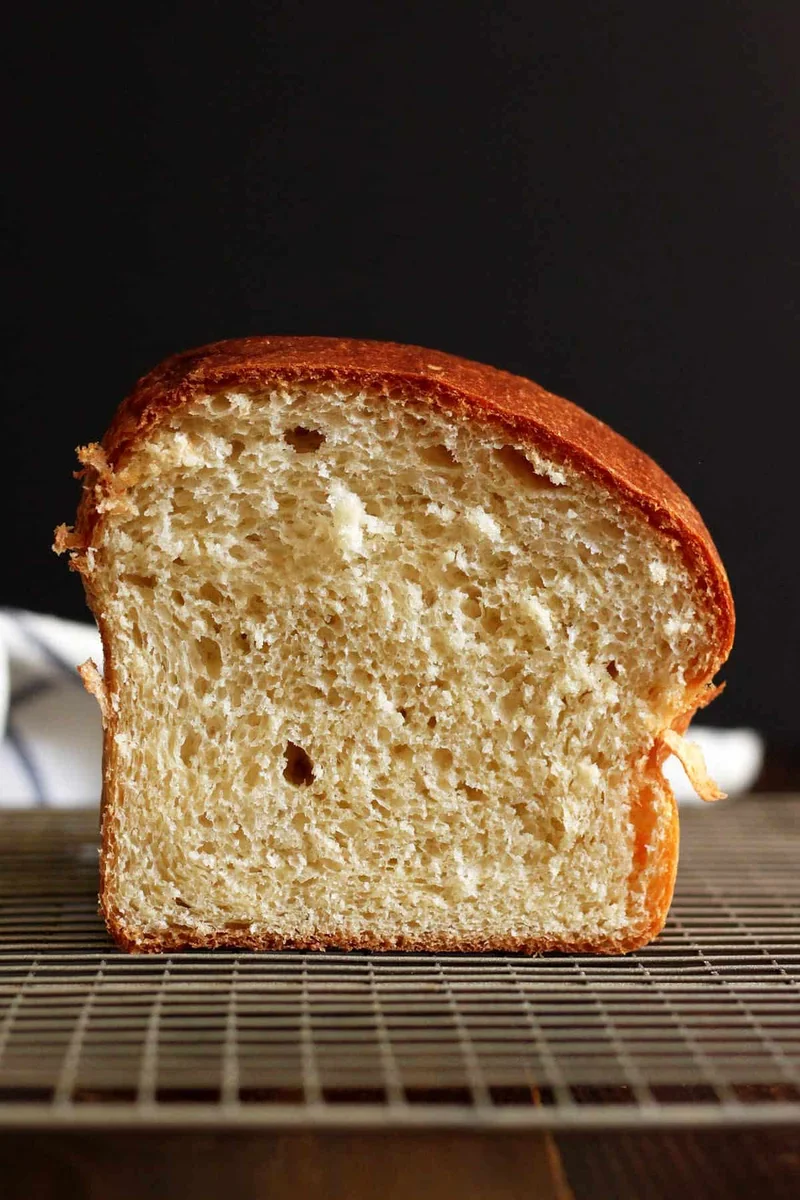
Brioche is a soft, rich French bread with a buttery crumb and a gentle sweetness. This loaf takes time to rise, but makes excellent toast, French toast, bread pudding and sandwiches.
Ingredients
- 3large eggs, at room temperature
- 28–42 g (2–3 tbsp)milk, at room temperature
- 2 tspactive dry yeast
- 45 g (¼ cup), dividedgranulated sugar
- 265 g (2 cups)plain flour
- 1 tspkosher salt
- 113 g (4 oz), thinly sliced and at room temperatureunsalted butter
- As neededextra flour for rolling
- 1whole egg
- 1 tbspmilk or water
Instructions
- 1
Bloom the yeast
Mix 2 tablespoons of the milk with 1 teaspoon of the sugar, then sprinkle the yeast over the top. Leave for about 10 minutes until puffy. If it does not puff up, repeat with fresh yeast to check that it is active.
- 2
Mix dry ingredients
In a small bowl, whisk together the remaining sugar, flour and salt until evenly combined.
- 3
Knead the dough
Lightly beat the 3 eggs in the stand mixer bowl with a hand whisk. Add the bloomed yeast mixture and the flour mixture. Fit the dough hook and knead on low speed, speed 2, for 15 minutes.
- 4
Check consistency
Check the dough occasionally as it kneads. If it seems too dry, sprinkle in the remaining 1 tablespoon of milk. After 15 minutes, it should pull away from the sides of the bowl.
- 5
Add the butter
Keep the mixer on speed 2 and add the softened butter a few pieces at a time, letting each addition work into the dough before adding more. This takes about 10 minutes. Knead for a further 10–20 minutes, until the dough pulls away from the bowl.
- 6
Shape and rise
Turn the dough out on to a lightly floured work surface and shape it into a ball. Put it in an oiled glass bowl and leave to rise at room temperature for 1 hour.
- 7
Choose fermentation
Either refrigerate the dough overnight, or leave it at room temperature until doubled in size, about 1–1½ hours, then continue to the next step.
- 8
Bring to temperature
If the dough has been refrigerated, let it come to room temperature before continuing.
- 9
Prepare the tin
Brush a loaf tin with melted butter or coat it with non-stick spray. Line it with baking parchment, leaving some overhang on both sides, then butter or spray the parchment too.
- 10
Shape and prove
Turn the dough on to a lightly floured work surface, knead it and shape it into an elongated loaf that fits the tin. Put it in a warm place, cover with a tea towel or cling film, and leave to rise until more than doubled and supple-looking, about 2–2½ hours.
- 11
Brush with egg
Lightly brush the top of the risen dough with egg wash.
- 12
Heat the oven
Preheat the oven to 175°C (350°F).
- 13
Glaze and bake
Brush the dough with egg wash once more. Bake for 30–35 minutes, until golden brown and a wooden skewer inserted into the loaf comes out clean.
- 14
Cool the loaf
Take the bread out of the oven and let it cool on a wire rack until safe to handle before removing it from the tin. Leave it to cool completely before slicing.
What is brioche?
Brioche is a French enriched bread, made with eggs and butter for a tender, rich crumb. It sits somewhere between everyday bread and a lightly sweet breakfast loaf.
This version is shaped as a loaf, making it easy to slice for toast, sandwiches or classic French toast. A slow rise gives the dough time to become light and supple.
Nutrition and macros by portion
The nutrition label shows one serving as written: 272 calories, 0g protein, 0g carbs, 0g fat.
| Portion | Adjustment | kcal | Protein | Carbs | Fat |
|---|---|---|---|---|---|
| Lighter | Serve a thinner slice | 190 kcal | 0g | 0g | 0g |
| This serving | As written | 272 kcal | 0g | 0g | 0g |
| Hungry | Add another slice | 408 kcal | 0g | 0g | 0g |
The recipe’s calories and macros are supplied per serving. In the loaf itself, flour and sugar provide most of the carbohydrates, butter contributes much of the fat, and eggs add protein and fat. Pair a slice with fruit or a savoury filling such as egg for a more rounded plate.
Why the dough needs time
Yeast: the initial bloom checks that the yeast is active before it goes into the dough. A foamy, puffy surface is a useful cue to move on.
Fermentation: after the first hour, the dough can rise at room temperature or rest in the fridge overnight. The chilled option spreads the work over two days, but the dough needs to come back to room temperature before shaping.
Getting the butter into the dough
Butter: use softened, thin slices and add them gradually while the mixer runs. Let each batch combine before adding the next so the dough can absorb the fat evenly.
Kneading: the dough may look loose as the butter goes in. Continue kneading for the stated time and look for dough that pulls away from the bowl rather than stopping as soon as the butter disappears.
Judging the rise
First rise: leave the dough at room temperature for 1 hour in an oiled bowl. It then either goes into the fridge overnight or continues rising until doubled, about 1–1½ hours.
Final proof: after shaping, give the loaf about 2–2½ hours in a warm spot. It should look more than doubled and supple before it goes into the oven.
A golden, fully baked loaf
Egg wash: brush the loaf lightly after its final rise, then apply another coat just before baking. This helps give the crust its glossy golden finish.
Doneness: bake at 175°C (350°F) for 30–35 minutes. The loaf should be golden, and a wooden skewer inserted into it should come out clean.
Serving and slicing
Cooling: let the loaf cool on a wire rack until it is safe to remove from the tin, then wait until it is completely cool before slicing. Cutting it warm can compress the soft crumb.
Pairings: serve slices as breakfast toast, or use them for French toast and bread pudding. The tender, slightly sweet loaf also works well in a lunch sandwich.
Recipe notes & tips
- Bring the eggs, milk and butter to room temperature before mixing.
- Keep the first 2 tablespoons of milk for blooming the yeast and add the remaining tablespoon only if the dough seems dry.
- Add the butter in small batches rather than all at once.
- Use the dough’s appearance as well as the clock when checking the rises.
- Let the loaf cool completely before slicing to help it keep its shape.
Variations
- Overnight rise: refrigerate the dough after its first hour at room temperature, then bring it back to room temperature before shaping.
- French toast: slice the cooled loaf and dip the slices in your preferred French toast mixture before cooking.
- Bread pudding: use leftover slices as the base for bread pudding.
- Sandwich loaf: slice the cooled brioche and fill it with savoury sandwich ingredients.
- Egg wash: use either milk or water with the whole egg to make the wash.
Common mistakes to avoid
- Inactive yeast: wait for a puffy bloom before mixing it into the dough, and repeat the bloom if it stays flat.
- Dry dough: check it during the initial kneading and add the remaining tablespoon of milk if needed.
- Adding butter too quickly: add a few pieces at a time and let each addition combine before continuing.
- Under-proofing: wait until the shaped loaf is more than doubled and supple-looking before baking.
- Slicing while warm: allow the loaf to cool completely so the crumb is less likely to compress.
How to store
Once completely cool, keep the loaf in an airtight container or wrapped at room temperature for up to 2 days. Reheat slices in a toaster, or freeze well-wrapped slices for longer storage and toast them from frozen.
Frequently asked questions
Can I leave the dough in the fridge overnight?
Yes. After the first 1-hour rise, refrigerate it overnight. Let it come to room temperature before shaping and proceeding with the final rise.
How can I tell whether the yeast has bloomed?
After about 10 minutes, the mixture should look puffy. If it does not, repeat the step to check that the yeast is working.
What if the dough looks dry?
During the initial 15-minute knead, add the remaining 1 tablespoon of milk a little at a time if needed. By the end, the dough should pull away from the bowl.
How do I know the loaf is baked through?
Bake it for 30–35 minutes at 175°C (350°F), until golden brown. A wooden skewer inserted into the loaf should come out clean.
Can I slice the brioche while it is warm?
Wait until it has cooled completely. The recipe also recommends letting it cool until safe to handle before removing it from the tin.
What can I make with leftover brioche?
Use it for French toast or bread pudding, or toast slices for breakfast. It also makes a soft, slightly sweet sandwich bread.
Cook it from the original
This recipe comes from wildwildwhisk.com. Their page has the author’s own photos, notes and tips — the best place to cook it from.
Open the recipe on wildwildwhisk.com