
Jasmine Rice, the 10-10-10 method
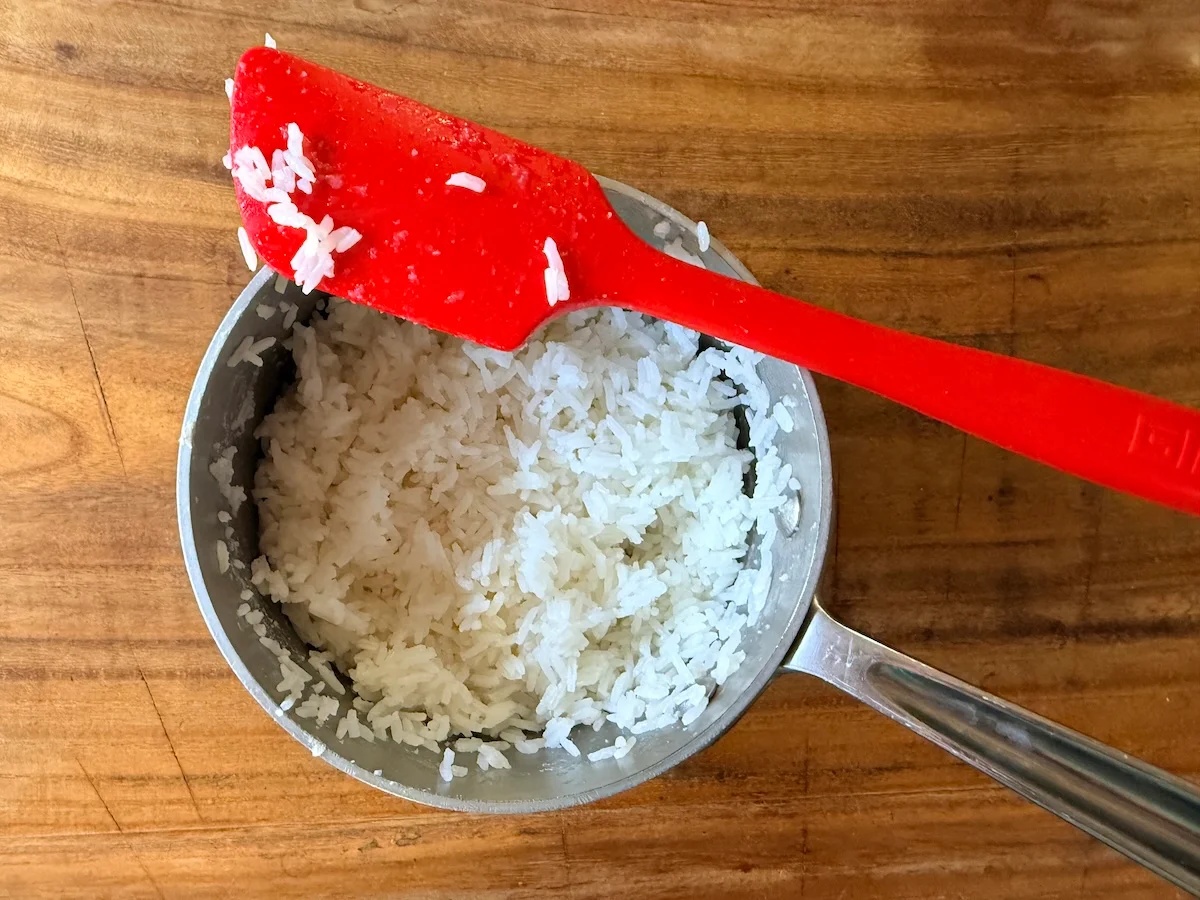
Jasmine rice cooked with a simple 10-10-10 routine: 10 minutes covered on low heat, then two 10-minute rests. Washing the grains and letting them settle helps produce separate, tender rice for serving alongside curries, stir-fries or other mains.
Ingredients
- 190 g (1 cup)white jasmine rice or similar long-grain rice
- 300 ml (1 1/4 cups)water
Instructions
- 1
Wash the rice
Put the rice in a heavy 1.5–2-litre pot and add enough water to cover it by about 2.5 cm. Stir vigorously with your fingers to loosen surface starch, then pour off the water. Repeat two or three times, until the water is nearly clear; it will not become completely clear. Tip the rice into a mesh strainer, shake off excess water and return it to the pot.
- 2
Cook for 10
Add 300 ml water to the pot. Bring it to the boil over high heat, stirring from time to time with a silicone spatula or chopsticks to stop the grains clumping. Reduce the heat slightly to keep a brisk simmer for 1–3 minutes, stirring often to scrape the bottom and move the grains around, until the surface looks glossy. A few craters may appear. Turn the heat to low, cover the pot and cook for 10 minutes.
- 3
Rest and fluff
Turn off the heat and leave the covered pot on the warm burner for 10 minutes. Uncover and fluff the rice with chopsticks, a fork or a spatula to circulate the grains. Cover it again and rest for another 10 minutes so the grains firm up and finish cooking. Keep covered and warm for up to 30 minutes, then fluff again before serving.
What is jasmine rice?
Jasmine rice is an aromatic long-grain rice commonly served across Southeast Asia. It cooks up fragrant and tender, with a soft texture that suits saucy dishes as well as simple rice bowls.
This version uses a three-part timing routine: 10 minutes of covered cooking followed by two 10-minute rests. Rinsing first removes some loose surface starch, while the rests let moisture finish distributing through the grains.
Nutrition and macros by portion
The nutrition label shows one serving as written: 231 calories, 5g protein, 51g carbs, 1g fat.
| Portion | Adjustment | kcal | Protein | Carbs | Fat |
|---|---|---|---|---|---|
| Lighter | Serve a smaller rice portion | 162 kcal | 3g | 36g | 0g |
| This serving | As written | 231 kcal | 5g | 51g | 1g |
| Hungry | Make a larger batch | 347 kcal | 7g | 77g | 1g |
Most of this serving’s energy and carbohydrates come from the rice; it contributes only a modest amount of protein and very little fat. For a more rounded plate, pair it with a protein-rich main and vegetables.
Choose the rice and pot
Rice choice: White jasmine rice is the intended option, but a similar long-grain white rice can be used. Different varieties may absorb water differently, so the texture can vary slightly.
Pot size: Use a heavy pot of about 1.5–2 litres. A sturdy base helps the rice heat evenly during the simmer and keeps the grains from catching as readily.
Rinse without chasing clear water
Rinsing: Stir the rice firmly in water to loosen starch, then pour the cloudy water away. Repeat two or three times, stopping when it is nearly clear rather than waiting for it to become perfectly transparent.
Draining: Shake the rice in a mesh strainer before returning it to the pot. Removing excess rinsing water helps keep the stated 300 ml cooking water more consistent.
Watch the initial simmer
Stirring: Once the measured water is in the pot, stir occasionally as it comes to the boil, then stir often during the 1–3-minute brisk simmer. Scraping the bottom and moving the grains helps prevent clumps.
Surface cue: The rice should look glossy before you lower the heat and cover the pot. A few small craters are normal and are not a reason to stir for longer.
Let the rests do their work
Covered cooking: After the initial simmer, turn the heat to low and cook covered for 10 minutes. Keep the lid on so steam stays in the pot.
Two rests: Leave the covered rice on the warm burner for 10 minutes after turning off the heat, then fluff and cover it for another 10 minutes. The second rest helps the grains settle and finish cooking.
Serve it with
Saucy dishes: Spoon the rice alongside a curry, stew or stir-fry, where its fragrance and tender texture can take up the sauce.
Simple bowls: Use it as a base for vegetables, tofu, fish or meat. Keep the pot covered and warm for up to 30 minutes, then fluff once more just before serving.
Recipe notes & tips
- Measure the rice and cooking water before you begin so the method is easy to follow.
- Use your fingers to agitate the grains gently but thoroughly during each rinse.
- Keep the pot covered during the 10-minute cooking time and both rests.
- Use chopsticks or a fork to fluff without crushing the cooked grains.
- If holding the rice, keep it covered and warm for no more than 30 minutes before serving.
Variations
- Brown rice: Use brown jasmine rice only with a method adjusted for its longer cooking time and greater water needs.
- Herb finish: Fold chopped fresh herbs through the rice after the final rest.
- Citrus aroma: Add a little finely grated citrus zest after cooking for a fragrant finish.
- Spiced rice: Add whole spices to the cooking water, then remove them before serving.
- Rice bowls: Top the cooked rice with cooked vegetables and your choice of protein for a complete bowl.
Common mistakes to avoid
- Expecting crystal-clear rinse water: Stop after two or three rinses when it is nearly clear.
- Skipping the drain: Shake the rinsed rice in a mesh strainer before adding the measured cooking water.
- Letting the rice clump: Stir during the boil and brisk simmer, scraping the bottom of the pot.
- Lifting the lid while cooking: Keep the pot covered for the full 10 minutes on low heat.
- Fluffing too early: Allow both 10-minute rests so the grains can finish cooking and firm up.
How to store
Cool leftover rice promptly, transfer it to an airtight container and refrigerate for up to 2 days. Reheat until steaming hot, adding a splash of water and covering the rice to help it heat evenly; avoid reheating it more than once.
Frequently asked questions
Why should I rinse jasmine rice?
Rinsing loosens and removes some surface starch, which can otherwise make the grains stick together. The water only needs to become nearly clear.
Can I use another type of rice?
A similar long-grain white rice is suggested as an alternative. Its water absorption and cooking time may differ, so the result may not be identical.
What does 10-10-10 mean?
Cook the rice covered on low heat for 10 minutes, leave it covered on the warm burner for 10 minutes, then fluff and rest it covered for another 10 minutes.
Are craters on the surface a problem?
No. A few craters can form during the brisk simmer and are normal; continue with the covered low-heat cooking step.
Can I keep the rice warm before serving?
Yes. Keep it covered and warm for up to 30 minutes, then fluff it again just before serving.
How much cooked rice does this make?
The recipe description says 1 cup of raw rice makes about 3 cups cooked rice.
Cook it from the original
This recipe comes from vietworldkitchen.com. Their page has the author’s own photos, notes and tips — the best place to cook it from.
Open the recipe on vietworldkitchen.com