
Fish in Parchment Paper (Fish En Papillote)
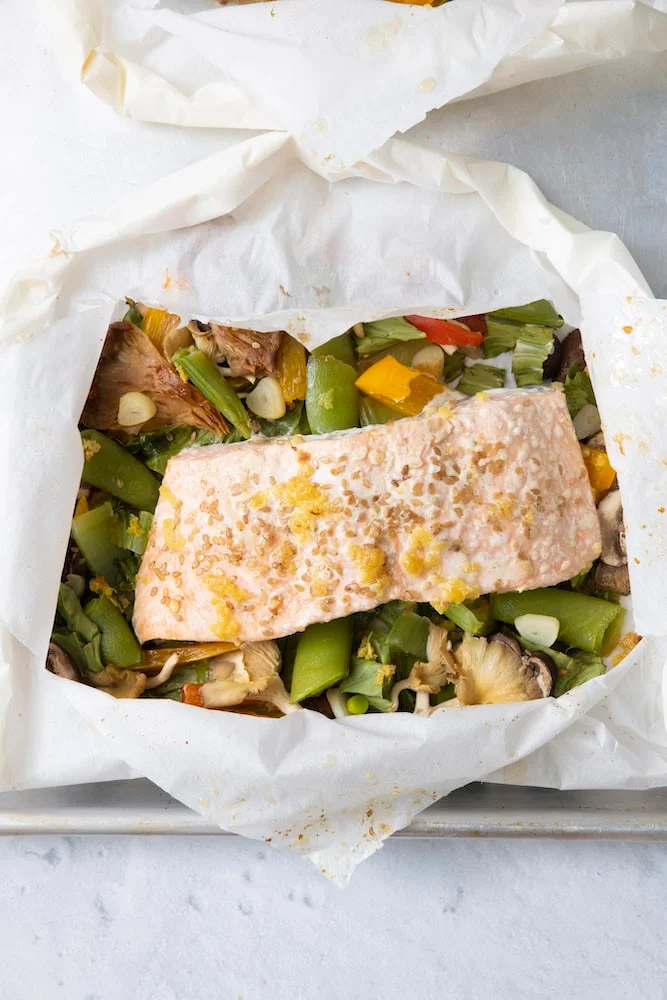
Fish and colourful vegetables steam together in sealed parchment parcels, with ginger, garlic, sesame and soy adding savoury flavour. The parcels are quick to assemble, need little washing-up and can be adapted to the fish you have.
Ingredients
- 4skinless, boneless fish fillets (white fish, tilapia, sole, salmon or cod)
- 8shiitake mushrooms, stems removed and sliced
- about 100 g (1 cup)sugar snap peas
- about 150 g (1 cup)red pepper, sliced
- 4baby pak choi, chopped
- 4 clovesgarlic, minced
- 5–7.5 cm (2–3 inches)fresh ginger, peeled and grated
- 10 ml (2 teaspoons)sesame oil
- 60 ml (¼ cup)soy sauce or liquid aminos
- 15 ml (1 tablespoon)sesame seeds
Instructions
- 1
Heat the oven
Preheat the oven to 200°C (400°F).
- 2
Prepare the paper
Cut four pieces of parchment paper, each about 30 × 41 cm (12 × 16 inches). Fold each piece in half, then open it out again.
- 3
Layer the vegetables
On one half of each sheet, arrange a quarter of the pak choi, mushrooms, sugar snap peas and red pepper. Add one minced garlic clove and a quarter of the grated ginger to each parcel.
- 4
Add fish and seasonings
Set a fish fillet on top of each pile of vegetables. Drizzle each with a quarter of the sesame oil and soy sauce, then sprinkle with a quarter of the sesame seeds.
- 5
Seal the parcels
Starting at one end, fold the parchment edges over themselves several times, making creases all the way around the fish until each parcel is fully enclosed and no air can escape.
- 6
Arrange on a tray
Place the parcels on a baking sheet, repeating with the remaining packets.
- 7
Bake the fish
Bake for 20 minutes.
- 8
Open and serve
Transfer the parcels to plates. Carefully cut open the top of each with scissors and let the steam escape; the contents will be hot. Serve, adding a scoop of rice to a parcel if you like so it can absorb the juices.
What is fish en papillote?
En papillote is a French cooking technique in which food is sealed in a paper parcel and cooked in its own steam. This American-style version pairs fish with crisp vegetables and an Asian-inspired mix of soy, ginger, garlic and sesame.
The sealed parcels keep the fish moist while the vegetables soften and release their juices. Cooking individual portions also makes serving straightforward.
Nutrition and macros by portion
The nutrition label shows one serving as written: 253 calories, 39g protein, 11g carbs, 6g fat.
| Portion | Adjustment | kcal | Protein | Carbs | Fat |
|---|---|---|---|---|---|
| Lighter | Use less sesame oil | 177 kcal | 27g | 8g | 4g |
| This serving | As written | 253 kcal | 39g | 11g | 6g |
| Hungry | Add a scoop of rice | 380 kcal | 59g | 17g | 9g |
The fish provides most of the protein, while the vegetables contribute some carbohydrates and fibre. Sesame oil and seeds supply much of the fat, and rice served alongside adds more carbohydrates. For a balanced plate, pair a parcel with a modest scoop of rice and enjoy all the vegetables and cooking juices.
Choosing the fish
White fish: Tilapia, sole and cod are mild options that let the seasonings come through. Choose fillets of similar thickness so they cook at roughly the same pace.
Salmon: This is a richer alternative and works with the same vegetables and seasonings. Keep the fillets’ thickness in mind when checking doneness.
Build even parcels
Vegetable base: Divide the pak choi, mushrooms, snap peas and pepper evenly across the four sheets. Keeping the piles similar in size helps the parcels cook consistently.
Seasoning: Spread the garlic, ginger, oil, soy sauce and sesame seeds evenly among the packets. The liquid and vegetable juices create a light cooking broth inside each parcel.
Seal in the steam
Fold the paper edges over repeatedly, working around the parcel until there are no gaps. A secure seal traps the steam and helps cook the fish and vegetables together.
Leave the food inside rather than opening a parcel to check it during baking. Opening it releases steam and interrupts the cooking.
Check the texture
The fish should be opaque and separate easily into flakes when cooked. If a fillet is unusually thick, it may need a little more time; open the parcel carefully and check the centre.
The vegetables should be tender but can still have a slight bite. Take care when opening the packets, as the escaping steam is very hot.
Serve with the juices
Rice is a simple accompaniment and soaks up the savoury liquid collected in the parcel. Spoon the fish, vegetables and juices over it, or serve the rice alongside.
Open each packet at the table or transfer its contents to a plate. Keep the juices with the fish rather than draining them away.
Recipe notes & tips
- Cut the parchment sheets to a generous size so there is enough paper to fold securely around the filling.
- Divide the vegetables and seasonings evenly to help all four parcels cook at a similar rate.
- Choose fillets with a similar thickness for more even cooking.
- Use kitchen scissors to open the parcels, and keep your face and hands clear of the escaping steam.
- Serve the parcels soon after baking so the fish stays tender and the vegetables do not continue softening in the hot packets.
Variations
- Change the fish: Use any of the suggested fish, choosing fillets of similar thickness.
- Add a citrus note: Add a little lemon or lime if you have it, while keeping the original seasonings.
- Use another mushroom: Substitute a similar amount of sliced mushrooms for the shiitake.
- Adjust the heat: Add chilli to the parcels for a spicier version.
- Serve with rice: Add cooked rice at the table to soak up the parcel juices.
Common mistakes to avoid
- Loose seals: Steam can escape through gaps; fold the edges over several times all the way around.
- Uneven portions: Large differences in filling size can affect cooking; divide the vegetables and seasonings evenly.
- Opening too soon: Steam escapes when a parcel is opened; keep it sealed during baking.
- Rushing the opening: Hot steam can burn; cut the top carefully and let the steam escape away from your face.
- Overcooking the fish: It can become dry; check that it flakes easily and avoid baking longer than needed.
How to store
Refrigerate leftover fish and vegetables in a covered container within 2 hours and use within 1–2 days. Reheat until piping hot, taking care not to overcook the fish; discard any parcels left at room temperature for too long.
Frequently asked questions
Can I use frozen fish?
Thaw the fish fully and pat it dry before assembling the parcels. Frozen fillets may release extra liquid and cook less evenly if used straight from frozen.
How can I tell when the fish is done?
Open a parcel carefully and check that the fish is opaque and flakes easily in the centre. If it is not ready, reseal the parcel and continue cooking briefly.
Can I prepare the parcels ahead?
You can assemble them shortly before cooking and keep them covered in the fridge. For best texture, bake them soon after assembly rather than storing them for a long time.
Can I cook these parcels on a barbecue?
The recipe method is for the oven. Parchment is not suitable for direct contact with barbecue flames, so use the oven unless you have a safe, indirect-heat setup designed for parchment parcels.
What can I serve with fish en papillote?
Rice works well with the savoury juices, as noted in the recipe. You can also serve the parcels on their own or with another simple side.
Cook it from the original
This recipe comes from weelicious.com. Their page has the author’s own photos, notes and tips — the best place to cook it from.
Open the recipe on weelicious.com