
One Pot Tteok Mandu Guk with Beef
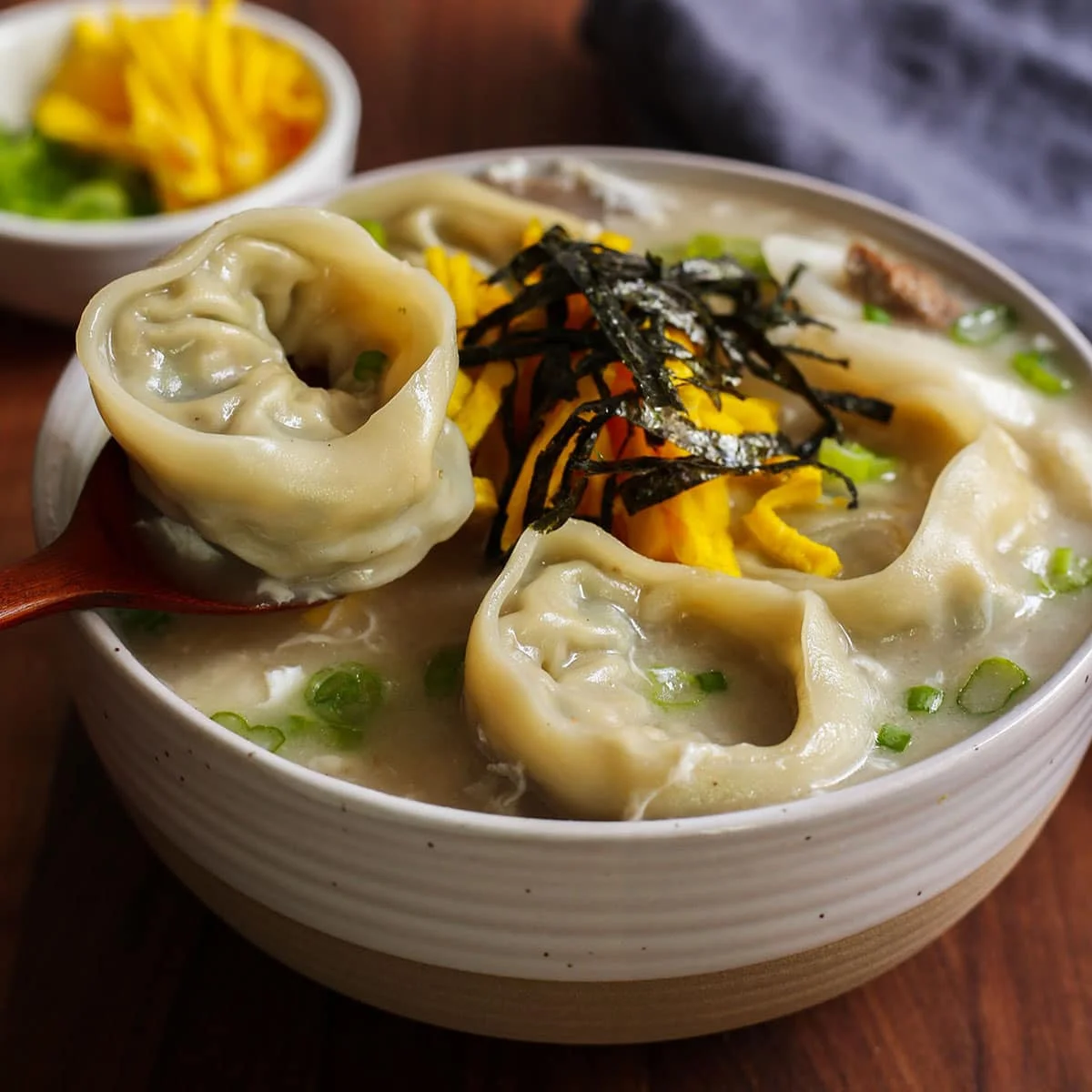
Tteok mandu guk is a comforting Korean soup of sliced rice cakes and dumplings, here made in one pot with beef. It is a warming meal for Lunar New Year or any time you want a filling soup with fewer pans to wash.
Ingredients
- 340 g (12 oz)sliced rice cake
- 150 g (5.3 oz), cut into thin 2.5 cm (1 inch) stripsbeef top round
- 30 ml (2 tablespoons)soup soy sauce, or regular soy sauce
- 1.42 litres (6 cups)water
- 15 ml (1 tablespoon)fish sauce
- 12frozen Korean mandu, shop-bought or homemade
- 15 ml (1 tablespoon)toasted sesame oil
- As neededoil
- To tastekosher salt
- To tastecracked black pepper
- 2 largeeggs, separated into yolks and whites
- 2spring onions, thinly sliced
- 1 sheettoasted seaweed, cut into thin strips
Instructions
- 1
Soak the rice cakes
Put the sliced rice cakes in a bowl and add enough water to cover them. Leave to soak for 20–30 minutes.
- 2
Cook the egg garnish
While the rice cakes soak, heat a non-stick frying pan over medium-low heat with a little oil. Whisk the egg yolks, pour them into the pan and tilt it to spread them into a thin layer. Cook for about 1 minute, until the underside is set, then flip and cook for about 30 seconds, until cooked through.
- 3
Slice the egg
Take the egg from the heat and leave it to cool. Halve the egg crepe, stack the pieces and cut them into thin strips. Set aside for the garnish.
- 4
Brown the beef
Heat about 15 ml (1 tablespoon) of oil in a medium pot over medium-high heat. Once hot, add the beef with a pinch of salt and a few cracks of black pepper. Stir-fry for 1 minute, then add the soup soy sauce and cook for a further 30 seconds.
- 5
Simmer the broth
Pour in the water and bring the soup to the boil. Reduce the heat to medium and simmer for about 5 minutes, skimming the surface as needed.
- 6
Add the rice cakes
After 5 minutes, season the soup with 15 ml (1 tablespoon) of fish sauce. Drain the rice cakes and add them to the pot. Simmer for 1–2 minutes, stirring often so they do not stick to the bottom.
- 7
Cook the dumplings
Add the frozen mandu and simmer for another 6–8 minutes, until the rice cakes are tender and the dumplings are cooked. The soup will thicken as it cooks.
- 8
Stir in egg whites
Whisk the egg whites for a few seconds, then drizzle them into the soup in a circular motion. Wait a second before stirring.
- 9
Season the soup
Turn off the heat and taste the soup. Add more salt and pepper if needed.
- 10
Garnish and serve
Ladle the soup into bowls and top each with strips of egg crepe, sliced spring onion and toasted seaweed.
What is tteok mandu guk?
Tteok mandu guk is a Korean soup combining tteok, or sliced rice cakes, with mandu dumplings in a savoury broth. It is traditionally associated with Lunar New Year, when it is served as a celebratory meal.
This version builds flavour with beef and soy sauce, then cooks the rice cakes and dumplings in the same pot. Egg, spring onion and seaweed finish each bowl with colour and texture.
Nutrition and macros by portion
The nutrition label shows one serving as written: 421 calories, 22g protein, 58g carbs, 11g fat.
| Portion | Adjustment | kcal | Protein | Carbs | Fat |
|---|---|---|---|---|---|
| Lighter | More broth, fewer mandu | 295 kcal | 15g | 41g | 8g |
| This serving | As written | 421 kcal | 22g | 58g | 11g |
| Hungry | Add extra mandu | 632 kcal | 33g | 87g | 17g |
The rice cakes provide most of the carbohydrates, while the beef and mandu contribute protein. Fat comes from the beef, dumplings, eggs and cooking oil; serve a generous portion of vegetables or banchan alongside to balance the bowl.
The rice cakes
Soaking first: The rice cakes get 20–30 minutes in water before they go into the soup. Drain them well before adding them so the broth does not pick up the soaking water.
Stirring often: Rice cakes can settle and stick as they soften. Keep the pot moving gently during their short simmer.
Building the broth
Beef first: Briefly stir-frying the beef with salt and pepper gives it a head start before the water goes in. The soy sauce follows the beef, adding savoury seasoning to the pot.
Skimming: As the broth simmers, remove any foam or residue from the surface as needed for a clearer-looking soup.
Getting the texture right
Rice cakes: They should be tender but still hold their shape. Check one near the end of cooking rather than relying only on the clock.
Mandu: The recipe uses frozen dumplings and allows 6–8 minutes of simmering. Check that they are cooked through before serving; the broth will thicken as the rice cakes cook.
Making the egg garnish
Thin crepe: Spread the yolks across the pan in a thin layer and cook until set before flipping. Let the crepe cool before slicing it into strips.
Egg whites: Drizzle the whisked whites into the hot soup, wait briefly, then stir. This adds soft strands directly to the broth while the yolk strips are kept for the topping.
Serving the soup
Finish each bowl with the egg strips, spring onion and seaweed just before serving, so the garnishes keep their distinct textures.
The description suggests serving the soup with banchan such as japchae and kimchi. A simple side of vegetables can also round out the meal.
About the listed sesame oil
Toasted sesame oil appears in the ingredient list, but the supplied method does not specify when to add it. Follow the stated cooking steps as written, or use the recipe publisher’s guidance if you need to clarify its intended place in the soup.
Recipe notes & tips
- Soak the rice cakes while preparing the egg garnish to make good use of the 20–30-minute wait.
- Stir frequently after adding the rice cakes, as they can stick to the base of the pot.
- Skim the broth during its first simmer if foam rises to the surface.
- Keep the egg-yolk crepe thin so it is easy to roll or stack and slice into neat strips.
- Check that the rice cakes are tender and the frozen mandu are cooked before turning off the heat.
- The ingredient list includes toasted sesame oil, but the method does not say when to use it.
Variations
- Use regular soy sauce: The ingredient list offers it as an alternative to soup soy sauce.
- Add more spring onion: Scatter extra sliced spring onion over the bowls for a sharper finish.
- Change the mandu: Use homemade or shop-bought dumplings, as the ingredient list allows.
- Adjust the seasoning: Add salt and pepper at the end to suit your taste.
- Serve with banchan: Pair the soup with kimchi or japchae for a fuller Korean-style meal.
Common mistakes to avoid
- Skipping the soak: Give the rice cakes 20–30 minutes in water before cooking, as directed.
- Leaving rice cakes unstirred: Stir often during their simmer so they do not stick to the pot.
- Adding the dumplings too early: Follow the method and add them after the rice cakes have had their initial simmer.
- Overcooking the egg crepe: Take it off once set and cooked through so it remains easy to slice.
- Forgetting to drain: Drain the soaked rice cakes before adding them to the broth.
- Serving without checking: Taste the soup and check the rice cakes and mandu before portioning it out.
How to store
Refrigerate leftover soup in a covered container and use within 2–3 days. Reheat gently in a saucepan until piping hot, stirring carefully; the rice cakes may soften further and the broth may thicken as it stands.
Frequently asked questions
Can I use regular soy sauce?
Yes. The ingredient list gives regular soy sauce as an alternative to soup soy sauce.
Do I need to thaw the mandu first?
The recipe adds the mandu frozen, so there is no need to thaw them first. Simmer for 6–8 minutes and check they are cooked through.
Why soak the rice cakes?
The method calls for soaking them for 20–30 minutes before cooking. Drain them before they go into the soup.
How do I know when the rice cakes are ready?
They should be tender while still holding their shape. Check one as the soup cooks, since timing can vary.
What is the egg garnish?
The yolks are cooked as a thin crepe, cooled and cut into strips. The whites are whisked and stirred into the soup separately.
When should I add the sesame oil?
It is listed among the ingredients, but the supplied method does not say when to add it. Check the original publisher’s instructions if you want to confirm its intended use.
Cook it from the original
This recipe comes from twoplaidaprons.com. Their page has the author’s own photos, notes and tips — the best place to cook it from.
Open the recipe on twoplaidaprons.com