
Turkey Pho (Pho Ga Tay)
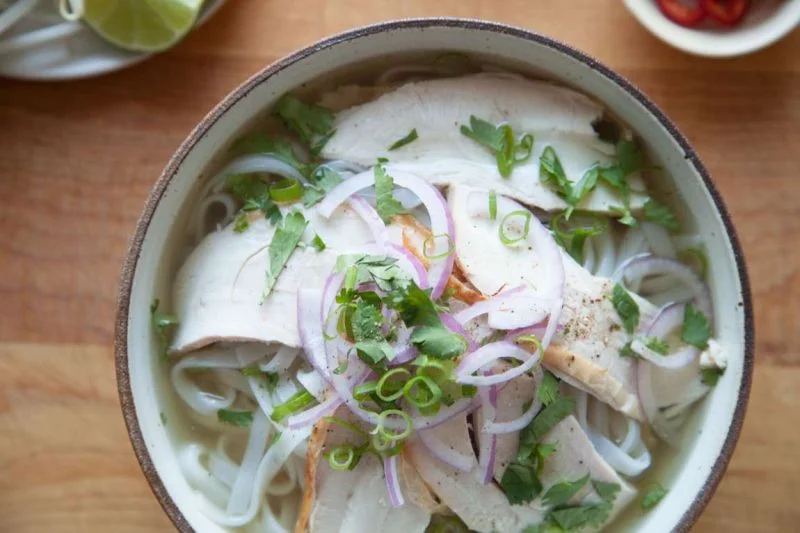
Turkey pho is a Vietnamese noodle soup built around a fragrant, gently simmered broth. This version turns a roast turkey carcass and leftover meat into a warming meal, finished with fresh herbs, crunchy sprouts and lime.
Ingredients
- 1.36 kg (3 lb)roast turkey carcass, including wings, drumsticks and other parts
- 1Fuji apple, peeled, cored and cut into 2 cm chunks
- 1 largecelery stalk, roughly chopped
- 1 mediumcarrot, cut into thick rounds
- 340 g (12 oz)napa cabbage leaves, cut into large pieces
- 1 bunch (about 43 g / 1.5 oz)cilantro, stems and leaves roughly chopped
- 4star anise
- 3whole cloves
- 15 ml (1 tbsp)coriander seeds
- 1 stick, 7.5 cm (3 in)cinnamon
- 1 largeyellow onion, peeled, halved and cut into thick slices
- 1 piece, about 7.5 cm (3 in)ginger, peeled, cut into thick slices and bruised
- 3.55 litres (15 cups)water
- 10 ml (2 tsp), plus more as neededfine sea salt
- 30–45 ml (2–3 tbsp)fish sauce
- 454 g (16 oz)dried narrow flat rice noodles, soaked in hot water until pliable and drained
- 567 g (1¼ lb)cooked turkey meat, thinly sliced or torn into bite-size pieces
- 1 very smallyellow or red onion, thinly sliced against the grain and soaked in water for 10 minutes
- 80 ml (⅓ cup)green onion, green parts only, thinly sliced
- 80 ml (⅓ cup)fresh cilantro, leafy tops chopped
- to tastepepper (optional)
- 710 ml (3 cups)bean sprouts
- 10–12 sprigsmint, Thai basil, or a combination of both
- 2limes, cut into wedges
- 1–2Thai, jalapeño, Fresno or serrano chillies, thinly sliced with seeds intact
Instructions
- 1
Prepare the turkey
Break the turkey backbone and wings, if using, into pieces small enough to fit in the pot. Quickly rinse or spray away visible impurities, then put the pieces in a large bowl with the apple, celery, carrot, cabbage and chopped cilantro.
- 2
Toast the spices
Put the star anise, cloves, coriander seeds and cinnamon in an approximately 8-quart (7.6-litre) stockpot. Toast over medium heat for several minutes, shaking or stirring, until fragrant. Add the onion and ginger and stir for 45–60 seconds, until fragrant. Pour in 1.9 litres (8 cups) of the water to stop the spices cooking, then add the turkey, apple, vegetables, salt and remaining 1.65 litres (7 cups) water.
- 3
Simmer the broth
Partially cover the pot and bring the broth to a simmer over high heat. Remove the lid and skim off any scum as needed. Reduce the heat to maintain a gentle simmer for 1 hour 15 minutes, then let the broth rest for 10–15 minutes.
- 4
Strain and season
Lift out the turkey pieces to make straining easier. Pour the broth through a muslin-lined mesh strainer set over a medium pot, then discard the solids. You should have about 2.8 litres (12 cups) of broth. Season with fish sauce and, if needed, extra salt.
- 5
Heat broth and water
Divide the noodles among six soup bowls. Meanwhile, bring the broth to a simmer over medium heat. Fill another pot with water and bring it to a rolling boil for cooking the noodles.
- 6
Cook and assemble
For each bowl, put a portion of noodles in a noodle strainer or mesh sieve and dip it into the boiling water. When the noodles are soft, lift out the strainer and shake off the water back into the pot. Tip the noodles into a bowl, top with turkey, then add the onion, green onion and cilantro. Finish with pepper.
- 7
Ladle and serve
Taste the broth and adjust the seasoning if you like, then increase the heat and bring it to a boil. Ladle about 475 ml (2 cups) of broth into each bowl and serve straight away with the extras at the table.
What is turkey pho?
Pho is a Vietnamese noodle soup served with rice noodles, aromatic broth and fresh garnishes. Pho ga is the chicken version; this turkey variation uses roast turkey and its carcass to make the broth.
The combination of toasted spices, onion and ginger gives the broth its savoury fragrance, while apple and vegetables simmer alongside the bones. Fresh herbs, lime and sprouts bring brightness and contrast to each bowl.
Nutrition and macros by portion
The nutrition label shows one serving as written: 660 calories, 48g protein, 79g carbs, 14g fat.
| Portion | Adjustment | kcal | Protein | Carbs | Fat |
|---|---|---|---|---|---|
| Lighter | More sprouts, fewer noodles | 462 kcal | 34g | 55g | 10g |
| This serving | As written | 660 kcal | 48g | 79g | 14g |
| Hungry | Extra turkey and noodles | 990 kcal | 72g | 119g | 21g |
The rice noodles provide most of the carbohydrate, while turkey supplies much of the protein. The turkey and fish sauce also contribute fat and sodium, though the amount in each bowl will vary with the turkey and how much seasoning you add. A practical balance is to add plenty of bean sprouts and herbs, and serve a vegetable side if you want more vegetables in the meal.
Build flavour from the carcass
Turkey carcass: Break the bones into pieces that fit the pot so they can be covered by the water and are easier to handle after simmering. A quick rinse removes visible impurities before they go in.
Vegetables and fruit: Apple, carrot, celery and napa cabbage simmer with the turkey to round out the broth. Use the specified quantities, as the broth is strained and the solids are discarded.
Toast the aromatics
Whole spices: Toast the star anise, cloves, coriander and cinnamon in the dry pot, shaking or stirring until fragrant. Keep them moving and take care not to let them scorch.
Onion and ginger: Add these after the spices and stir for 45–60 seconds. Pouring in the first 8 cups of water then stops the aromatics cooking further before the turkey and vegetables are added.
Keep the simmer gentle
Skimming: As the broth comes to a simmer, uncover the pot and remove any scum from the surface. This helps leave the finished broth clearer.
Doneness: Simmer gently for 1 hour 15 minutes, rather than letting the pot boil vigorously. Rest it for 10–15 minutes before straining, then taste and season the strained broth with fish sauce and salt as needed.
Get the noodles right
Soaking: The noodles are soaked in hot water until pliable and drained before serving. Their final cooking happens in boiling water, one portion at a time.
Texture: Lift the noodles out as soon as they are soft, then shake off excess water before putting them in the bowl. This keeps them from sitting in the cooking water and becoming over-soft.
Finish each bowl at the table
Layering: Place the noodles in the bowl first, then arrange the turkey and sliced onion, green onion and cilantro on top. Pour over the boiling broth just before serving.
Garnishes: Offer bean sprouts, mint or Thai basil, lime wedges and sliced chilli at the table. Each person can add them to taste for freshness, acidity and heat.
Serve it as a complete meal
The noodles and turkey make the soup filling, while the herbs, sprouts and lime keep the bowl lively. Serve the garnishes separately so everyone can customise their portion.
For a more substantial meal, place extra cooked turkey and noodles on the table. Keep the broth hot and ladle it over each bowl just before eating.
Recipe notes & tips
- Use a stockpot large enough to hold the carcass and all 3.55 litres of water.
- Break the carcass into manageable pieces before starting so it is easier to fit into the pot.
- Toast the whole spices over medium heat and stir or shake them often to avoid scorching.
- Keep the broth at a gentle simmer for the full cooking time rather than letting it boil hard.
- Cook the noodles in individual portions so they are easy to drain and divide evenly.
- Bring the broth back to a boil before ladling it into the bowls.
Variations
- Herb mix: Use mint, Thai basil or a combination of both, as available.
- Chilli choice: Use Thai, jalapeño, Fresno or serrano chilli to suit the heat you like.
- Extra lime: Offer additional lime wedges for a brighter, tangier bowl.
- More vegetables: Add extra bean sprouts at the table for more crunch.
- Turkey pieces: Use thinly sliced or bite-size torn cooked turkey, as preferred.
Common mistakes to avoid
- Boiling hard: A vigorous boil can make the broth cloudy; lower the heat once it reaches a simmer.
- Skipping the skim: Leaving scum on the surface can affect the broth's clarity; remove it as needed.
- Scorching spices: Toasting too long can turn the aromatics bitter; stir or shake them and stop when fragrant.
- Overcooking noodles: Leaving noodles in boiling water too long can make them too soft; lift them out once tender.
- Underseasoning broth: Taste after straining and adjust with fish sauce and extra salt before serving.
- Serving broth lukewarm: Bring it back to a boil before ladling so the bowls are properly hot.
How to store
Store leftover broth and turkey separately from the noodles and fresh garnishes in covered containers in the fridge for up to 3 days. Reheat the broth and turkey until steaming hot, and cook fresh noodle portions for serving; keep leftover soaked or cooked noodles chilled and separate.
Frequently asked questions
Can I make the broth ahead?
Yes. Strain and season it, then chill it separately from the noodles and garnishes. Reheat it to a boil before serving.
Do I need to use a turkey carcass?
The carcass is the base of this broth, along with the specified cooked turkey meat for the bowls. The method is designed around a roast turkey carcass.
Why are the spices toasted first?
Toasting them briefly helps release their fragrance before they simmer in the broth. Stir or shake the pot so they do not scorch.
How do I know when the noodles are ready?
Lift a portion from the boiling water when it is soft, then drain it well. The recipe does not specify an exact noodle-cooking time, so check the texture as they cook.
What can I use instead of mint?
Use Thai basil instead, or serve a combination of mint and Thai basil.
Can I leave out the chilli?
Yes. The chilli is served as a garnish, so it can be omitted or offered separately for people to add as they like.
Cook it from the original
This recipe comes from vietworldkitchen.com. Their page has the author’s own photos, notes and tips — the best place to cook it from.
Open the recipe on vietworldkitchen.com