
Blistered Padron Peppers
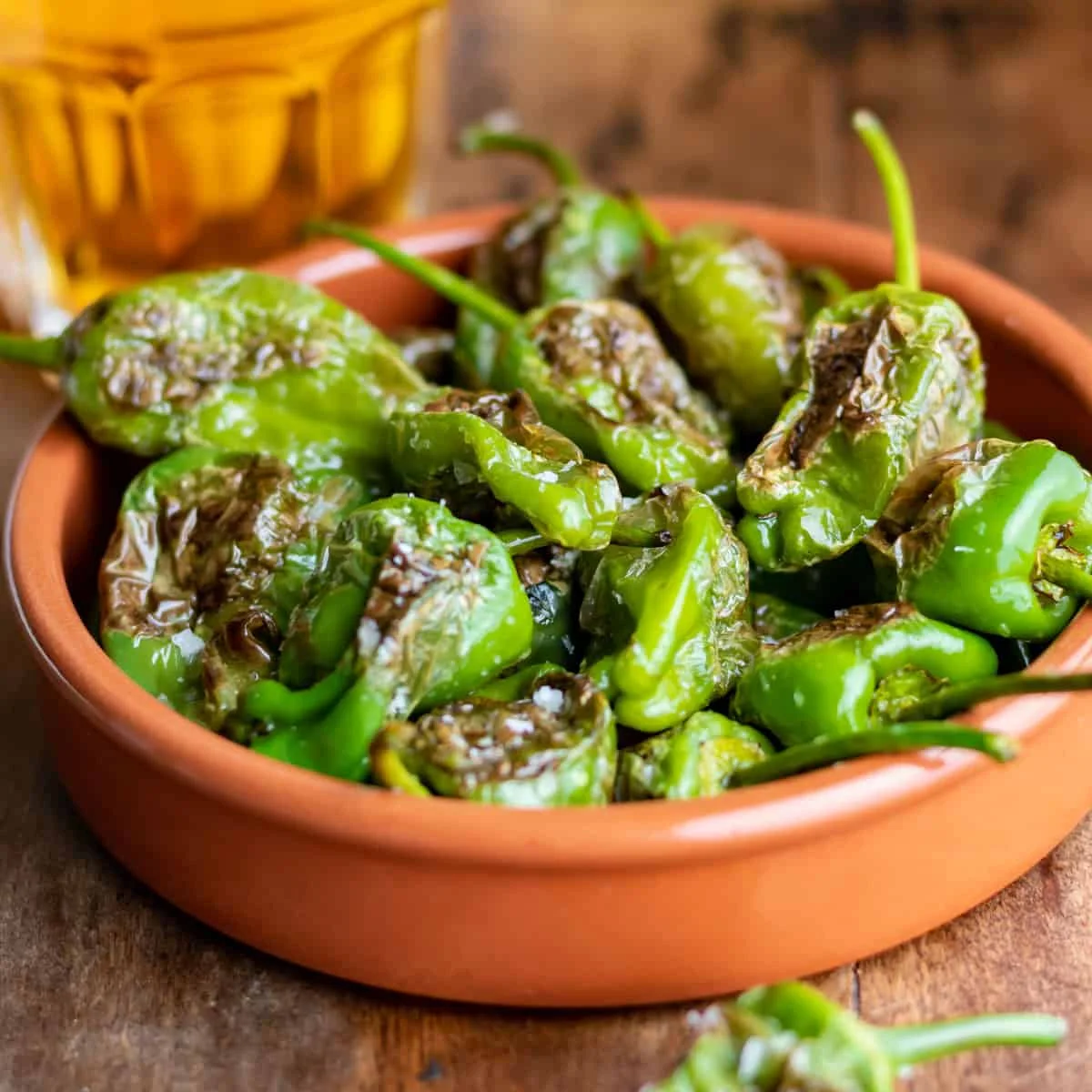
Blistered Padron peppers are a simple Spanish tapas dish of quickly seared green peppers finished with sea salt. They take around 10 minutes to make and are fun to share, as some peppers can be surprisingly hot.
Ingredients
- 15 ml (1 tablespoon)olive oil
- 500 g (3 cups)Padron peppers
- 2.5 ml (1/2 teaspoon)sea salt
Instructions
- 1
Prepare the peppers
Soak or rinse the peppers in cold water to remove dirt, then dry them thoroughly. Discard any that are bruised or mouldy.
- 2
Heat the skillet
Heat the olive oil in a large skillet over high heat; cast iron is ideal for retaining heat evenly. The oil is ready when it looks shiny and begins to smoke lightly.
- 3
Blister the peppers
Use tongs to arrange the peppers in a single layer in the hot skillet, without overcrowding. Sear them, turning occasionally, until hot and marked with black or brown blisters; cook in batches if needed.
- 4
Salt and serve
Remove the peppers with tongs, sprinkle with sea salt and serve immediately, on their own or with a dipping sauce.
What are Padron peppers?
Padron peppers are small green peppers associated with the Galician town of Padrón in north-west Spain, and they are often served as tapas. This version keeps the preparation classic and spare: hot oil blisters the skins, while salt brings out the peppers’ savoury flavour.
Most are mild, but some can be hot, so sharing a plate comes with a little surprise. Their quick cooking makes them a handy starter or a snack to put on the table while the rest of a meal is prepared.
Nutrition and macros by portion
The nutrition label shows one serving as written: 43 calories, 1g protein, 4g carbs, 3g fat.
| Portion | Adjustment | kcal | Protein | Carbs | Fat |
|---|---|---|---|---|---|
| Lighter | Use less olive oil | 30 kcal | 1g | 3g | 2g |
| This serving | As written | 43 kcal | 1g | 4g | 3g |
| Hungry | Make a larger batch | 65 kcal | 2g | 6g | 5g |
The peppers provide most of the carbohydrate, while olive oil supplies nearly all the fat; the dish contains little protein. For a more substantial plate, serve it alongside a protein-rich tapas dish and some bread.
Choose and dry the peppers
Fresh peppers: Pick firm peppers with smooth, unblemished skins, and discard any that are bruised or mouldy. Rinsing removes grit, but any water left on the surface can make hot oil spit.
Dry thoroughly: Pat the peppers dry after washing, or leave them to air-dry briefly. This also helps the skins blister rather than steam.
Get the skillet hot
Hot oil: Heat the olive oil over high heat until it shimmers and just begins to smoke lightly, as described in the method. Keep an eye on it, and add the peppers promptly once it reaches that point.
Room to sear: Arrange the peppers in one layer with space around them. If they do not fit comfortably, cook in batches so they make contact with the pan.
Look for blistered skins
Turn occasionally: Use tongs to rotate the peppers so different sides meet the hot surface. The aim is a hot pepper with dark brown or black patches, not a uniformly soft or collapsed one.
Check the finish: Take them out once blistered on the outside. Their small size means they cook quickly, so watch the pan rather than relying on a long unattended sear.
Season and serve straight away
Sea salt: Sprinkle it over the peppers as soon as they come out of the skillet, so it clings to the hot skins. The amount in the recipe gives a light, even finish.
At the table: Serve them immediately while warm, either plain or with a dipping sauce. They work well as part of a tapas spread alongside bread, olives or other small plates.
Keep the cooking simple
Three ingredients: Olive oil helps the peppers sear, Padron peppers provide the main flavour, and sea salt finishes the dish. There is no need to add extra seasoning to get a satisfying result.
Small batches: A crowded pan traps moisture and reduces browning. If the skillet is full, remove the first batch before cooking the next.
Recipe notes & tips
- Dry the peppers completely after rinsing to reduce splattering.
- Use a wide skillet so the peppers can sit in a single layer.
- Wait for the oil to shimmer before adding the peppers.
- Turn the peppers with tongs to blister several sides.
- Cook in batches if the pan looks crowded.
- Serve as soon as they are salted for the best texture.
Variations
- Lemon finish: Add a little lemon juice at the table for a fresh, tangy note.
- Garlic oil: Add a small amount of sliced garlic to the oil shortly before the peppers, taking care not to burn it.
- Smoky salt: Use smoked sea salt in place of the regular sea salt for a gentle smoky finish.
- Dipping sauce: Serve with a simple garlic mayonnaise or another sauce on the side.
- Tapas spread: Pair the peppers with olives, bread and other small Spanish-style dishes.
Common mistakes to avoid
- Wet peppers: They can spit in hot oil and steam; dry them thoroughly before cooking.
- Crowded skillet: The peppers soften instead of blistering; cook them in batches.
- Cool oil: The skins may not sear well; wait until the oil shimmers before adding the peppers.
- Unwatched oil: Oil that is left heating can smoke too much; stay by the skillet and add the peppers promptly.
- Overcooking: The peppers can become limp; remove them once they are hot and blistered.
How to store
These peppers are best eaten straight away. If needed, refrigerate leftovers in an airtight container for up to 2 days and reheat briefly in a hot skillet; the skins will be softer than when freshly cooked.
Frequently asked questions
Are Padron peppers spicy?
Most are mild, but some can be hot, which is part of the fun of sharing them. The heat varies from pepper to pepper.
Do I need to remove the stems?
No. The recipe leaves them on, making the peppers easy to turn and pick up.
Can I cook the peppers in a non-stick pan?
Yes, although the recipe recommends a large cast-iron skillet for even heat retention. Whatever pan you use, avoid crowding it.
How do I know when the peppers are done?
They should be hot and have black or brown blistered patches on the outside. Turn them occasionally so several sides meet the skillet.
Can I make them ahead?
They are quickest to make just before serving and have their best texture when freshly blistered. Reheated leftovers will be softer.
Cook it from the original
This recipe comes from veggiedesserts.com. Their page has the author’s own photos, notes and tips — the best place to cook it from.
Open the recipe on veggiedesserts.com