
Hong Kong Mango Pudding
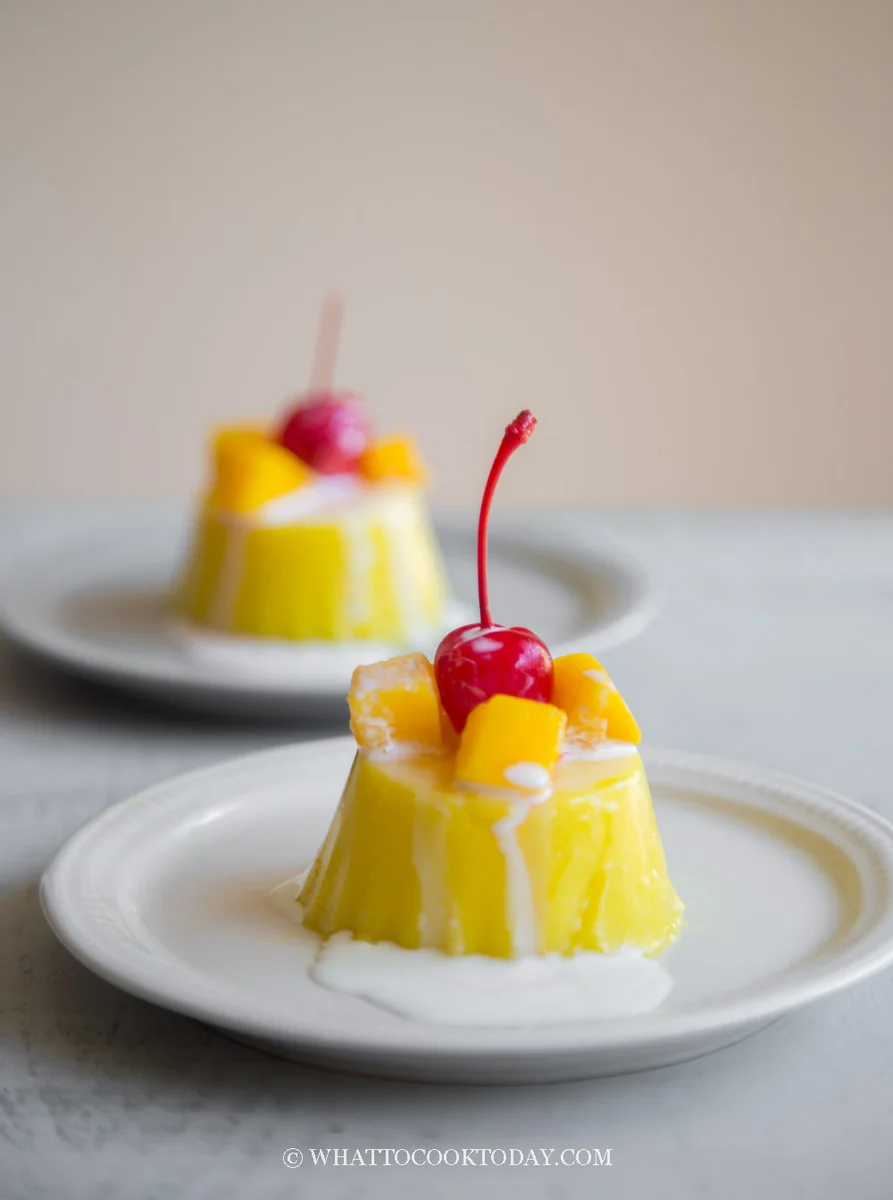
Hong Kong mango pudding is a smooth, creamy chilled dessert with a soft, wobbly set and fresh mango flavour. It is simple to prepare ahead and serve in cups or unmoulded with mango and a drizzle of evaporated milk.
Ingredients
- 250 gpeeled ripe mango
- 15 ggelatine powder
- 150 mlhot water
- 70 gsugar
- 150 mlevaporated milk (or half-and-half)
- 200 mlwhole milk
- 200 gpeeled ripe mango
- to tasteevaporated milk
- to tastemaraschino cherries
Instructions
- 1
Dissolve gelatine
Mix the sugar and gelatine powder. Pour in the hot water and stir until dissolved, then set aside.
- 2
Blend the mango
Blend the mango with the evaporated milk and whole milk until smooth, using a blender or food processor. Alternatively, purée the mango with a hand blender and then mix it with both milks. Strain the mixture for a smooth texture, then stir in the melted gelatine mixture.
- 3
Prepare the moulds
Silicone moulds do not need oiling. If using ceramic cups and you plan to unmould the pudding, lightly oil them; there is no need to oil cups if serving the pudding in them. If available, transfer the mixture to a jug with a spout to make pouring easier.
- 4
Chill the pudding
Ladle or pour the mixture into the cups. Refrigerate for at least 4 hours or overnight.
- 5
Add the toppings
Cut some mango into cubes. Unmould the pudding onto a plate or serve it in its cup, then add mango cubes. Drizzle with extra evaporated milk if you like.
What is Hong Kong mango pudding?
Mango pudding is a chilled, softly set dessert associated with Hong Kong-style menus and cafés. Its appeal comes from ripe fruit, a creamy milk base and a delicate wobble rather than a firm, sliceable set.
This version blends mango into the milk mixture and adds fresh mango on top, giving each serving both a smooth texture and pieces of fruit.
Nutrition and macros by portion
The nutrition label shows one serving as written: 233 calories, 9g protein, 41g carbs, 5g fat.
| Portion | Adjustment | kcal | Protein | Carbs | Fat |
|---|---|---|---|---|---|
| Lighter | Skip the extra milk drizzle | 163 kcal | 6g | 29g | 4g |
| This serving | As written | 233 kcal | 9g | 41g | 5g |
| Hungry | Serve a larger portion | 350 kcal | 14g | 62g | 8g |
The mango and sugar provide most of the carbohydrates, while the evaporated milk and whole milk contribute fat and some protein. Serve a pudding alongside a meal with a source of savoury protein if you want a more balanced plate.
Choose ripe mangoes
For the pudding: use ripe mangoes that smell fragrant and yield slightly when pressed. Their sweetness and aroma come through clearly in a dessert with few other strong flavours.
For the topping: keep some mango aside to cut into cubes just before serving, so the garnish stays distinct from the puréed base.
Dissolve the gelatine fully
Gelatine mixture: stir the powder with the sugar before adding the hot water, then keep stirring until no granules remain. This helps it disperse evenly through the pudding.
Combining: stir the dissolved gelatine into the strained mango mixture until thoroughly blended.
Aim for a smooth, wobbly set
Straining: pass the blended mixture through a strainer to catch fibrous mango strands and any remaining lumps. This gives the pudding a more even texture.
Chilling: allow at least 4 hours in the fridge, or leave it overnight, so the gelatine can set the mixture.
Choose cups or moulds
For serving in cups: pour the mixture straight into the cups; there is no need to oil them if the pudding will be eaten from the cup.
For unmoulding: lightly oil ceramic cups to help release the pudding. Silicone moulds do not need oiling, and a jug with a spout can make filling the moulds tidier.
Serve with simple toppings
Mango cubes: add them just before serving for a fresh contrast to the creamy pudding. A little extra evaporated milk can be drizzled over the top if desired.
On the side: serve after a meal with tea or coffee; the pudding can be presented in its cup or turned out onto a plate.
Recipe notes & tips
- Use fragrant, ripe mangoes for the fullest fruit flavour.
- Stir the gelatine mixture until it has fully dissolved before setting it aside.
- Strain the blended mixture to remove fibres and lumps.
- Pour carefully into the cups to avoid spilling the mixture.
- Chill overnight if you want to prepare the dessert ahead.
- Cut the topping mango into cubes shortly before serving.
Variations
- Half-and-half: use it instead of evaporated milk in the pudding mixture, as suggested in the ingredient list.
- Cup service: leave the pudding in its cup for a simple presentation without oiling the cups.
- Unmoulded service: lightly oil ceramic cups before filling to make turning out easier.
- Extra mango: add more fresh mango cubes on top for a fruitier finish.
- Cherry garnish: add maraschino cherries alongside the mango when serving.
Common mistakes to avoid
- Undissolved gelatine: keep stirring it into the hot water until no granules remain.
- Fibrous pudding: strain the blended mixture before mixing in the gelatine.
- Rushed chilling: leave the cups in the fridge for at least 4 hours.
- Sticking to ceramic: lightly oil the cups if you plan to unmould the pudding.
- Over-blending the garnish: keep the topping mango in cubes rather than blending it into the pudding.
How to store
Cover the cups and keep them refrigerated; make the pudding up to a day ahead and serve it chilled. Add the mango cubes and optional evaporated milk just before serving.
Frequently asked questions
How long does the pudding need to chill?
Chill it for at least 4 hours, or leave it in the fridge overnight.
Can I make it the day before?
Yes. The method allows for overnight chilling, so it is convenient to prepare ahead.
Do I need to oil the cups?
Not if you are using silicone moulds or serving the pudding straight from its cup. Lightly oil ceramic cups if you plan to unmould the pudding.
Can I use a hand blender?
Yes. Purée the mango with a hand blender, then combine it with the evaporated milk and whole milk.
Why should I strain the mixture?
Straining removes mango fibres and any lumps, helping the pudding turn out smooth.
How should I serve it?
Serve it in its cup or unmould it onto a plate. Top with mango cubes and add a drizzle of evaporated milk if you like.
Cook it from the original
This recipe comes from whattocooktoday.com. Their page has the author’s own photos, notes and tips — the best place to cook it from.
Open the recipe on whattocooktoday.com