
Slow Cooker Pot Roast
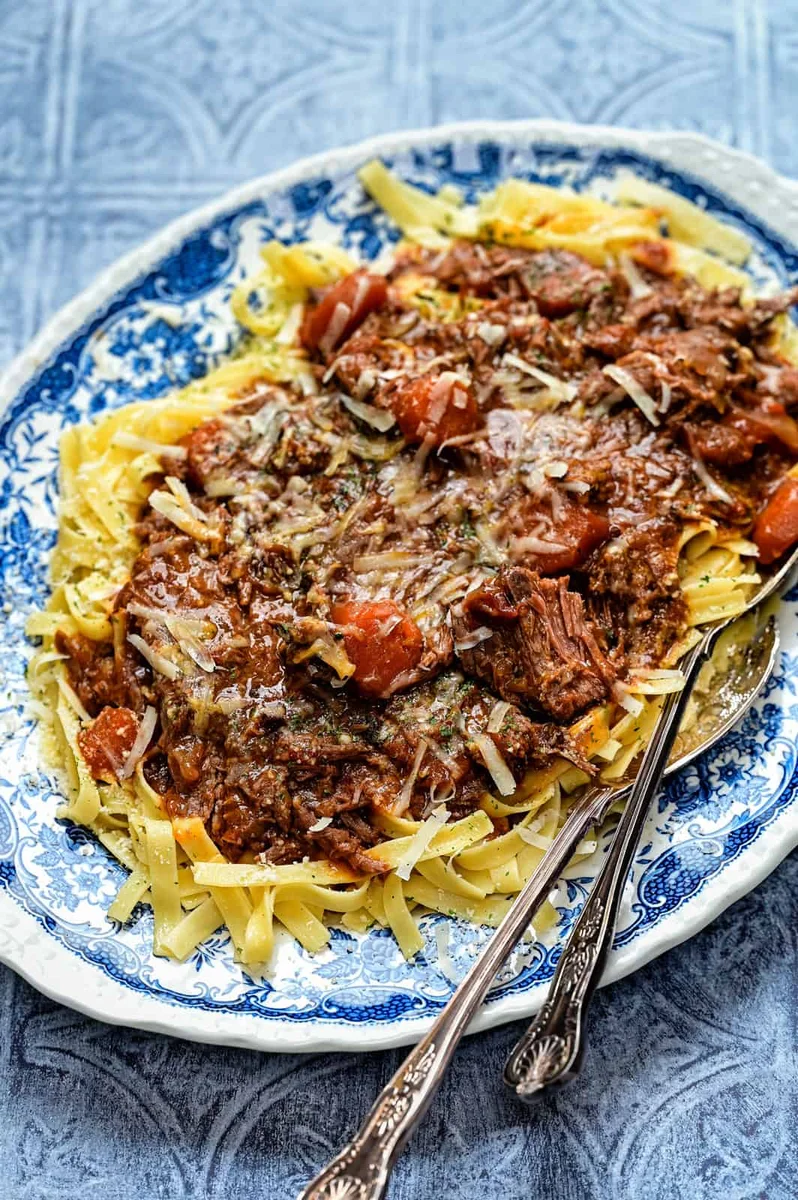
This slow cooker pot roast pairs a browned beef joint with tomatoes, red wine and vegetables, then cooks it until tender enough to slice easily. Serve it over noodles, mashed potatoes or polenta for a hearty meal.
Ingredients
- 1.5 kg (4 lb)beef joint
- A few turns of the millsalt and pepper, to season
- 2 tbspolive oil
- ½ tbspbutter
- 4 largeshallots, diced
- 1 tspsugar
- A pinchground cinnamon
- 400 g (14 oz)plum tomatoes
- 180 ml (¾ cup)red wine
- 4carrots, peeled and sliced
- 2 ribscelery
- 3 clovesgarlic, unpeeled
- 2bay leaves
- 1beef stock cube, crumbled
- 60 ml (¼ cup)water
- 2 tsp cornflour diluted in cold water or 1 tsp xanthan gumthickener, if needed
- To tastesalt and pepper
- To garnishfresh parsley
- Plentygrated Parmesan, to serve
Instructions
- 1
Brown the beef
Season the beef joint generously with salt and pepper. Heat the olive oil in a frying pan and brown the beef on all sides, then set it aside.
- 2
Soften shallots
Add the butter to the pan and cook the shallots over a low heat until softened. Covering the pan can help them caramelise.
- 3
Add tomatoes
Stir in a pinch of sugar and the cinnamon, then add the plum tomatoes. Break them up with the back of a wooden spoon.
- 4
Simmer the wine
Pour the wine into the pan and bring it to a rolling simmer. Transfer the pan’s contents to the slow cooker.
- 5
Add vegetables
Add the sliced carrots, celery sticks, unpeeled garlic cloves and crumbled beef stock cube. Stir to combine.
- 6
Slow cook beef
Place the beef joint on top and add a little water. Cover and cook on the low setting for 8–10 hours, or overnight, until the beef is fully tender and easily pierced with a knife.
- 7
Thicken sauce
Move the beef to a chopping board and let it cool slightly. Discard the bay leaves, garlic and celery sticks, then bring the sauce to a rolling simmer. Stir in a little cornflour slurry or xanthan gum if needed to thicken it, and adjust the seasoning with salt and pepper.
- 8
Slice and serve
Slice the beef and return it to the sauce to warm through. Serve over noodles, mashed potatoes or polenta, with grated Parmesan and fresh parsley.
What is slow cooker pot roast?
Pot roast is a method of cooking a large cut of beef slowly with liquid until it becomes tender. This version has a tomato and red wine sauce with carrots, shallots and a hint of cinnamon.
The description presents it as an Italian-style pot roast, while the recipe is also labelled Greek. Its defining feature here is the slow-cooked beef and rich, savoury sauce, rather than a strict claim to one regional tradition.
Nutrition and macros by portion
The nutrition label shows one serving as written: 673 calories, 60g protein, 15g carbs, 40g fat.
| Portion | Adjustment | kcal | Protein | Carbs | Fat |
|---|---|---|---|---|---|
| Lighter | Use less Parmesan | 471 kcal | 42g | 11g | 28g |
| This serving | As written | 673 kcal | 60g | 15g | 40g |
| Hungry | Add extra noodles | 1010 kcal | 90g | 23g | 60g |
The beef supplies most of the protein and a substantial share of the fat; olive oil, butter and Parmesan also contribute fat. The carrots, tomatoes and serving base contribute carbohydrates, so pair a moderate amount of noodles or mash with extra vegetables if you want a more balanced plate.
Why brown the beef first?
Browning: Searing the joint on all sides gives the outside colour and builds savoury browned bits in the pan. Those bits become part of the sauce when you add the shallots and wine.
Shallots: Cooking them gently in butter softens their sharpness and brings a little sweetness to the tomato base. Keep the heat low so they soften without catching.
Building the tomato and wine sauce
Tomatoes: Breaking up the plum tomatoes helps them blend into the cooking liquid as the sauce simmers. Sugar and a pinch of cinnamon round out their flavour without making the sauce taste sweet.
Wine: Bring the wine to a rolling simmer in the frying pan before transferring everything to the slow cooker. This also lets you loosen any browned bits from the pan into the sauce.
How to tell when the beef is tender
Doneness: Use the recipe’s knife test: the joint should be easy to pierce when it is ready. The 8–10-hour low setting is a guide, so check tenderness rather than relying only on the clock.
Resting: Let the beef cool slightly on a chopping board before slicing. This makes it easier to handle, then the slices can warm through in the sauce.
Getting the sauce consistency right
Thickening: Bring the sauce to a rolling simmer before adding a little cornflour slurry or xanthan gum, if it needs it. Add the thickener gradually and stir it in so you can stop once the sauce reaches your preferred consistency.
Seasoning: Check the sauce after it has cooked and thickened, then add salt and pepper to taste. The stock cube already contributes seasoning, so taste before adding more.
What to serve with pot roast
Noodles or mash: Both make a substantial base and catch the tomato and wine sauce. Polenta is another option named in the recipe.
Finishing touches: Add plenty of grated Parmesan and fresh parsley just before serving. The cheese brings a savoury, salty finish, while parsley adds a fresh note.
Recipe notes & tips
- Pat the beef dry before searing so it browns more readily.
- Brown the joint on every side before placing it in the slow cooker.
- Keep the shallots over a low heat and cover the pan if you want to help them soften.
- Check the beef with a knife near the end of cooking; it should pierce easily.
- Add the thickener a little at a time, stirring and checking the sauce as you go.
- Taste the sauce before adding the final salt and pepper.
Variations
- Use polenta: Serve the beef and sauce over polenta instead of noodles or mashed potatoes.
- Add extra carrots: Increase the sliced carrots for more vegetables in the cooking pot.
- Adjust the cinnamon: Use a smaller pinch for a more restrained warm spice note.
- Choose xanthan gum: Use 1 tsp instead of the cornflour slurry if you prefer that thickener.
- Finish with herbs: Add the fresh parsley at the table for a brighter garnish.
Common mistakes to avoid
- Skipping the sear: The beef misses out on browned flavour; colour it on all sides in the frying pan first.
- Cooking shallots too hot: They can catch before softening; keep the heat low and cover the pan if helpful.
- Adding too much thickener: The sauce can become overly thick; stir it in gradually and stop when the texture suits you.
- Guessing doneness by time alone: Slow cookers vary; use the knife test and cook until the beef is easily pierced.
- Over-seasoning early: The stock cube adds salt; taste the finished sauce before adjusting it.
How to store
Refrigerate leftover beef and sauce in a covered container and use within 3 days. Reheat gently in a saucepan until piping hot throughout, adding a splash of water if the sauce has thickened too much.
Frequently asked questions
Can I cook this overnight?
Yes. The method allows for cooking on the low setting for 8–10 hours or overnight. Check that the beef is tender and easily pierced before serving.
How do I know the beef is ready?
Pierce it with a knife: it should go in easily when the beef is fully tender. If it still feels firm, continue cooking and check again.
Do I have to thicken the sauce?
No. The cornflour slurry or xanthan gum is only needed if the sauce seems too thin. Stir in a small amount at a time.
Can I leave out the red wine?
The recipe includes red wine as part of the sauce, so leaving it out will change the flavour. If you do omit it, use a suitable cooking liquid in its place, though that is an adjustment to the recipe.
What should I serve with pot roast?
The recipe suggests noodles, mashed potatoes or polenta. Add grated Parmesan and fresh parsley to finish.
Can I prepare the sauce ahead?
You can prepare the shallot, tomato and wine mixture before transferring it to the slow cooker. Refrigerate it promptly if making it ahead, then continue with the recipe when ready to cook.
Cook it from the original
This recipe comes from supergoldenbakes.com. Their page has the author’s own photos, notes and tips — the best place to cook it from.
Open the recipe on supergoldenbakes.com