
Arrabbiata Sauce (Pasta Arrabiata)
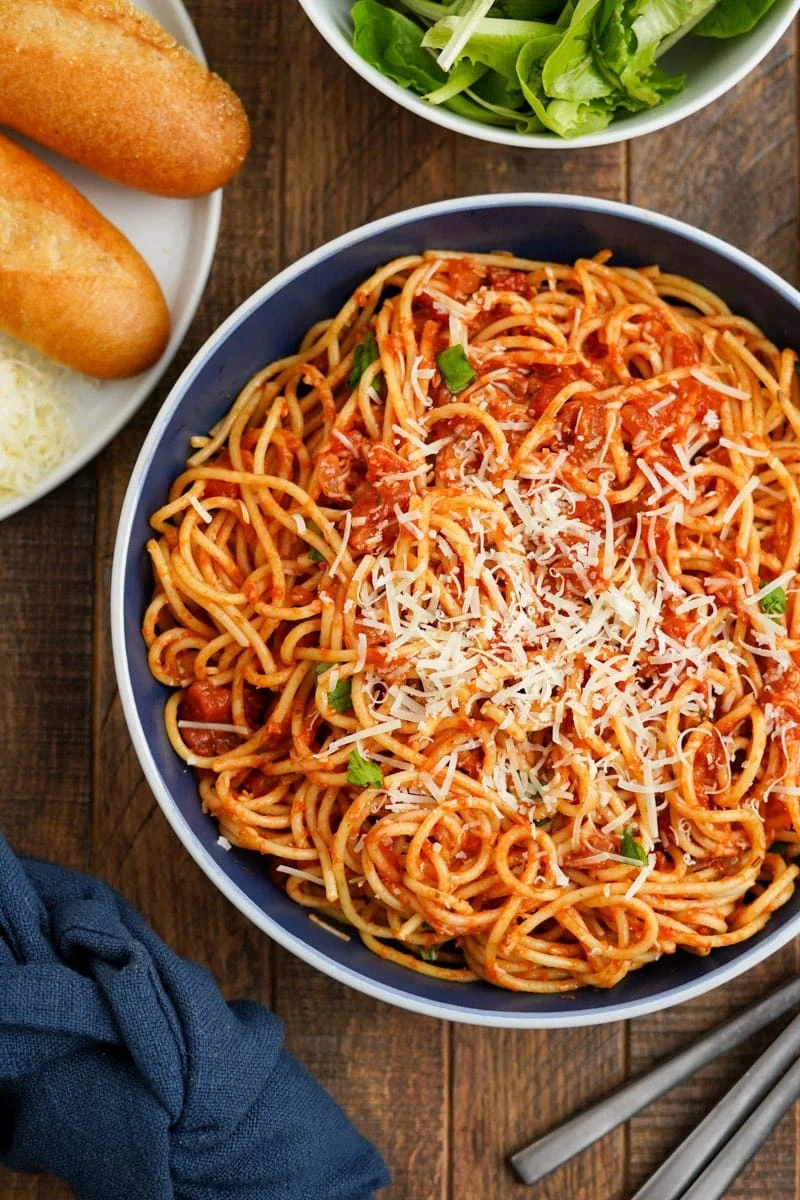
Arrabbiata is a spicy tomato sauce served over pasta, with garlic, crushed red pepper and fresh basil. This version comes together in about 25 minutes and makes a generous sauce for four.
Ingredients
- 454 g (1 pound)spaghetti
- 30 ml (2 tablespoons)extra-virgin olive oil
- 150 g (1 cup), finely choppedsweet onion
- 5 cloves, mincedgarlic
- 5 ml (1 teaspoon)crushed red pepper
- 5 ml (1 teaspoon)Italian seasoning blend
- 794 g (28 ounces)canned crushed tomatoes
- 411 g (14.5 ounces)canned petite diced tomatoes
- 10 g (½ cup), chopped and dividedfresh basil
- 12.5 g (1 tablespoon)white granulated sugar
- 5 ml (1 teaspoon)salt
- 2.5 ml (½ teaspoon)ground black pepper
- To taste, for servingParmesan cheese
Instructions
- 1
Cook the pasta
Cook the spaghetti according to the packet instructions. Drain and set aside, or make the sauce while the pasta cooks.
- 2
Heat the oil
Warm the olive oil in a large saucepan over medium heat.
- 3
Soften the aromatics
Add the onion and cook for about 3 minutes, until tender and translucent. Stir in the garlic, crushed red pepper and Italian seasoning, then cook for 1 minute more, or until fragrant.
- 4
Add the tomatoes
Stir in the crushed tomatoes, diced tomatoes, ¼ cup of the chopped basil, sugar, salt and black pepper until combined.
- 5
Simmer the sauce
Cover the pan, bring the sauce to a simmer over medium-low heat and cook for 20 minutes.
- 6
Finish with basil
Stir in the remaining fresh basil and serve the sauce over the cooked pasta.
- 7
Serve with Parmesan
If you like, top with extra fresh basil and freshly grated Parmesan cheese.
What is arrabbiata sauce?
Arrabbiata is an Italian tomato sauce known for its heat, usually from chilli, and its simple combination of tomato and garlic. Its name is associated with being angry or fiery.
This version uses both crushed and diced tinned tomatoes for a sauce with a smooth base and small pieces of tomato. Basil stirred in at the end adds a fresh note.
Nutrition and macros by portion
The nutrition label shows one serving as written: 234 calories, 8g protein, 41g carbs, 6g fat.
| Portion | Adjustment | kcal | Protein | Carbs | Fat |
|---|---|---|---|---|---|
| Lighter | Less pasta, more vegetables | 164 kcal | 6g | 29g | 4g |
| This serving | As written | 234 kcal | 8g | 41g | 6g |
| Hungry | Larger pasta portion | 351 kcal | 12g | 62g | 9g |
The spaghetti supplies most of the carbohydrates, while olive oil contributes much of the fat. The tomatoes and Parmesan contribute some protein, with Parmesan adding more if you use it. Pair a serving with vegetables or salad for a more varied plate.
The tomato combination
Crushed tomatoes: these make up the bulk of the sauce and give it a thick, even base.
Diced tomatoes: their pieces bring a chunkier texture, so the finished sauce is not entirely smooth.
Build the flavour gently
Onion: cook it for about 3 minutes until softened and translucent; this gives it time to lose its raw edge.
Garlic and chilli: add them with the Italian seasoning and cook for just 1 minute, until fragrant. Keep stirring so the garlic does not catch in the pan.
Choose your heat level
The crushed red pepper provides the sauce’s heat. The listed teaspoon gives the recipe its intended spicy character, but chilli strength can vary.
For a milder sauce, use less crushed red pepper; for more heat, add a little extra to taste.
Simmer for a rounded sauce
Once the tomatoes are in, cover the pan and simmer over medium-low heat for 20 minutes. Keep the heat gentle so the sauce bubbles steadily rather than spluttering.
Stir in the reserved basil after cooking to preserve its fresh flavour. The sauce is ready to spoon over the cooked spaghetti.
Serving ideas
Toss the sauce with the drained spaghetti or spoon it over each portion. Finish with extra basil and freshly grated Parmesan if desired.
A simple green salad or cooked vegetables alongside can round out the meal without competing with the spicy tomato sauce.
Recipe notes & tips
- Start the pasta while preparing the sauce to help the two components finish at a similar time.
- Reserve the remaining chopped basil until the sauce has simmered so it tastes fresh.
- Stir the sauce occasionally during its 20-minute simmer.
- Grate Parmesan just before serving for the best texture.
- Taste the sauce before serving and adjust the chilli to suit your preference.
Variations
- More heat: add extra crushed red pepper to the sauce to taste.
- Milder chilli: reduce the crushed red pepper for a gentler sauce.
- Herb change: use some fresh parsley in place of the finishing basil.
- Different pasta: serve the sauce with another pasta shape instead of spaghetti.
- Cheese-free: leave off the Parmesan and serve with extra fresh basil.
Common mistakes to avoid
- Browning the onion: cook it until tender and translucent rather than letting it darken.
- Scorching the garlic: stir it with the seasonings and limit cooking to about 1 minute.
- Boiling the sauce hard: keep the heat at medium-low for a gentle simmer.
- Adding all the basil early: reserve half to stir in after simmering.
- Overcooking the pasta: follow the packet timing and drain it when ready.
How to store
Refrigerate leftover sauce and pasta in airtight containers for up to 3 days. Reheat gently in a saucepan or microwave until piping hot, adding a splash of water if the sauce has thickened. Store sauce separately from pasta if possible.
Frequently asked questions
How spicy is arrabbiata sauce?
It is intended to be spicy, with the heat coming from crushed red pepper. Use less or more than the listed teaspoon to suit your taste.
Can I make the sauce while the pasta cooks?
Yes. The method allows for preparing the sauce while the spaghetti cooks, which helps keep the total cooking time down.
Can I use a different pasta shape?
Yes. The sauce can be served over another pasta shape if you do not have spaghetti.
Why use two types of tinned tomatoes?
Crushed tomatoes give the sauce a thick base, while petite diced tomatoes add small pieces for texture.
When should I add the basil?
Add half with the tomatoes before simmering, then stir in the rest after the 20-minute simmer.
Do I have to add Parmesan?
No. Parmesan is optional; the sauce can be served with extra basil instead.
Cook it from the original
This recipe comes from wholefully.com. Their page has the author’s own photos, notes and tips — the best place to cook it from.
Open the recipe on wholefully.com