
Oven Baked Ham
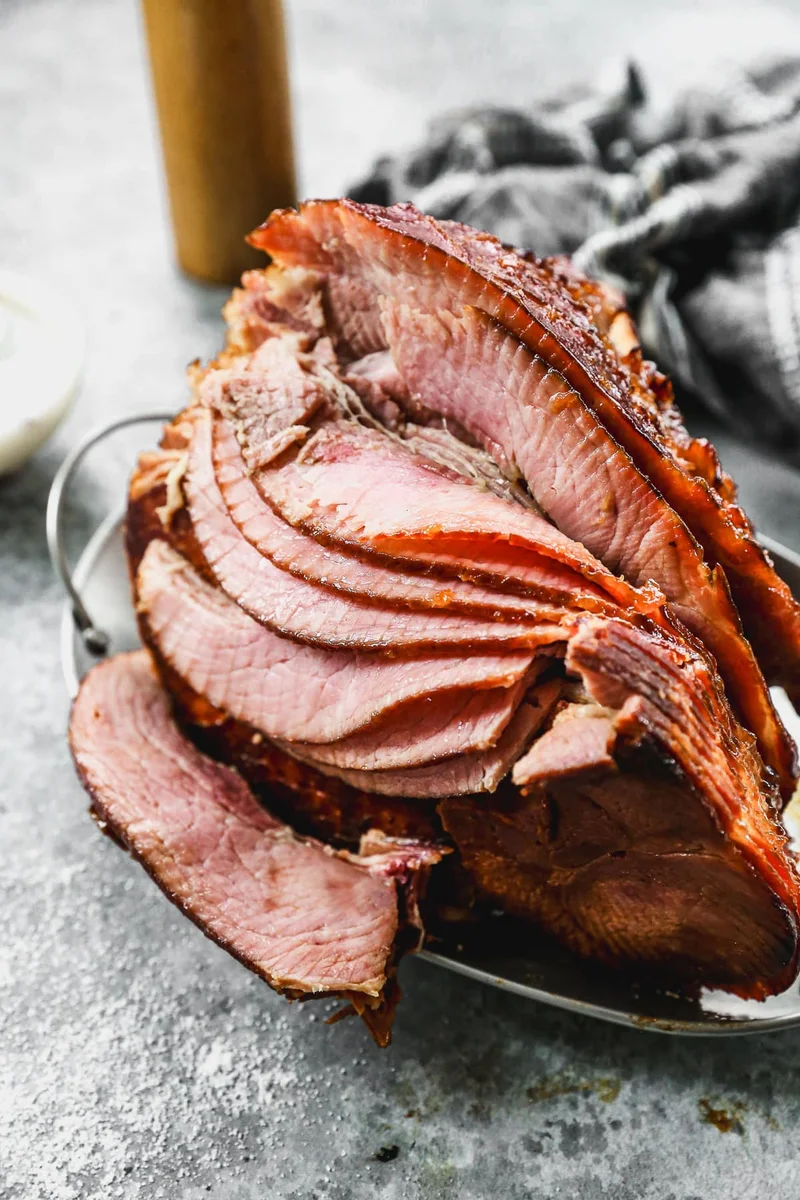
A spiral-cut ham is marinated in dry white wine, then baked under foil and finished with a brown sugar glaze. It makes a straightforward American-style centrepiece for a holiday meal, with most of the hands-on work happening at the end.
Ingredients
- 1 (4.1–5.4 kg / 9–12 lb, or half ham 2.3–3.2 kg / 5–7 lb)spiral-cut ham
- 1 bottle (750 ml)dry white wine, such as Pinot Grigio or Sauvignon Blanc
- 1 recipeEasy Brown Sugar Ham Glaze, or glaze of choice
Instructions
- 1
Marinate the ham
Check the bone for a plastic removal disc and take it out if present. With a thin, sharp knife, score crosshatch cuts over the top and sides. Put the ham in a large bowl or zip-top bag, pour in the wine, then cover or seal. Marinate for at least 6 hours or overnight, turning the ham a few times for even coverage. If you want to refer to the package cooking times, take a photo before disposing of the packaging.
- 2
Prepare for baking
When ready to cook, leave the ham at room temperature for at least 1 hour. Heat the oven to 165°C (325°F). Allow 12 minutes per pound, or follow the package instructions, then subtract 20 minutes and note the resulting baking time. For example, a 4.5 kg (10 lb) ham takes 120 minutes at that rate; subtract 20 minutes for a baking time of 100 minutes.
- 3
Bake under foil
Take the ham out of the marinade and discard the marinade. Set the ham flat-side down in a large roasting pan and cover it tightly with foil. Bake for the time calculated in the previous step, preparing the glaze while it cooks.
- 4
Glaze and finish
Twenty minutes before the ham is due to finish baking, take it out and raise the oven temperature to 220°C (425°F). Remove the foil and spread the glaze all over the ham. Return it to the oven for 15–20 minutes, until the glaze is caramelised and the centre reaches 60°C (140°F) on an instant-read thermometer. The ham is already cooked, so this stage is to heat it through; avoid overcooking, and allow a little more or less time depending on its shape. It can be removed at 57°C (135°F), as its temperature will rise while resting. Transfer it to a cutting board and rest for 15 minutes before serving. Use the pan juices to make ham gravy if desired.
What is oven-baked ham?
Oven-baked ham is a familiar American holiday centrepiece: a cured ham is warmed in the oven and often finished with a sweet glaze. This version uses a wine marinade for flavour, then a hot final bake to caramelise the glaze.
A spiral-cut ham is already sliced for serving, which makes carving easier. Keeping it covered for most of the bake helps it heat without exposing the slices to prolonged high heat.
Nutrition and macros by portion
The nutrition label shows one serving as written: 620 calories, 71g protein, 3g carbs, 29g fat.
| Portion | Adjustment | kcal | Protein | Carbs | Fat |
|---|---|---|---|---|---|
| Lighter | Smaller slice, more vegetables | 434 kcal | 50g | 2g | 20g |
| This serving | As written | 620 kcal | 71g | 3g | 29g |
| Hungry | Larger ham portion | 930 kcal | 107g | 5g | 44g |
Most of the carbohydrates come from the brown sugar glaze, while the ham provides most of the protein and fat. Serve a slice with vegetables and a modest portion of potatoes or another starchy side to make a balanced plate.
Choosing the ham and wine
Ham: The recipe calls for a spiral-cut ham, either a full ham weighing 4.1–5.4 kg (9–12 lb) or a half ham weighing 2.3–3.2 kg (5–7 lb). Check the bone for a plastic removal disc before marinating.
Wine: Use a 750 ml bottle of dry white wine, such as Pinot Grigio or Sauvignon Blanc. The recipe discards the marinade after soaking, so do not use it as a sauce.
Scoring and marinating
Scoring: Make shallow crosshatch cuts over the top and sides with a thin, sharp knife. This gives the surface more crevices for the glaze to coat.
Marinating: Leave the ham in the wine for at least 6 hours or overnight, turning it a few times. Keep it covered in a bowl or sealed in a zip-top bag while it marinates.
Calculating the baking time
Timing: Allow 12 minutes per pound, or use the package instructions, and subtract 20 minutes for the covered bake. For a 10 lb ham, that calculation gives 100 minutes before glazing.
Package: Take a photo of the cooking instructions before throwing away the packaging if you plan to use its timing. The ham's shape can affect how quickly it heats, so check its temperature near the end.
Getting the glaze right
Temperature change: The oven moves from 165°C (325°F) to 220°C (425°F) for the finishing stage. Remove the foil before spreading the glaze over the ham.
Doneness: Bake for 15–20 minutes after glazing, looking for a caramelised surface and a centre temperature of 60°C (140°F). Since the ham is already cooked, avoid leaving it in the oven longer than needed.
Resting and serving
Rest: Move the finished ham to a cutting board and leave it for 15 minutes before serving. The recipe notes that the temperature may continue to rise during this time.
To serve: The spiral-cut slices make serving simple. If you like, use the roasting-pan juices to make ham gravy while the ham rests.
Recipe notes & tips
- Remove any plastic disc from the ham bone before marinating.
- Turn the ham several times during the wine marinade for more even coverage.
- Bring the ham to room temperature for at least 1 hour before baking.
- Use the ham's package instructions if you prefer them to the 12-minutes-per-pound calculation.
- Check the temperature with an instant-read thermometer near the end of the glazed bake.
- Rest the ham for 15 minutes before serving.
Variations
- Choose another glaze: Use a glaze of your choice in place of the brown sugar glaze.
- Use a half ham: Choose a 2.3–3.2 kg (5–7 lb) half ham instead of a full ham.
- Try Pinot Grigio: Use this dry white wine for the marinade.
- Try Sauvignon Blanc: This is another dry white wine option named in the recipe.
- Make gravy: Use the roasting-pan juices for ham gravy while the ham rests.
Common mistakes to avoid
- Leaving the plastic disc in place: Check the bone and remove the disc before cooking.
- Skipping the turns: Turn the ham a few times during marinating so the wine reaches it more evenly.
- Guessing the bake time: Calculate it from the ham's weight or follow the package instructions, then subtract 20 minutes.
- Glazing too early: Wait until 20 minutes before the planned finish, then raise the oven temperature and glaze.
- Overcooking the ham: Check the centre temperature and remove it once heated through and glazed.
- Cutting straight away: Rest the ham for 15 minutes before serving.
How to store
Refrigerate leftover ham in a covered container. Reheat portions until hot, taking care not to heat them for longer than necessary, as the ham can dry out.
Frequently asked questions
Can I marinate the ham overnight?
Yes. Marinate it for at least 6 hours or overnight, turning it a few times. Keep it covered or sealed while it marinates.
How long should I bake the ham?
Allow 12 minutes per pound, or follow the ham package instructions, then subtract 20 minutes for the covered bake. Finish with 15–20 minutes uncovered after glazing.
What temperature should the ham reach?
The recipe gives 60°C (140°F) as the target centre temperature. It also notes that you can remove the ham at 57°C (135°F), as its temperature will rise while it rests.
Should I use the wine marinade as a sauce?
No. Remove the ham from the marinade and discard the wine before baking. The recipe suggests using the roasting-pan juices for gravy instead.
Can I use a half ham?
Yes. The recipe allows a half ham weighing 2.3–3.2 kg (5–7 lb). Recalculate the baking time for its weight or consult its package instructions.
Why does the oven temperature increase near the end?
The oven is raised to 220°C (425°F) for the glazed finish so the surface can caramelise. The ham is uncovered during this final 15–20-minute stage.
Cook it from the original
This recipe comes from wellplated.com. Their page has the author’s own photos, notes and tips — the best place to cook it from.
Open the recipe on wellplated.com