
Perfect Roast Chicken
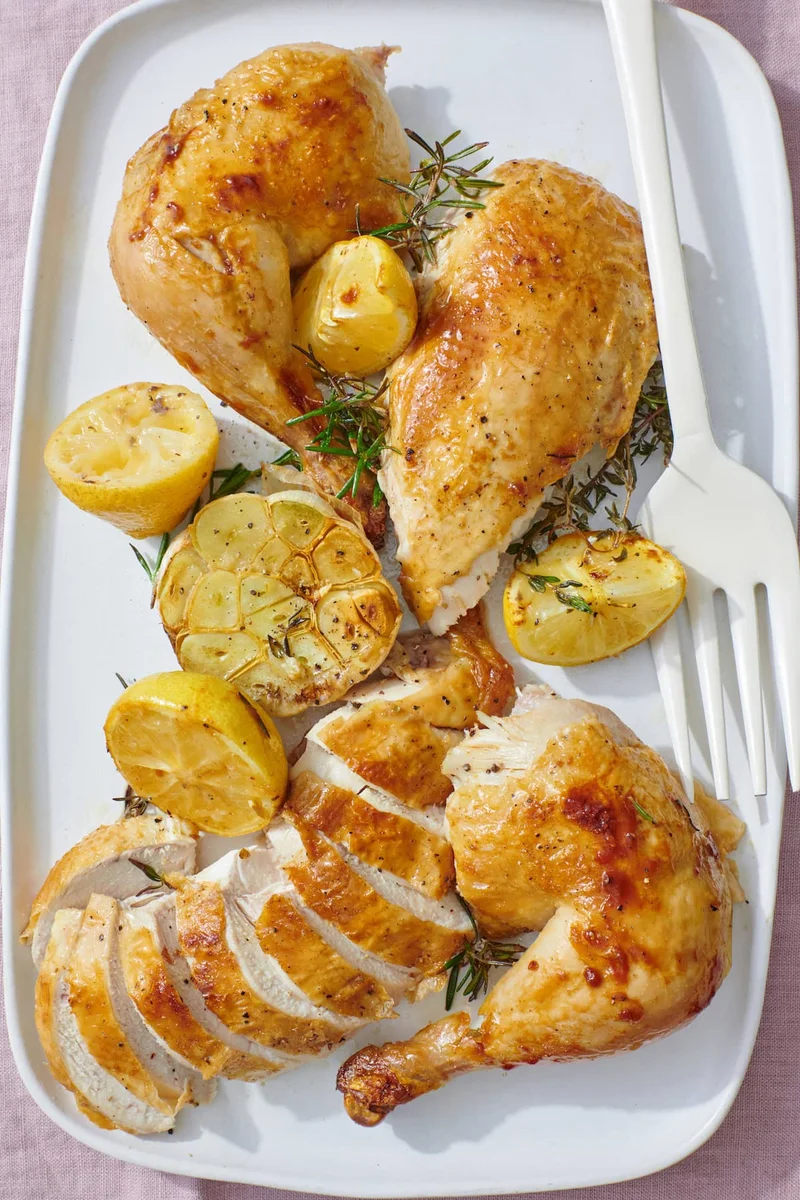
A simple American-style roast chicken with crisp skin, juicy meat and a fragrant centre of herbs, lemon and garlic. It makes a satisfying centrepiece with little hands-on preparation.
Ingredients
- 1 whole (about 1.8 kg / 4 lb)chicken
- 15 ml (1 tablespoon)olive oil
- 15 ml (3 teaspoons)kosher salt
- 3–4 sprigsthyme, rosemary or another fresh herb of your choice
- 1, halvedlemon
- 4–5 cloves, peeled and crushed (or 1 head, halved)garlic
Instructions
- 1
Dry the chicken
Pat the chicken dry inside and out, removing as much moisture as possible.
- 2
Oil and season
Rub the olive oil over the chicken and season it with salt inside and out.
- 3
Choose a pan
Set the chicken in a 23 cm (9-inch) skillet with an ovenproof handle, a cast-iron skillet or a foil-lined baking tray.
- 4
Heat the oven
Heat the oven to 230°C (450°F).
- 5
Fill and tie
Put the herbs, lemon and garlic inside the chicken, then tie its legs together.
- 6
Roast the chicken
Roast for 15 minutes at 230°C (450°F). Lower the oven to 175°C (350°F) and roast for a further 45–50 minutes, or until the internal temperature reads 71°C (160°F).
- 7
Rest and serve
Take the chicken out of the oven and leave it to rest for 10 minutes before serving.
What is roast chicken?
Roast chicken is a familiar American-style centrepiece: a whole bird cooked in the oven until the skin browns and the meat is tender. This version keeps the preparation straightforward, using oil and salt for the outside and lemon, garlic and herbs to scent the cavity.
Drying the skin before roasting helps it brown, while the two oven temperatures give the chicken an initial blast of heat followed by a longer roast.
Nutrition and macros by portion
The nutrition label shows one serving as written: 512 calories, 41g protein, 4g carbs, 36g fat.
| Portion | Adjustment | kcal | Protein | Carbs | Fat |
|---|---|---|---|---|---|
| Lighter | More vegetables, less skin | 358 kcal | 29g | 3g | 25g |
| This serving | As written | 512 kcal | 41g | 4g | 36g |
| Hungry | Larger chicken portion | 768 kcal | 62g | 6g | 54g |
The chicken provides most of the protein, while the olive oil and the bird’s skin contribute much of the fat. Carbohydrate is minimal in the chicken itself; balance the plate with vegetables and, if you want a more substantial meal, a serving of potatoes or bread.
Getting the chicken ready
Dry skin: Pat the bird thoroughly, including inside the cavity. Surface moisture can slow browning.
Seasoning: Rub the oil over the whole chicken and distribute the salt inside and out so the seasoning is not limited to the skin.
Choosing herbs and aromatics
Herbs: Thyme and rosemary both suit roast chicken; use either or another fresh herb you like. The recipe leaves the choice flexible.
Cavity filling: Add the halved lemon and crushed garlic with the herbs, then tie the legs together as directed. These aromatics perfume the chicken as it roasts.
The two-temperature roast
Initial heat: Start at 230°C (450°F) for 15 minutes to get the roasting underway.
Finishing heat: Reduce the oven to 175°C (350°F) and continue for 45–50 minutes. Check the internal temperature towards the end of cooking rather than relying only on the clock.
Checking doneness and resting
Temperature: The recipe gives 71°C (160°F) as its internal-temperature cue. Check the thickest part of the meat without touching bone.
Resting: Leave the chicken for 10 minutes after roasting before serving. This also gives you time to finish sides or bring the serving dishes to the table.
What to serve with it
A roast chicken pairs well with roasted potatoes or bread to catch the juices, plus a green vegetable such as green beans or broccoli. For a lighter plate, serve it with a crisp salad and plenty of vegetables.
Recipe notes & tips
- Use kitchen paper to dry the cavity as well as the outside of the bird.
- Let the chicken sit briefly at room temperature while the oven heats, rather than putting it straight from the fridge into the oven.
- Use a roasting pan or skillet that holds the chicken without crowding it.
- Check the temperature in the thickest part of the meat and avoid touching bone with the thermometer.
- Rest the chicken for the full 10 minutes before carving.
Variations
- Citrus twist: Add orange in place of the lemon for a different aromatic note.
- Herb choice: Use thyme, rosemary or another fresh herb you enjoy.
- Garlic option: Use half a head of garlic instead of the individual peeled cloves.
- Pan vegetables: Arrange chopped vegetables around the chicken if your roasting pan has room.
- Extra seasoning: Add black pepper alongside the salt before roasting.
Common mistakes to avoid
- Damp skin: Pat the chicken dry inside and out before adding oil so the surface can brown.
- Uneven seasoning: Season the cavity as well as the outside of the bird.
- Crowded pan: Choose a pan with enough room around the chicken for it to roast rather than be tightly packed.
- Guessing doneness: Check the internal temperature instead of relying only on appearance or timing.
- Skipping the rest: Give the chicken 10 minutes to rest before carving and serving.
How to store
Refrigerate leftover chicken in a covered container within 2 hours of cooking and use within 3–4 days. Reheat portions until steaming hot throughout, or enjoy the cooked meat cold.
Frequently asked questions
Can I use dried herbs?
The recipe specifies fresh herbs. If using dried herbs instead, use a modest amount, as they are more concentrated, and put them in the cavity with the lemon and garlic.
What pan can I use?
Use a 23 cm (9-inch) skillet with an ovenproof handle, a cast-iron skillet or a baking tray lined with foil, as listed in the method.
How do I know when the chicken is done?
The recipe calls for an internal reading of 71°C (160°F). Measure in the thickest part of the meat without touching bone.
Why does the chicken need to rest?
Resting is part of the method and gives the chicken 10 minutes to settle after it comes out of the oven. Use that time to prepare sides or set out plates.
Can I prepare the chicken ahead?
You can dry and season it ahead, then keep it covered in the refrigerator until you are ready to roast. Keep raw chicken separate from ready-to-eat foods.
Cook it from the original
This recipe comes from weelicious.com. Their page has the author’s own photos, notes and tips — the best place to cook it from.
Open the recipe on weelicious.com