
Tartines
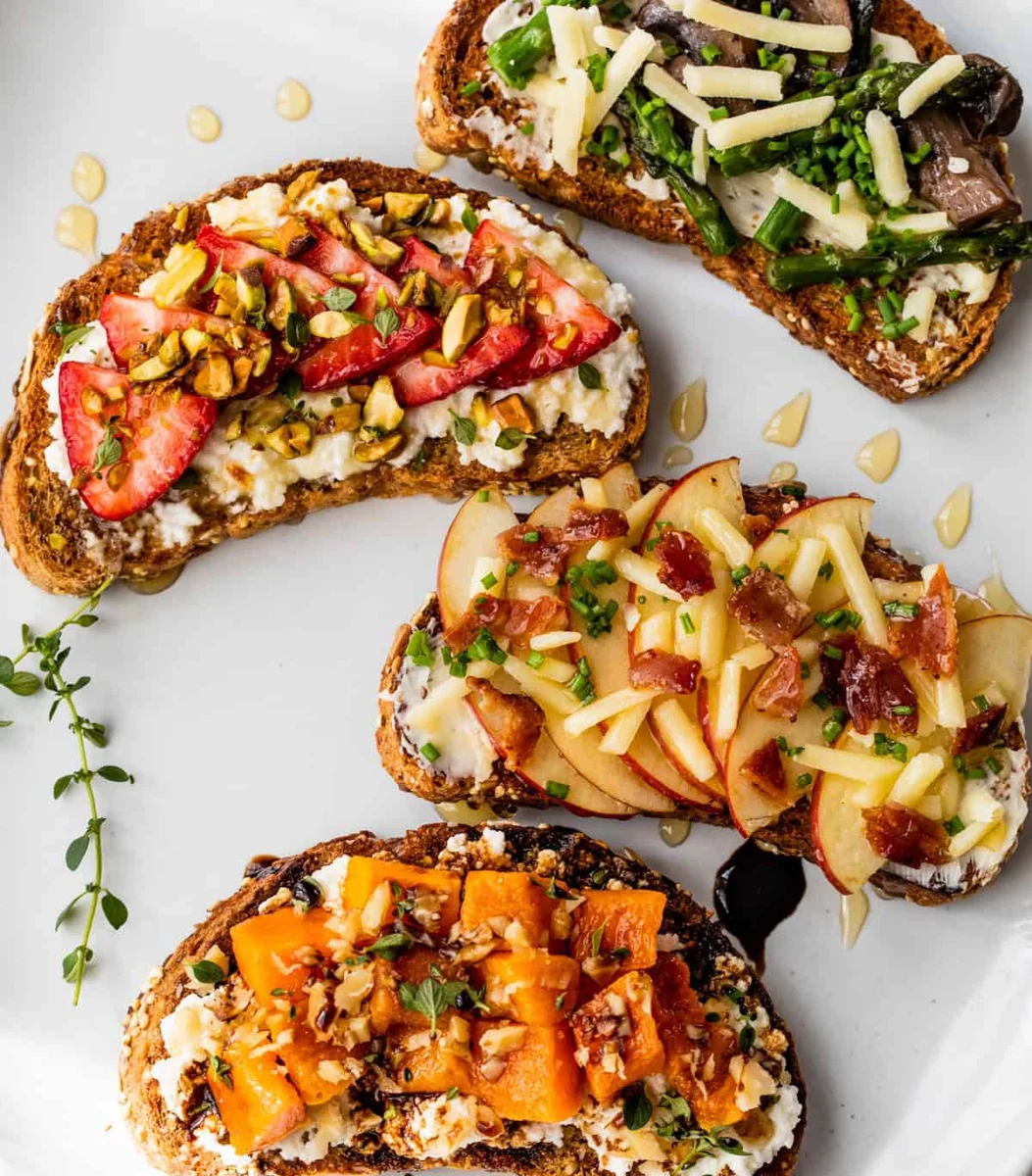
Tartines are French open-faced sandwiches built on toasted bread and finished with a mix of spreads, toppings and garnishes. They make a quick, adaptable meal when you want to use what you have on hand.
Ingredients
- to tasteBread, such as sourdough, country bread or rye
- to tasteBase layer, such as butter, goat’s cheese, ricotta or hummus
- to taste, optionalSpread, such as jam, caramelised onions or mustard
- to taste, optionalProtein, such as tinned tuna, bacon or smoked salmon
- to tasteFruit or vegetables
- to taste, optionalMelting cheese
- to taste, optionalFinishing touches, such as flaky sea salt, balsamic glaze, olives or grated Parmesan
Instructions
- 1
Toast the bread
Toast the bread in the oven for a large batch, or use a toaster or toaster oven for a smaller batch.
- 2
Add the base
Spread your chosen base layer over the bread to help keep the toppings from making it soggy.
- 3
Layer the toppings
Arrange the remaining ingredients on top of the base.
- 4
Melt the cheese
If you like, place the tartines under the grill to melt the cheese.
What are tartines?
A tartine is a French-style open-faced sandwich: a slice of bread topped rather than enclosed in another slice. The name and format are associated with French café and home cooking, where bread makes a simple base for a range of savoury or sweet toppings.
This version is a flexible template rather than a fixed combination. Toasted bread, a protective spread and toppings of your choice make it easy to adapt to the ingredients you have.
Nutrition and macros by portion
The nutrition label shows one serving as written: 260 calories, 8g protein, 33g carbs, 11g fat.
| Portion | Adjustment | kcal | Protein | Carbs | Fat |
|---|---|---|---|---|---|
| Lighter | Use a lighter base | 182 kcal | 6g | 23g | 8g |
| This serving | As written | 260 kcal | 8g | 33g | 11g |
| Hungry | Add another tartine | 390 kcal | 12g | 50g | 17g |
The bread supplies most of the carbohydrates, while butter or cheese can contribute much of the fat; the protein depends on the base and optional toppings you choose. Pair a tartine with a salad or vegetables for a more substantial plate.
Choose a sturdy bread
Bread choice: Sourdough, country bread and rye are all suggested options. A slice that can support its toppings is easier to assemble and eat.
Toasting: The recipe allows a toaster, toaster oven or oven, depending on how many tartines you are making. Toast the bread before adding the toppings.
Build a good base
Spread: Butter, goat’s cheese, ricotta and hummus are possible base layers. Choose one that suits the other toppings you plan to add.
Barrier: Spread the base across the bread before layering on the other ingredients. It helps stop moisture from the toppings soaking into the toast.
Layer for balance
Toppings: Combine the optional spread or protein with fruit or vegetables to make your own mix. The recipe leaves the combinations open, so you can choose flavours that work together.
Finish: Melting cheese is optional, as are finishing touches such as olives, balsamic glaze or grated Parmesan. Add a final garnish to suit the topping combination.
Know when they are ready
Toast first: The bread should be toasted before you add the base and toppings; the method gives no specific browning time, so use your preferred level of toastiness.
Grill last: Only grill the tartines if you have chosen melting cheese. Take them out once the cheese has melted to your liking.
Serve them straight away
Tartines are quick to assemble and the stated total time is 10 minutes. Toasting and topping the bread just before serving helps preserve its texture.
Serve them as a light meal or alongside a salad or soup. Pick accompaniments that suit the toppings rather than adding every suggested ingredient to one slice.
Recipe notes & tips
- Toast the bread before adding any toppings.
- Spread the base layer across the slice to help protect it from moisture.
- Choose toppings that complement one another rather than piling on every option.
- Use the oven when preparing a larger batch and a toaster for a smaller one.
- Add melting cheese only if you plan to finish the tartines under the grill.
- Add delicate finishing touches after grilling.
Variations
- Smoked salmon: Pair it with a creamy base and finish with a little flaky sea salt.
- Tinned tuna: Add it over a base of your choice with vegetables for a savoury tartine.
- Caramelised onions: Spread them over the toast with goat’s cheese for a rich, savoury combination.
- Jam: Use it with butter or ricotta for a sweet-leaning tartine.
- Olives: Scatter them over a vegetable-topped tartine for a briny finish.
Common mistakes to avoid
- Skipping the toast: Toast the bread first so it starts crisp rather than soft.
- Leaving gaps in the base: Spread it over the slice to help shield the bread from moist toppings.
- Overloading the bread: Use a manageable amount of toppings so the tartine is easier to handle.
- Grilling without cheese: The optional grill step is for melting cheese, so skip it when your toppings do not need melting.
- Adding everything at once: Choose a few compatible toppings instead of treating every suggestion as required.
How to store
Tartines are best assembled and eaten straight away, as the toppings can soften the toast. Keep any unused ingredients covered and refrigerated as appropriate, and toast fresh bread when you are ready to make more.
Frequently asked questions
What bread can I use for tartines?
The recipe suggests sourdough, country bread or rye, but you can use another bread that holds its toppings. Toast it before assembling.
Do I have to use a base layer?
The base layer is part of the method and helps prevent the toppings from making the bread soggy. Choose from options such as butter, goat’s cheese, ricotta or hummus.
Can I make tartines without cheese?
Yes. Both the base and melting cheese are flexible choices, and the cheese-melting step is optional.
How do I make tartines for a group?
Toast a larger batch of bread in the oven, as suggested in the method. Add the base and toppings after toasting.
Can tartines be served cold?
The method toasts the bread, but only the optional melting-cheese step requires further heating. If you omit melting cheese, you can serve them without grilling.
Cook it from the original
This recipe comes from wellplated.com. Their page has the author’s own photos, notes and tips — the best place to cook it from.
Open the recipe on wellplated.com