
Garlic Butter Rosemary Rolls
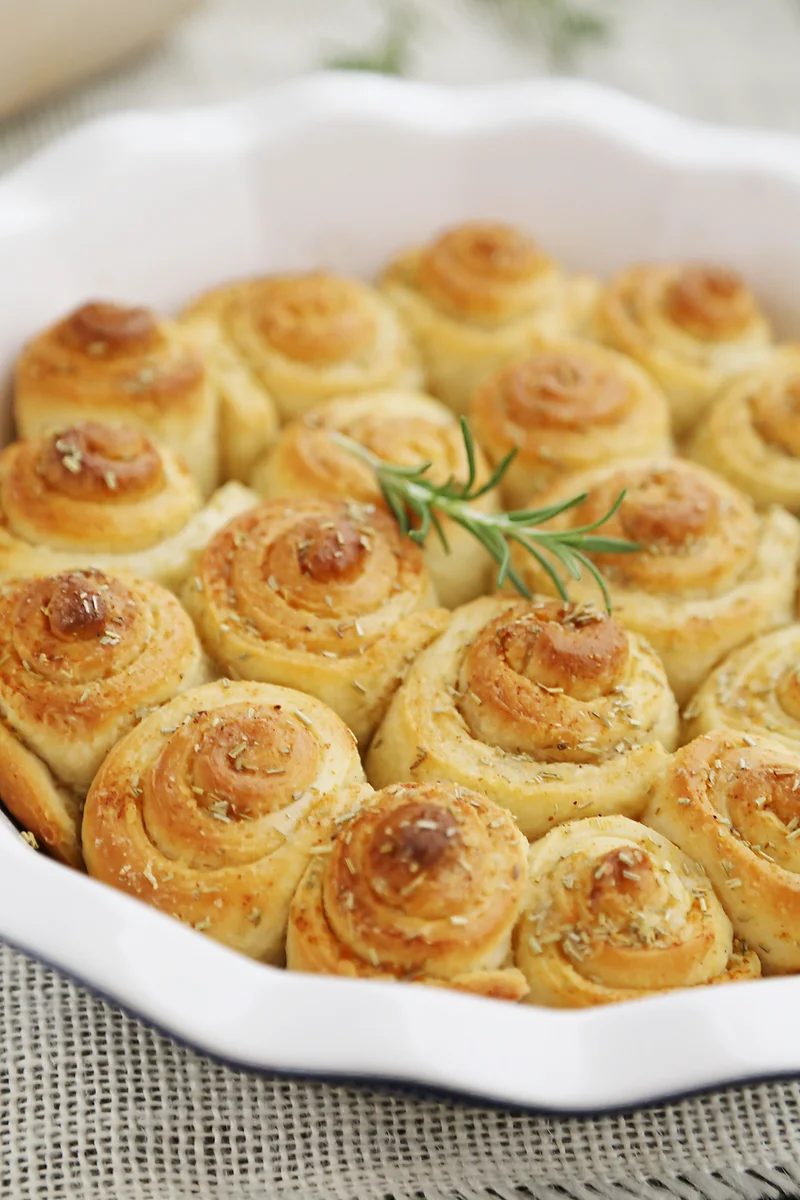
Soft, homemade rolls are brushed with rosemary garlic butter before and after baking for a savoury finish. They make a handy side for soup, pasta or a shared meal.
Ingredients
- 220–280 g (1¾–2¼ cups)plain flour
- 1 packetFleischmann's® Pizza Crust Yeast
- 1½ teaspoonsgranulated sugar
- ¾ teaspoonkosher salt
- 160 ml (⅔ cup)warm water
- 45 ml (3 tablespoons)olive oil
- 42 g (3 tablespoons), meltedbutter
- ¼ teaspoonchopped rosemary
- ⅛ teaspoongarlic powder
Instructions
- 1
Mix the dough
In a large bowl, combine 125 g (1 cup) of the flour with the yeast, sugar and salt. Stir in the warm water and olive oil until well blended, about 1 minute. Gradually mix in enough of the remaining flour to make a soft dough that forms a ball and is slightly sticky. Knead on a floured surface for a few minutes, until smooth and elastic. Put the dough in an oiled bowl and leave it to rise in a warm place for 30 minutes.
- 2
Shape the rolls
Take the dough out of the bowl and roll it out on a floured surface into a large rectangle. Cut it into long strips, then cut the strips in half crosswise. Roll the pieces into small rolls and arrange them in a greased cake tin. Cover and leave to rise in a warm place for about 1 hour.
- 3
Heat the oven
When ready to bake, preheat the oven to 200°C (400°F).
- 4
Brush and bake
Mix the melted butter, rosemary and garlic powder in a small bowl. Brush half of the mixture over the rolls just before baking. Bake for 20–25 minutes, then remove from the oven and brush with the remaining butter mixture.
What are garlic butter rosemary rolls?
These are small yeast-raised bread rolls finished with a buttery herb topping. The recipe uses a quick pizza-crust yeast rather than a long, slow-rise dough, making it a straightforward way to bake warm rolls at home.
Olive oil keeps the dough supple, while rosemary and garlic give the butter a savoury aroma. Brushing some topping on before baking and the rest afterwards layers the flavour onto the crust.
Nutrition and macros by portion
The nutrition label shows one serving as written: 360 calories, 7g protein, 47g carbs, 16g fat.
| Portion | Adjustment | kcal | Protein | Carbs | Fat |
|---|---|---|---|---|---|
| Lighter | Use less butter topping | 252 kcal | 5g | 33g | 11g |
| This serving | As written | 360 kcal | 7g | 47g | 16g |
| Hungry | Serve an extra roll | 540 kcal | 11g | 71g | 24g |
Most of the carbohydrates come from the flour, while olive oil and butter contribute most of the fat. The small amount of yeast adds some protein, but these rolls are not a major protein source; serve them with a protein-rich main and vegetables to balance the plate.
Choosing the flour and yeast
Flour: The recipe gives a range because the dough only needs as much flour as it takes to become a soft, slightly sticky ball. Add it gradually instead of tipping in the full amount at once.
Yeast: Use the specified packet of pizza-crust yeast. The method mixes it directly with the dry ingredients, so follow that order rather than treating it like yeast that needs to be dissolved separately.
Kneading and rising
Kneading: Work the dough on a lightly floured surface for a few minutes, until it feels smooth and elastic. Too much extra flour can make the rolls denser, so dust the surface sparingly.
First rise: Set the covered, oiled bowl somewhere warm for 30 minutes. After shaping, cover the rolls and allow about 1 hour for the second rise.
Shaping the strips
Rolling: Roll the dough into a large rectangle, then cut it into long strips and halve them crosswise. Roll each piece into a small roll, keeping the pieces reasonably similar in size so they bake at a similar pace.
Pan: Arrange the rolls in a greased cake tin. Leave a little room between them, as the second rise gives the dough space to expand.
Getting the bake right
Oven: Bake at 200°C (400°F) for 20–25 minutes. Begin checking at the lower end of the time range, as roll size and oven behaviour can affect how quickly they colour.
Doneness: Look for a golden surface and rolls that feel set rather than doughy. The recipe does not specify a target internal temperature.
When to add the garlic butter
Before baking: Brush on half of the rosemary-garlic butter just before the rolls go into the oven. This gives the tops a savoury coating as they bake.
After baking: Brush on the remaining butter as soon as the rolls come out. The warm surface helps it spread over the crust.
What to serve alongside
These rolls suit soup, pasta or a simple salad, where they can be used to mop up sauce. For a fuller plate, pair them with a protein-rich main and plenty of vegetables.
Recipe notes & tips
- Add the remaining flour gradually so the dough stays soft and slightly sticky.
- Use only a light dusting of flour while kneading to avoid making the dough stiff.
- Keep the dough covered during both rises so its surface does not dry out.
- Grease the cake tin well to make the baked rolls easier to lift out.
- Brush the first half of the butter mixture on just before baking, as directed.
Variations
- Fresh garlic: Replace the garlic powder with a small amount of finely minced garlic mixed into the butter.
- Herb swap: Use finely chopped thyme in place of the rosemary.
- Cheesy tops: Sprinkle a little grated hard cheese over the rolls before baking.
- Peppery finish: Add a few grinds of black pepper to the butter mixture.
- Seeded crust: Scatter sesame seeds over the buttered tops before baking.
Common mistakes to avoid
- Adding all the flour at once: The dough may become too firm; add it gradually until the dough is soft and slightly sticky.
- Using too much bench flour: Excess flour can make the rolls dense; dust the work surface lightly.
- Skipping the second rise: The shaped rolls need about 1 hour in a warm place before baking.
- Crowding the tin: Rolls need room to expand; arrange them with a little space between each one.
- Brushing on all the butter at once: The recipe divides the topping; save half to brush over the rolls after baking.
How to store
Store cooled rolls in an airtight container at room temperature for up to 2 days. Warm them briefly in a low oven before serving; the buttered crust is best freshly baked.
Frequently asked questions
Can I use a different yeast?
The method is written for pizza-crust yeast mixed directly into the flour. If substituting another type, check its instructions, as it may require a different preparation or rise time.
How sticky should the dough be?
It should form a ball and remain slightly sticky, as stated in the method. Add the remaining flour a little at a time to reach that texture.
Can I prepare the rolls ahead?
The recipe does not give an overnight or make-ahead method. For the best result, follow the two rises and bake them on the day you plan to serve them.
How can I tell when they are baked?
Bake for 20–25 minutes at 200°C (400°F), looking for golden tops and rolls that feel set. Check them from 20 minutes onwards.
Can I use dried rosemary?
The recipe calls for chopped rosemary. Dried rosemary can be used, but crush it finely first so it mixes evenly into the butter.
Cook it from the original
This recipe comes from thecomfortofcooking.com. Their page has the author’s own photos, notes and tips — the best place to cook it from.
Open the recipe on thecomfortofcooking.com