
Karaage | Japanese Fried Chicken
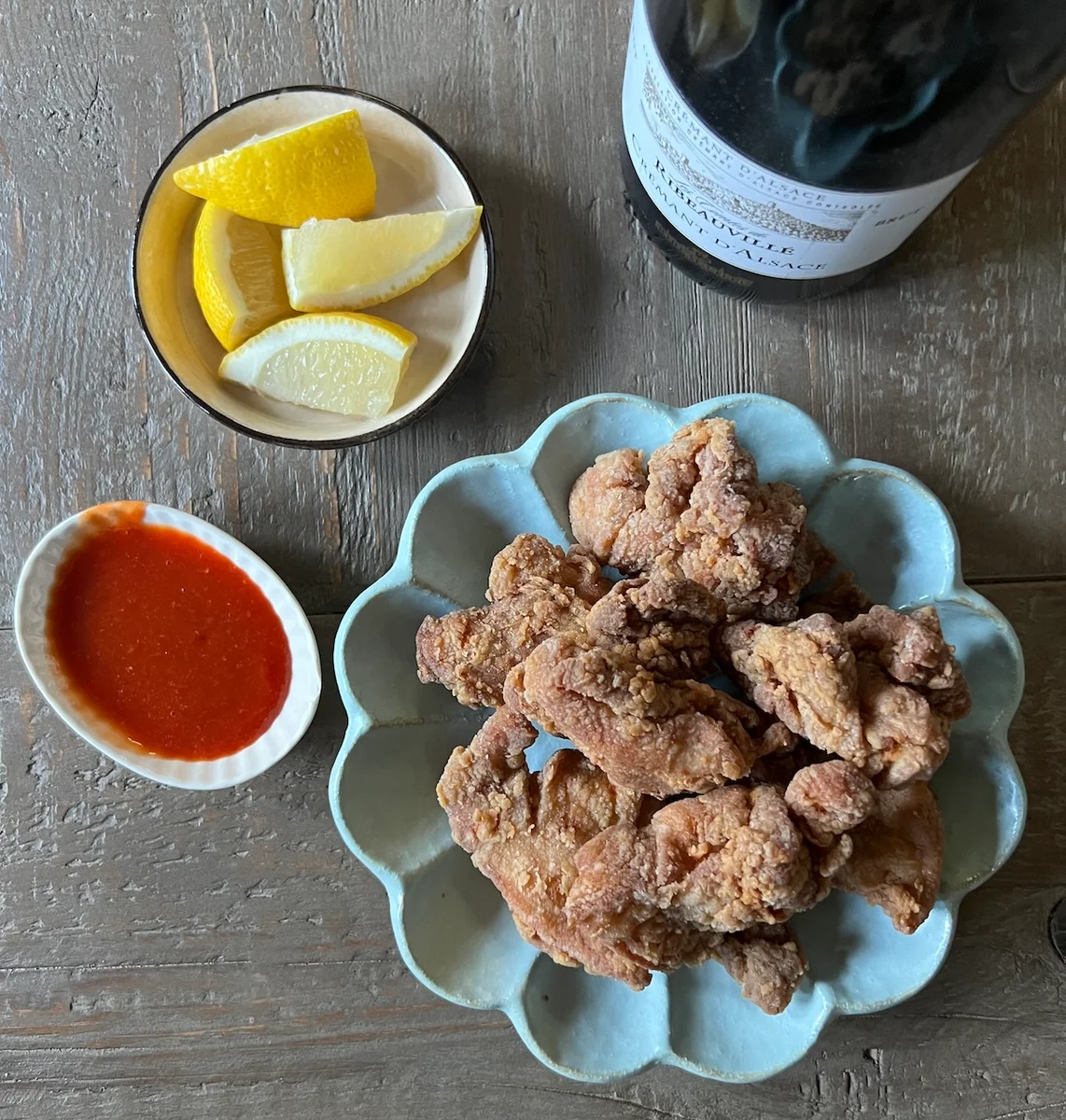
Karaage is Japanese fried chicken with a savoury ginger, garlic and sake marinade and a crisp, golden coating. Marinate it ahead, then fry in batches for a satisfying main course or a crunchy addition to a larger meal.
Ingredients
- 907 g (2 lb)boneless chicken thighs, skin on if possible, cut into quarters
- 1 chunky piece, about 7.5 cm (3 inches)fresh ginger, peeled and grated
- 3 clovesgarlic, grated
- 1 teaspoon (5 ml) coarse sea salt, or ½ teaspoon (2.5 ml) fine sea salt, plus more for sprinklingcoarse sea salt or fine sea salt
- 60 ml (¼ cup)sake
- 2 tablespoons (30 ml)soy sauce
- 1 largeegg
- As neededrapeseed or other neutral oil, for deep-frying
- 90 g (¾ cup)cornflour or potato starch
- 95 g (¾ cup)plain flour
- 1lemon, cut into wedges
Instructions
- 1
Prepare the chicken
Put the quartered chicken thighs in a large bowl or a resealable food bag.
- 2
Marinate the chicken
In a separate bowl, combine the ginger, garlic, salt, sake, soy sauce and egg. Add this mixture to the chicken and turn the pieces until coated. Cover the bowl or seal the bag and refrigerate for at least 2 hours, or overnight. Take the chicken out of the fridge 30 minutes before frying.
- 3
Heat the oil
Cover a baking tray with two layers of kitchen paper. Pour 5 cm (2 inches) of rapeseed oil into a Dutch oven or wok and heat over medium-high heat to 177°C (350°F), checking with a deep-frying thermometer.
- 4
Coat the chicken
Drain the chicken in a fine-mesh sieve to remove excess liquid. Whisk the cornflour or potato starch with the plain flour in a shallow bowl. Coat 4 or 5 chicken pieces at a time, shaking off any excess. Using dry, heatproof tongs or wooden chopsticks, carefully lower the pieces into the hot oil without splashing.
- 5
Fry and serve
Fry 4 or 5 pieces at a time, depending on the pan size, without crowding the pan. Turn them after 3 minutes and fry for another 3 minutes, until golden brown. Transfer to the kitchen paper, sprinkle with salt and serve with lemon wedges.
What is karaage?
Karaage is a Japanese style of frying in which bite-sized pieces are seasoned, coated and fried until crisp. Chicken karaage is a familiar version, often served as a snack, side dish or main course.
This recipe builds flavour before frying with ginger, garlic, sake and soy sauce. A mixture of starch and flour gives the chicken a crisp coating, while lemon adds a bright finish.
Nutrition and macros by portion
The nutrition label shows one serving as written: 570 calories, 35g protein, 36g carbs, 31g fat.
| Portion | Adjustment | kcal | Protein | Carbs | Fat |
|---|---|---|---|---|---|
| Lighter | Remove chicken skin | 399 kcal | 25g | 25g | 22g |
| This serving | As written | 570 kcal | 35g | 36g | 31g |
| Hungry | Serve with rice | 855 kcal | 53g | 54g | 47g |
The chicken provides most of the protein, while the flour, starch and sake contribute carbohydrates. Fat comes mainly from the chicken skin and the oil absorbed during frying; serving it with vegetables and rice can help balance the plate.
The marinade does the work
Ginger and garlic: Grating them helps distribute their flavour through the marinade and over the chicken pieces.
Time: Give the chicken at least 2 hours in the fridge, or leave it overnight. Taking it out 30 minutes before frying helps reduce the chill before it goes into the oil.
Why use two coatings?
Starch: Cornflour or potato starch helps produce a crisp, light shell around each piece.
Plain flour: Combined with the starch, it gives the coating a slightly different texture from using either on its own. Shake off loose flour so it does not fall into the oil and burn.
Frying in batches
Pan space: Fry only 4 or 5 pieces at a time, adjusting to the size of your pan. Crowding can bring down the oil temperature and makes it harder for the pieces to brown evenly.
Safe handling: Lower the chicken gently with dry, heatproof tongs or wooden chopsticks. Keep the oil steady at 177°C (350°F) and avoid splashing.
Look for golden brown
Timing: Turn the chicken after 3 minutes, then fry for another 3 minutes. The recipe’s cue is a golden-brown coating; cut into the largest piece if you need to check that it is cooked through.
Finish: Let excess oil drain on the kitchen paper and sprinkle with salt while the chicken is still hot. Serve with lemon wedges for squeezing.
Serving karaage
As a main: Serve the chicken with rice and a vegetable side, such as a crisp salad or steamed greens, to make a more rounded plate.
For sharing: Set out the lemon wedges and serve the pieces hot as part of a Japanese-inspired meal or as a snack.
Recipe notes & tips
- Use a deep-frying thermometer to keep the oil near 177°C (350°F).
- Drain the chicken well before coating so the flour mixture clings instead of turning pasty.
- Shake off loose coating before lowering each piece into the oil.
- Fry in small batches so the chicken has room to brown.
- Serve soon after frying for the crispest coating.
- For advance preparation, fry the chicken hours ahead and reheat it on a rack in a 190°C (375°F) oven until warm.
Variations
- Use potato starch: Swap it for the cornflour for a different crisp coating.
- Choose boneless thighs: Keep the skin on if possible for a richer result.
- Add more ginger: Increase the grated ginger for a sharper, more aromatic marinade.
- Adjust the salt: Use ½ teaspoon fine sea salt instead of 1 teaspoon coarse sea salt.
- Serve with rice: Add steamed rice and vegetables to make it a fuller meal.
Common mistakes to avoid
- Skipping the marinade: Give the chicken at least 2 hours to take on the ginger, garlic and soy flavours.
- Coating wet chicken: Drain off excess marinade before dredging so the coating does not clump.
- Crowding the pan: Fry 4 or 5 pieces at a time, depending on the pan, to leave space for even browning.
- Adding chicken to cool oil: Heat the oil to 177°C (350°F) before frying.
- Leaving off the salt: Sprinkle the fried pieces while hot so the seasoning sticks.
How to store
Refrigerate leftovers in a sealed container and eat within 3 days. Reheat on a rack in a 190°C (375°F) oven until warmed through; the coating is best freshly fried.
Frequently asked questions
Can I marinate the chicken overnight?
Yes. Cover it or seal the bag and refrigerate for at least 2 hours or overnight.
Can I use chicken without the skin?
Yes. The recipe calls for skin-on thighs if possible, but boneless thighs without skin will also work.
Can I use potato starch instead of cornflour?
Yes. The recipe lists cornflour or potato starch for the coating.
How do I know when the chicken is ready?
Fry each batch for 3 minutes, turn the pieces and fry for 3 minutes more, until golden brown. Check the largest piece is cooked through before serving.
Can I fry karaage ahead?
Yes. Fry it hours in advance and reheat on a rack in a 190°C (375°F) oven until warm.
What can I serve with karaage?
Serve it with lemon wedges as directed, or add rice and vegetables if you are making it a main course.
Cook it from the original
This recipe comes from vietworldkitchen.com. Their page has the author’s own photos, notes and tips — the best place to cook it from.
Open the recipe on vietworldkitchen.com