
Easy and Quick Croissant From Scratch (No Lamination)
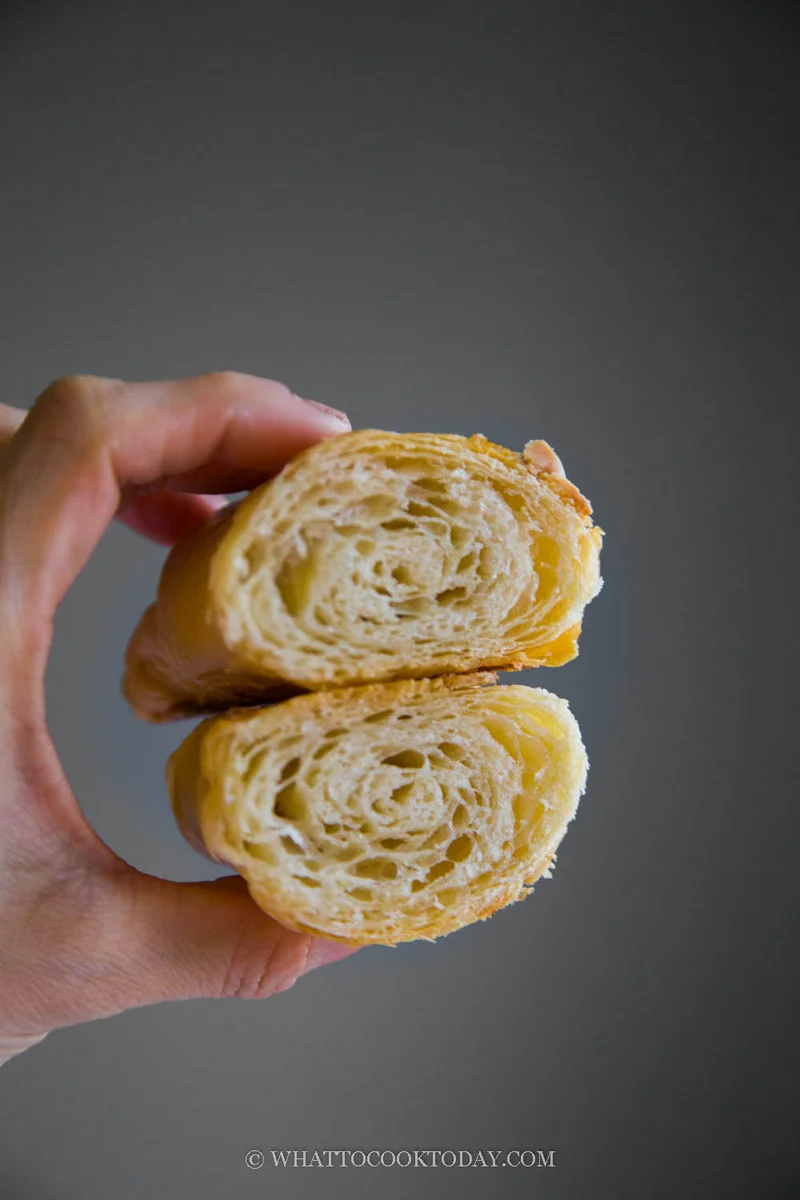
These quick, no-lamination croissants use a simple butter-spread-and-roll method to create soft, layered pastries without the traditional repeated folds. They take time to proof, but the hands-on shaping is straightforward and the result is best enjoyed freshly baked.
Ingredients
- 300 g, plus extra for dustingplain flour
- ½ tspsalt
- 30 gsugar
- 1 tspactive dried yeast
- 160 gmilk
- 20 gunsalted butter, softened
- 150 gunsalted butter, softened
- 1egg, beaten
- 1 tspmilk
Instructions
- 1
Mix the dough
Combine the flour, sugar, salt and yeast in a stand mixer fitted with a dough hook. Add the 160 g milk and 20 g softened butter. Knead on the lowest speed until combined, then increase to speed 2 and knead until smooth. By hand, knead for about 5–8 minutes. The room should be around 21°C or cooler to help keep the butter from melting.
- 2
Rest the dough
Place the dough in a lightly oiled or sprayed bowl and leave it at room temperature for 30 minutes. It will not double in size during this short rest.
- 3
Spread the butter
Lightly flour the work surface, dusting away any excess. Roll the dough into a rectangle about 20 × 60 cm, pressing out any air bubbles as you go. Spread the remaining 150 g softened butter evenly over the dough, working quickly and taking care that it does not melt. Roll the dough tightly from a short side, like a Swiss roll, wrap it and chill for 20 minutes.
- 4
Roll and shape
Line a baking tray with baking parchment and lightly flour the work surface. Set the chilled dough with its long side facing you and gently flatten it a little, taking care not to split it. Roll it into a rough 32 × 23 cm rectangle about 4 mm thick, neatening the edges with a dough scraper. If the butter starts to soften, chill the dough for a few minutes before continuing. Mark the near edge at roughly 4 cm intervals, then cut triangles with a dough scraper or pizza cutter; combine the two half-triangles at the edge if needed to make 8. Stretch the wide end of each triangle slightly and roll it up into a croissant, placing the tip underneath and pressing it gently to seal. Arrange them with room to expand.
- 5
Proof the croissants
Cover the croissants with a clean cloth and proof at about 21–25°C until doubled in size, which may take 2–3 hours. Keep them away from a warm spot so the butter does not melt. They should feel light and puffy, and a gentle press should spring back slowly.
- 6
Brush with egg
Once the croissants have doubled, gently brush them with the beaten egg mixed with 1 tsp milk.
- 7
Bake until golden
Heat a conventional oven to 200°C and position a rack in the middle. For a fan oven, reduce the temperature by about 20°C. While the oven heats, chill the tray of croissants in the fridge. Bake for 20–25 minutes, until deeply golden brown.
- 8
Cool before serving
Leave the croissants on the tray for 5 minutes, then transfer them to a cooling rack. Let them cool completely before eating.
What are croissants?
Croissants are buttery, crescent-shaped pastries associated with French bakeries and made with dough that bakes into a flaky, layered crumb. Traditional versions use repeated folds of dough and butter, a process known as lamination.
This shortcut spreads softened butter over rolled dough, then rolls and chills it before shaping. It skips the repeated folding while still aiming for distinct layers inside.
Nutrition and macros by portion
The nutrition label shows one serving as written: 323 calories, 6g protein, 34g carbs, 19g fat.
| Portion | Adjustment | kcal | Protein | Carbs | Fat |
|---|---|---|---|---|---|
| Lighter | Serve with fresh fruit | 226 kcal | 4g | 24g | 13g |
| This serving | As written | 323 kcal | 6g | 34g | 19g |
| Hungry | Serve two croissants | 485 kcal | 9g | 51g | 29g |
The flour and sugar provide most of the carbohydrates, while the butter contributes most of the fat. The flour, milk and egg provide some protein; serve a croissant with yoghurt, eggs or fruit to make a more balanced plate.
Why the butter matters
Spread butter: the 150 g portion is the main source of richness and creates the layers. It should be soft enough to spread evenly but not greasy or melting.
Keep cool: a cool room and brief chilling help the butter stay in place as you roll. If it begins to soften, pause and return the dough to the fridge.
Rolling and shaping
Even thickness: roll the dough to roughly 4 mm so the triangles bake at a similar rate. Neat edges make the pieces easier to shape, but the final two half-triangles can be joined if needed.
Secure the tip: roll each triangle from its wide end and finish with the point tucked underneath. Pressing the point lightly against the dough helps the croissant hold its shape as it proofs.
How to judge the proof
Allow 2–3 hours for the shaped croissants to double at about 21–25°C. The time can vary, so use their appearance and feel rather than relying only on the clock.
A properly proofed croissant looks puffy and feels light. When gently pressed, the dough should spring back slowly; a quick rebound suggests it may need more time.
Bake for colour
A 200°C conventional oven gives the pastry a strong initial bake; use about 180°C for a fan oven. Chilling the tray while the oven heats helps keep the butter cool before baking.
Look for a deep golden colour after 20–25 minutes. If the pastries are still pale, give them a little longer and check again.
Serving ideas
Serve these croissants plain, warm or at room temperature, with coffee or tea for breakfast. Their buttery flavour also works well alongside fresh fruit or yoghurt.
For a savoury plate, pair one with eggs or a simple salad. Split leftovers and fill them just before serving if you want a quick sandwich.
Recipe notes & tips
- Keep the room cool while you handle the butter so it stays spreadable rather than runny.
- Brush away excess flour before spreading the butter to avoid dry patches in the dough.
- Use a dough scraper to keep the rectangle edges tidy and cut the triangles cleanly.
- Leave space between the shaped croissants so they can expand without touching.
- Brush the egg wash gently so you do not flatten the risen dough.
Variations
- Add almonds: Scatter sliced almonds over the egg wash before baking.
- Make them savoury: Add a little grated cheese before rolling each triangle.
- Add chocolate: Place a few chocolate pieces at the wide end before rolling.
- Try a filled centre: Add a small spoonful of thick jam before shaping, keeping it away from the edges.
- Skip the crescent: Shape the triangles as straight rolls if that is easier.
Common mistakes to avoid
- Melting the butter: Pause and chill the dough for a few minutes before continuing.
- Rolling too firmly: Use gentle, even pressure so the dough does not split and release the butter.
- Underproofing: Wait until the croissants are doubled, puffy and slow to spring back when pressed.
- Overproofing in warmth: Proof at 21–25°C and keep the croissants away from hot spots that could melt the butter.
- Placing the tip on top: Tuck the pointed end underneath and press it gently to help prevent unrolling.
How to store
Once completely cool, store the croissants in an airtight container at room temperature for up to 2 days. Reheat briefly in a 160°C oven until warmed through; avoid microwaving if you want to retain a crisper exterior.
Frequently asked questions
Can I make the dough by hand?
Yes. Knead it for about 5–8 minutes, until smooth. It does not need to reach the windowpane stage.
Why must the butter stay cool?
If it melts into the dough before baking, the layers can be less distinct. Chill the dough briefly whenever the butter starts to soften.
How do I know when the croissants are proofed?
They should be roughly doubled, puffy and light. A gentle press should spring back slowly.
Can I proof them in the oven?
The recipe suggests using the oven with its light on, but make sure the temperature stays around 21–25°C. If it gets warmer, proof them elsewhere so the butter does not melt.
Can I use a fan oven?
Yes. Reduce the temperature by about 20°C from the 200°C conventional setting, then bake until deeply golden.
Can I freeze the baked croissants?
Yes. Freeze them once cool in a suitable airtight container or freezer bag. Thaw, then warm them in the oven to refresh the outside.
Cook it from the original
This recipe comes from whattocooktoday.com. Their page has the author’s own photos, notes and tips — the best place to cook it from.
Open the recipe on whattocooktoday.com