
Black Forest Pavlova
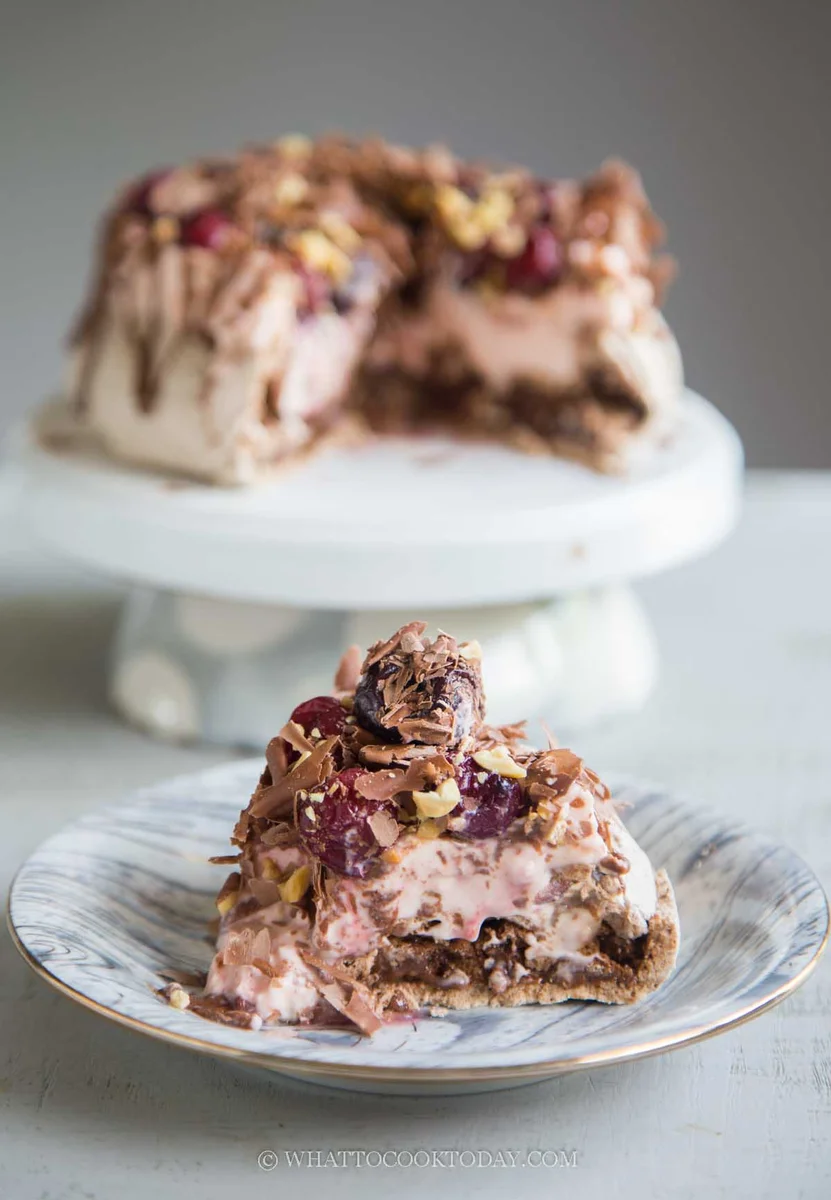
Black Forest Pavlova pairs a cocoa-streaked meringue with cherry-swirled whipped cream, morello cherries and dark chocolate. It makes a striking centrepiece, but the hands-on work is simple if you allow plenty of time for baking and cooling.
Ingredients
- 120 g (from about 3–4 large eggs)egg whites
- 150 ggranulated sugar
- 1 Tbspcornstarch
- 2 Tbspunsweetened cocoa powder (Dutch-processed if available)
- 1 tspbalsamic vinegar
- 240 gcold heavy cream
- 3 Tbsppowdered sugar
- 1/2 tspvanilla extract
- 1 tsp (optional)kirsch
- 1 Tbsp (optional, plus more for colour)syrup from the canned cherries
- 1 Tbspcornstarch
- 200 g, drained (reserve the syrup if you like)canned morello cherries
- To tastedark chocolate (60–70%, shaved or grated)
- A small handfulcrushed peanuts or chopped hazelnuts
Instructions
- 1
Separate the eggs
Separate the eggs while cold, keeping the yolks for another use. Bring the whites to room temperature before you start.
- 2
Line the tray
Line a large baking sheet with parchment paper. If helpful, trace a 15 cm circle on it as a guide for shaping the pavlova.
- 3
Preheat the oven
Heat a conventional oven to 150°C or a convection oven to 140°C, with the rack in the middle. Line a large baking sheet with parchment, not wax paper.
- 4
Whip the whites
Beat the egg whites until foamy and white. Gradually add the sugar, 2–3 tablespoons at a time, waiting 20–30 seconds between additions. Once all the sugar is in, increase the speed and beat until thick, glossy and the sugar has dissolved, scraping down the bowl if needed. This can take 10–15 minutes or longer; rub a little meringue between clean fingers and keep beating if it feels gritty.
- 5
Check the meringue
Continue until the meringue is very firm, glossy and thick enough to hold its shape and sharp lines.
- 6
Fold in cocoa
Sift in the cornstarch and cocoa powder, then add the balsamic vinegar. Fold gently with a spatula, leaving some cocoa streaks rather than mixing until completely even.
- 7
Shape the base
Spoon the meringue onto the lined tray and form a mound about 5 cm tall. Smooth it lightly and flatten the top a little to leave room for the cream and toppings; avoid making it too tall or overworking the shape.
- 8
Bake slowly
Lower the conventional oven to 93°C or the convection oven to 82°C. Put the tray on the middle rack and bake for 2 hours 30 minutes without opening the oven door.
- 9
Cool in oven
When the baking time is up, turn off the oven and leave the door closed. Let the pavlova cool inside for at least 8 hours or overnight. Cracks in the meringue are normal.
- 10
Store the base
Once fully cool, keep the pavlova in an airtight container in a place that is not humid for 3–4 days. To freeze it, wrap it in cling film and then foil, place it in an airtight container and freeze for up to one month; it can thaw while you assemble the dessert.
- 11
Whip the cream
Make sure the cream is very cold. Whip it with the cherry syrup, powdered sugar and cornstarch until it starts to thicken.
- 12
Finish the cream
Add the vanilla and kirsch, then continue whipping to soft-to-medium peaks. The cream should be soft and spreadable rather than stiff.
- 13
Set out the base
Place the cooled pavlova on a serving plate or cake stand.
- 14
Add the cream
Spoon the whipped cream over the pavlova; there is no need to make it perfectly neat.
- 15
Top with cherries
Drizzle melted chocolate over the cream if you like, then scatter on the cherries. Add a little of their syrup for shine if desired.
- 16
Finish with chocolate
Scatter the crushed peanuts or chopped hazelnuts over the top, then shave or grate dark chocolate generously over everything.
What is Black Forest Pavlova?
Pavlova is a meringue-based dessert associated with Australia and New Zealand, known for its crisp outside and softer centre. This version borrows the chocolate-and-cherry flavours of Black Forest cake and turns them into a relaxed, shareable centrepiece.
Cocoa folded loosely through the meringue gives it a marbled look, while cherry syrup flavours the cream. Cherries, dark chocolate and a little crunch complete the combination.
Nutrition and macros by portion
The nutrition label shows one serving as written: 286 calories, 5g protein, 34g carbs, 16g fat.
| Portion | Adjustment | kcal | Protein | Carbs | Fat |
|---|---|---|---|---|---|
| Lighter | Less cream, more cherries | 200 kcal | 4g | 24g | 11g |
| This serving | As written | 286 kcal | 5g | 34g | 16g |
| Hungry | Larger slice | 429 kcal | 8g | 51g | 24g |
The meringue and sugar provide most of the carbohydrates, while the cream contributes much of the fat and some of the protein. Cherries add fruit and further carbohydrates; serve a slice with fresh berries or fruit for a balanced-feeling dessert plate.
Build a stable meringue
Egg whites: separating them while cold is easier, but let them reach room temperature before whipping. Even a trace of yolk or grease can make it harder for the whites to gain volume.
Sugar: add it gradually and allow time for it to dissolve. A glossy, firm meringue that does not feel gritty is the foundation for a pavlova that holds its shape.
Fold gently and shape simply
Cocoa and vinegar: fold in the sifted cocoa and cornstarch with the balsamic vinegar, stopping while streaks remain. Overmixing can knock air out of the meringue and lose the marbled effect.
Mound: keep the base around 5 cm tall and flatten the top slightly. A loose shape is part of the appeal, and less handling means less chance of deflating the mixture.
Bake low and cool slowly
Low heat: the oven temperature drops after the meringue is shaped, to 93°C for a conventional oven or 82°C for a convection oven. Bake for 2 hours 30 minutes without opening the door.
Long rest: leave the pavlova in the switched-off oven for at least 8 hours or overnight. This gradual cooling is part of the method; surface cracks are expected and can be covered with cream.
Whip cream that will spread
Cold cream: start with cream straight from the fridge and whip it with the cherry syrup, powdered sugar and cornstarch until it thickens. Add the vanilla and optional kirsch, then stop at soft-to-medium peaks.
Texture: the cream should be soft enough to spread over the meringue, not stiff. If you want a stronger pink tint, the recipe allows for a little extra cherry syrup.
Choose and prepare the toppings
Cherries: drain the morello cherries but keep their syrup for the cream or a final drizzle. A little syrup can also give the fruit a glossy finish.
Chocolate and nuts: shave or grate dark chocolate over the assembled pavlova and add crushed peanuts or chopped hazelnuts for crunch. Melted chocolate is an optional extra drizzle, separate from the shaved topping.
Serve it as a centrepiece
Assemble the pavlova shortly before serving so the cream and cherries sit on the crisp meringue for as little time as practical. Bring it to the table whole, then cut or break it into portions.
It is rich and sweet, so serve modest slices alongside fresh fruit or a bowl of berries if you want a lighter finish to the meal.
Recipe notes & tips
- Use a clean, grease-free bowl and beaters for the egg whites.
- Let the whites come to room temperature before whipping them.
- Add the sugar slowly and allow time for it to dissolve fully.
- Use parchment paper rather than wax paper for the baking tray.
- Keep the oven door closed during baking and cooling.
- Assemble close to serving time to help the meringue keep its texture.
Variations
- Use hazelnuts: swap the peanuts for chopped hazelnuts for a classic pairing with chocolate.
- Skip the kirsch: leave it out of the cream for an alcohol-free version.
- Add extra syrup: use a little more cherry syrup for a deeper pink tint and a stronger cherry note.
- Make it less sweet: reduce the powdered sugar in the cream to suit your taste.
- Add melted chocolate: drizzle a little over the cream before adding the cherries.
Common mistakes to avoid
- Adding sugar too quickly: add it 2–3 tablespoons at a time and wait 20–30 seconds between additions.
- Stopping while the meringue is gritty: keep beating until the sugar has dissolved.
- Overmixing the cocoa: fold gently and leave streaks rather than trying to make the colour uniform.
- Making the base too tall: shape it to about 5 cm high to reduce the risk of collapse.
- Opening the oven door: keep it closed throughout baking and the long cooling period.
- Whipping the cream too stiff: stop at soft-to-medium peaks so it stays easy to spread.
How to store
Keep the cooled, unassembled pavlova in an airtight container in a non-humid place for 3–4 days. For longer storage, wrap it in cling film and foil, seal it in an airtight container and freeze for up to one month; thaw as you assemble. Store assembled leftovers covered in the fridge and eat promptly, as the meringue softens once topped.
Frequently asked questions
Can I make the pavlova base ahead?
Yes. Once completely cool, store it in an airtight container in a non-humid place for 3–4 days, or freeze it for up to one month as described in the method.
Why did my pavlova crack?
Cracks can happen and are normal for this dessert. The cream and toppings will cover some of them, and the meringue will still be usable.
Can I use a convection oven?
Yes. Preheat it to 140°C, then lower it to 82°C for the baking stage. Keep the door closed during baking and cooling.
How do I know when the meringue is ready to bake?
It should be thick, glossy and very firm, holding its shape and sharp lines. Rub a little between clean fingers; if it feels gritty, keep beating.
Can I leave out the kirsch?
Yes. The kirsch is optional, so you can omit it without changing the rest of the method.
When should I assemble the pavlova?
Assemble it shortly before serving, once the base is fully cool. This helps the meringue stay crisp for longer under the cream and cherries.
Cook it from the original
This recipe comes from whattocooktoday.com. Their page has the author’s own photos, notes and tips — the best place to cook it from.
Open the recipe on whattocooktoday.com