
Spicy Hake Fishcakes
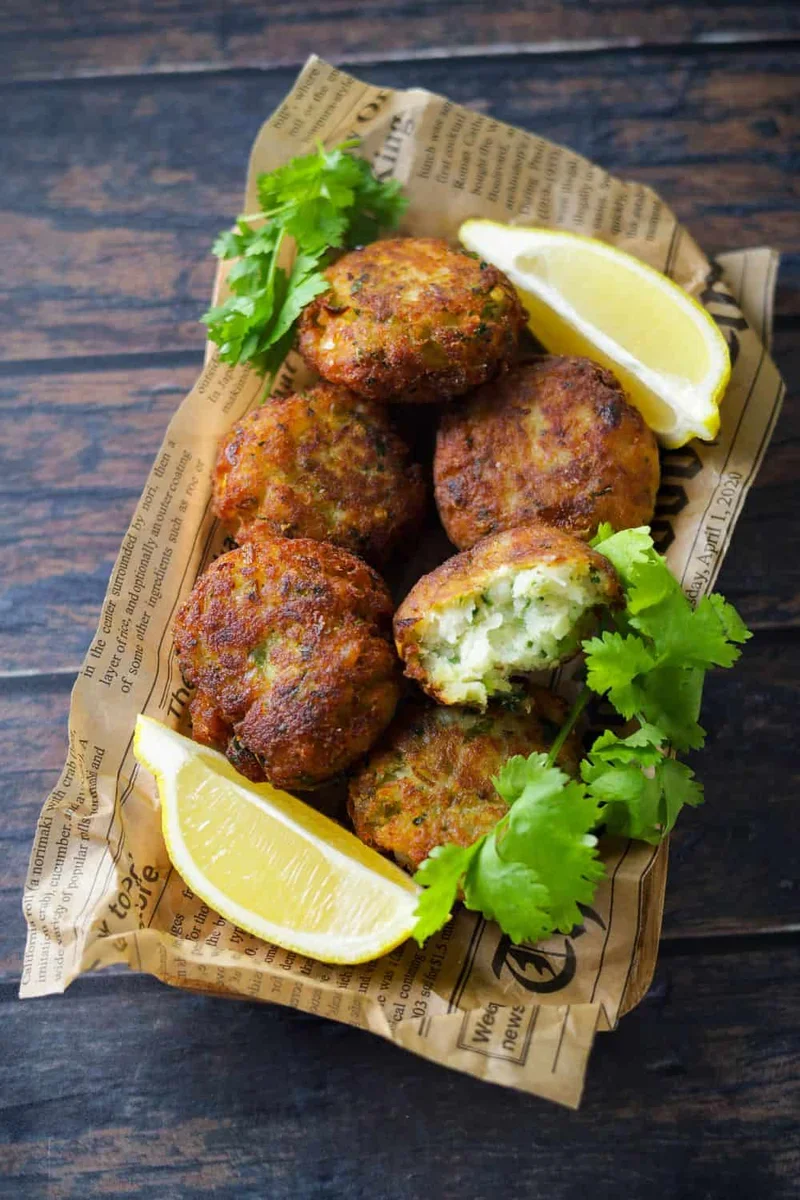
These Indian-inspired hake fishcakes combine flaky fish with grated potato, fresh herbs and chillies, then fry until crisp and golden. They make a handy meal or snack, with lemon to brighten the rich, spiced coating.
Ingredients
- 500 gskinless, deboned hake
- 120 ml (½ cup)milk
- 2 mediumpotatoes, boiled and grated
- 4green chillies, finely chopped
- 4red chillies
- 1 mediumonion, finely diced and squeezed to remove liquid
- 15 g (½ cup)coriander, finely chopped
- 10 g (¼ cup)mint, finely chopped
- 2 tspginger-garlic paste
- 1 largeegg yolk
- 1 tspsalt
- 22 g (3 tbsp)breadcrumbs
- To servelemon
- 240 ml (1 cup)vegetable oil, for frying
Instructions
- 1
Poach the fish
Pour the milk into a pan and add the hake. Cook over medium heat for 5 minutes, then turn off the heat and leave the fish in the hot pan to finish cooking. Separately, boil the potatoes with their skins on until soft, then set them aside.
- 2
Flake and grate
Drain the milk and use two forks to break the fish into flakes. Grate the potatoes into a large bowl and add the fish.
- 3
Mix the filling
Add the chillies, coriander, mint, onion, breadcrumbs, ginger-garlic paste, salt, pepper and egg yolk to the bowl. Season with salt and mix thoroughly.
- 4
Shape the cakes
Divide the mixture into 12 to 14 portions, depending on your preferred size. Shape each portion into a ball, then flatten it in your palm.
- 5
Fry and serve
Roll each fishcake in flour and shake off any excess. Heat the oil in a pan and cook the fishcakes until golden brown and crisp. Drizzle with lemon juice and serve.
What are spicy hake fishcakes?
Fishcakes are a familiar way to turn cooked fish into a filling that can be shaped and fried. This version takes an Indian-inspired direction with green and red chillies, coriander, mint and ginger-garlic paste.
Hake keeps the centre mild and flaky, while grated potato helps bring the mixture together. A crisp exterior and squeeze of lemon make the contrast work.
Nutrition and macros by portion
The nutrition label shows one serving as written: 125 calories, 9g protein, 9g carbs, 6g fat.
| Portion | Adjustment | kcal | Protein | Carbs | Fat |
|---|---|---|---|---|---|
| Lighter | Use less frying oil | 88 kcal | 6g | 6g | 4g |
| This serving | As written | 125 kcal | 9g | 9g | 6g |
| Hungry | Make larger fishcakes | 188 kcal | 14g | 14g | 9g |
Hake and egg yolk provide most of the protein, while the potatoes and breadcrumbs contribute most of the carbohydrates. The frying oil supplies much of the fat, though the amount absorbed will vary. Serve with salad or vegetables to add freshness and make the plate more balanced.
Choose and cook the hake
Poach gently: cooking the hake in milk over medium heat for 5 minutes gives it a mild flavour. Letting it sit in the hot pan after turning off the heat allows it to finish cooking without vigorous bubbling.
Check the flakes: break the fish up with two forks and look for any stray bones before mixing. Drain the milk well so the filling does not become wet.
Get the potato texture right
Boil whole: keeping the skins on while boiling helps the potatoes stay less waterlogged. Let them cool enough to handle before grating.
Squeeze the onion: removing its excess liquid helps the mixture hold its shape. Grated potato, breadcrumbs and egg yolk bind the fish and herbs into a workable filling.
Balance the heat and herbs
Chillies: the recipe includes both green and red chillies, but gives no preparation detail for the red ones. Chop them finely before adding so their heat is distributed through the mixture.
Fresh herbs: coriander and mint add a bright counterpoint to the chilli and ginger-garlic paste. Mix them through evenly so each fishcake has a similar flavour.
Shape for even frying
Keep portions similar: the recipe makes 12 to 14 cakes, with smaller portions cooking more quickly. Flatten each ball to an even thickness so the centre heats through as the outside browns.
Coat lightly: the method calls for flour, but flour is not included in the ingredient list. If following that coating step, allow for this missing ingredient; shake off excess before frying.
Fry until crisp
Watch the colour: cook the cakes in the heated oil until their surfaces are golden brown and crisp. Avoid crowding the pan, which can make it harder to maintain steady heat.
Finish with lemon: a little lemon juice cuts through the fried coating and lifts the herbs. Serve soon after cooking for the best contrast between the crisp outside and soft centre.
What to serve alongside
Fresh sides: serve with a green salad or lightly dressed vegetables to add crunch and freshness. Lemon wedges let everyone adjust the sharpness at the table.
For a fuller meal: pair the fishcakes with rice or flatbreads and a simple yoghurt-based dip. Keep the sides mild if you want the chilli flavour to stand out.
Recipe notes & tips
- Drain the poached hake thoroughly before flaking it into the potato.
- Squeeze the diced onion well so it does not loosen the mixture.
- Cool the boiled potatoes enough to handle before grating them.
- Shape the portions to a similar thickness for more even cooking.
- Fry in batches rather than packing the pan tightly.
- Serve the fishcakes soon after frying while their coating is crisp.
Variations
- Milder heat: remove the chilli seeds before chopping to temper the spice.
- Extra lemon: add finely grated lemon zest to the mixture for a brighter flavour.
- Herb balance: adjust the coriander and mint proportions while keeping the total amount similar.
- Oven finish: brown the cakes in the pan, then finish cooking them in a hot oven.
- Smaller bites: shape the mixture into smaller rounds for snack-sized portions.
Common mistakes to avoid
- Wet filling: drain the hake and squeeze the onion well so the cakes hold together.
- Uneven pieces: flatten each portion to a similar thickness so they cook at the same pace.
- Crowded pan: fry in batches to help the cakes brown instead of turning soft.
- Overhandling: mix only until combined to keep the fish flakes intact.
- Unclear coating: flour appears in the method but not the ingredient list, so account for it before starting if you plan to coat the cakes.
How to store
Refrigerate cooked fishcakes in a covered container for up to 2 days. Reheat in a pan or oven until piping hot, turning once if needed; the coating may soften during storage.
Frequently asked questions
How many fishcakes does this make?
The method divides the mixture into 12 to 14 portions. The final number depends on how large you shape them.
Can I make the mixture ahead?
You can prepare and shape the mixture ahead, then keep it covered in the fridge and fry it later. Keep it chilled and cook it thoroughly before serving.
How can I tell when the fishcakes are done?
They should be golden brown and crisp on the outside, with a hot centre. If the cakes are thick, lower the heat slightly after browning so the middle has time to warm through.
Can I use frozen hake?
Yes, thaw it fully and drain away excess liquid before poaching. The ingredient list calls for skinless, deboned fish.
Why is flour mentioned in the method but not the ingredients?
The supplied method says to roll the fishcakes in flour, but flour is absent from the ingredient list. If you want to follow that coating step, have flour ready and use only enough for a light dusting.
Can I reduce the chilli?
Yes. Use fewer chillies or remove their seeds for a milder result, while keeping in mind that the recipe does not specify how the red chillies are prepared.
Cook it from the original
This recipe comes from tamarindnthyme.com. Their page has the author’s own photos, notes and tips — the best place to cook it from.
Open the recipe on tamarindnthyme.com