
Egusi Jollof Rice
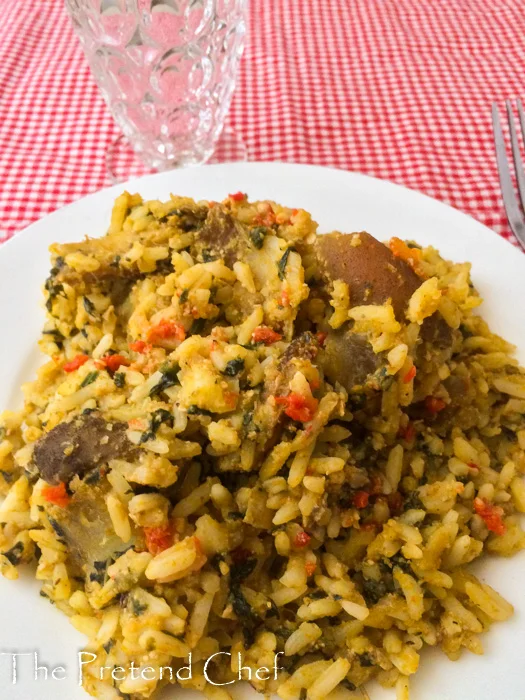
Egusi Jollof rice is a quick way to turn leftover cooked rice and egusi soup into a warm, savoury meal. It comes together in one pot, with crayfish and seasoning bringing extra depth.
Ingredients
- As neededEgusi soup
- As neededCooked rice
- To tasteSeasoning cube
- A little, to tasteGround crayfish
- To tasteSalt
Instructions
- 1
Add the rice
Put the leftover cooked rice into a pot.
- 2
Season the rice
Add the egusi soup, seasoning cube, a little ground crayfish and salt.
- 3
Add water
Pour in 1–2 tablespoons of water and stir to combine.
- 4
Steam and taste
Cover the pot and steam over medium-low heat until the rice is dry. Taste and adjust the seasoning as needed.
What is Egusi Jollof rice?
Egusi Jollof rice is a practical Nigerian-style dish made by combining cooked rice with egusi soup and warming it through. It is a resourceful use of leftovers rather than a long-cooked jollof rice preparation.
The soup coats the rice with its savoury, nutty character, while crayfish adds another layer of flavour. This version works because it needs only a little water and gentle steaming to bring everything together.
Nutrition and macros by portion
The nutrition label shows one serving as written: 430 calories, 13g protein, 62g carbs, 14g fat.
| Portion | Adjustment | kcal | Protein | Carbs | Fat |
|---|---|---|---|---|---|
| Lighter | More vegetables, less rice | 301 kcal | 9g | 43g | 10g |
| This serving | As written | 430 kcal | 13g | 62g | 14g |
| Hungry | Serve a larger portion | 645 kcal | 20g | 93g | 21g |
Most of the carbohydrate comes from the cooked rice, while egusi soup contributes fat and some protein; crayfish adds a smaller amount of protein. For a more balanced plate, serve a moderate portion with a generous side of vegetables.
Choosing the rice and soup
Leftover rice: use rice that has been cooked and cooled, breaking up any clumps before adding it to the pot. Its grains are already tender, so the aim is to heat them through without making them mushy.
Egusi soup: stir it into the rice so the soup is spread through rather than sitting in one dense patch. Since soups vary in thickness and seasoning, adjust salt only after tasting.
Seasoning with care
Crayfish: add a little ground crayfish for a savoury seafood note, then taste before adding more. Its flavour can become quite prominent if used generously.
Seasoning cube and salt: both can add saltiness, and the egusi soup may already be seasoned. Start modestly and correct the seasoning at the end.
Steaming without sticking
Water: the 1–2 tablespoons help loosen the mixture and create enough moisture for steaming. Add only the amount needed to help the rice mix easily.
Heat: keep the covered pot over medium-low heat so the rice warms gently. Stir after adding the ingredients, then let the covered rice steam until it is dry.
How to judge doneness
The rice is ready when it is hot throughout and no excess liquid remains at the bottom of the pot. The grains should be coated with soup but still hold their shape.
Taste a spoonful before serving. If the flavour needs adjustment, add a little more salt or seasoning, stir, and allow the rice to heat briefly again.
Serving ideas
Serve the rice hot as a quick meal or as a side alongside vegetables. A fresh, crisp accompaniment can balance the soft, rich texture of the rice and soup.
Because the soup and rice make a filling base, portion them according to appetite and add any sides separately. Avoid stirring extra liquid into the pot just before serving.
Recipe notes & tips
- Break up cold rice clumps before adding the soup so the mixture heats evenly.
- Taste the egusi soup first to gauge how much extra salt the rice may need.
- Begin with the smaller amount of water if the soup is already quite loose.
- Keep the pot covered while steaming to retain heat and moisture.
- Stir gently so the cooked rice grains do not break down.
Variations
- Add vegetables: Fold in cooked spinach or mixed vegetables near the end, just long enough to heat them through.
- Make it hotter: Stir in a little chilli if you want more heat.
- Use fresh rice: Cook rice for the meal and let it cool slightly before combining it with the soup.
- Boost the crayfish: Add a little more ground crayfish for a stronger savoury flavour.
- Add an egg: Serve with a fried or boiled egg for an extra topping.
Common mistakes to avoid
- Adding too much water: The rice can turn soggy; start with 1 tablespoon and add only if needed.
- Over-seasoning early: Egusi soup and seasoning cubes can already be salty; taste before adding more salt.
- Using high heat: The bottom may catch before the rice warms through; keep the heat at medium-low.
- Leaving rice clumped: It heats unevenly; loosen the grains before mixing.
- Stirring too vigorously: The grains can break up; fold the mixture together gently.
How to store
Refrigerate leftovers promptly in a covered container and use within 3–4 days. Reheat until steaming hot, adding a small splash of water if the rice has dried out.
Frequently asked questions
Can I use freshly cooked rice?
Yes. Let it cool slightly and drain away excess moisture before mixing it with the egusi soup.
How much egusi soup should I add?
The recipe does not specify quantities, so add enough to coat and flavour the rice without making it soupy. Adjust to suit how much rice you have.
Do I have to add water?
A small amount helps the mixture steam and combine. If your egusi soup is already loose, begin with just 1 tablespoon or omit it if the rice mixes easily.
How do I stop the rice from becoming mushy?
Use cooked rice with distinct grains, add only a little water and heat gently. Stir just enough to distribute the soup.
Can I make this with frozen leftover rice?
Thaw the rice safely before adding it to the pot, then break up any clumps. Heat it thoroughly with the soup before serving.
Cook it from the original
This recipe comes from thepretendchef.com. Their page has the author’s own photos, notes and tips — the best place to cook it from.
Open the recipe on thepretendchef.com