
Stuffed Cabbage roll
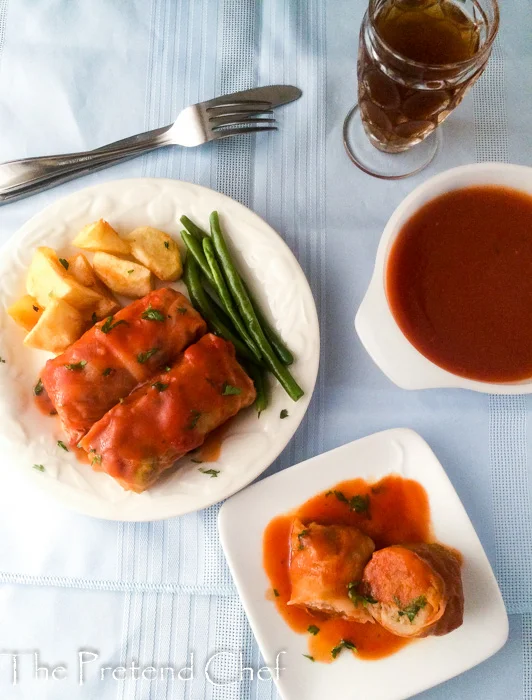
These cabbage rolls wrap minced beef and cooked rice in tender cabbage leaves, then simmer them in a sweet, tangy tomato sauce. They take time to assemble, but the rolls can cook gently while the sauce flavours soak in.
Ingredients
- 500 gminced beef
- 180 g (1 cup)cooked rice
- 40 g (1/4 cup)finely chopped onion
- 15 g (1/4 cup)finely chopped spring onion (green part)
- 1egg
- 2 teaspoonssalt
- 1 teaspoonchilli powder
- 2 teaspoonsminced garlic
- 1 teaspoonthyme
- 2seasoning cubes
- 60 ml (1/4 cup)water
- 1/2 teaspoonWorcestershire sauce (optional)
- 1 tablespoonvegetable oil
- 240 ml (1 cup)tomato paste (tinned tomato)
- 1 teaspoonthyme
- 1 teaspoonminced garlic
- 1bay leaf
- 3 tablespoonssugar
- 2 tablespoonsvinegar
- 1chicken seasoning cube (powder)
- to tastespring onion (white part)
- 1 smallonion, sliced
- 16 g (2 tablespoons)cornflour
Instructions
- 1
Mix the filling
Combine the minced beef, cooked rice, chopped onion, spring onion greens, egg, salt, chilli powder, garlic, thyme, seasoning cubes, 60 ml water and Worcestershire sauce, if using, in a bowl.
- 2
Chill the filling
Mix until evenly combined. Cover with cling film pressed directly onto the mixture and refrigerate.
- 3
Heat the water
Set a large, deep stock pot over medium-high heat. Add enough water to cover the cabbage and some salt, then bring it to the boil. Reduce the heat to a simmer.
- 4
Prepare the cabbage
Remove any torn or worn outer leaves and wash the cabbage head. With a sharp knife, cut off the base and remove the thick core.
- 5
Soften the leaves
Lower the cabbage into the hot water with the cut side facing down and simmer. As the outer leaves soften and loosen, lift them out, drain them well and set them aside; collect 12–15 leaves.
- 6
Remove the cabbage
Take the remaining cabbage head out of the water.
- 7
Fry the tomato
Heat the vegetable oil in a saucepan over medium heat. When hot, add the tomato paste and stir-fry for 1 minute to cook off its raw taste.
- 8
Season the sauce
Add the garlic, thyme and bay leaf and stir until fragrant. Mix in the sugar, vinegar, seasoning cube, spring onion whites and 120 ml water, then take the pan off the heat.
- 9
Trim each leaf
Cut away the thick rib at the base of each cabbage leaf.
- 10
Fill and roll
Put some beef and rice mixture in the centre of a leaf. Starting at the rib end, fold the leaf over the filling, tuck in both sides and roll it up to the end; secure with a toothpick if needed.
- 11
Finish the rolls
Set each roll on a plate and repeat until the filling is used.
- 12
Layer the pot
Line the bottom of a medium-sized pot with the smaller cabbage leaves. Scatter the sliced onion over them, then arrange the rolls on top with their seams facing down.
- 13
Add the sauce
Pour the tomato sauce over the rolls, covering them. Set a clean, flat plate upside down over the rolls.
- 14
Simmer the rolls
Cover the pot and bring it to the boil over high heat. Reduce the heat to medium-low and simmer for 1–1 1/4 hours, until the cabbage is soft. Check occasionally and add a little water if the pot is becoming dry.
- 15
Thicken the sauce
Lift the rolls out onto a plate and remove any toothpicks. Strain the tomato sauce through a sieve into a small pot, bring it to the boil and cook until reduced and thickened; taste and adjust the seasoning.
- 16
Finish and serve
For a thicker sauce, mix the cornflour with 60 ml water and stir it into the sauce a little at a time until it reaches the consistency you want. Pour the sauce over the cabbage rolls to serve.
What are stuffed cabbage rolls?
Stuffed cabbage rolls are leaves wrapped around a savoury filling and cooked in a sauce. Versions of the dish appear across many regions, so the exact filling and seasoning vary from kitchen to kitchen.
This version uses minced beef and rice with chilli, thyme and seasoning cubes, then simmers the rolls in a tomato sauce balanced with vinegar and sugar.
Nutrition and macros by portion
The nutrition label shows one serving as written: 303 calories, 22g protein, 29g carbs, 12g fat.
| Portion | Adjustment | kcal | Protein | Carbs | Fat |
|---|---|---|---|---|---|
| Lighter | Smaller roll portion | 212 kcal | 15g | 20g | 8g |
| This serving | As written | 303 kcal | 22g | 29g | 12g |
| Hungry | Larger roll portion | 455 kcal | 33g | 44g | 18g |
The beef and egg provide most of the protein, while the rice and added sugar contribute carbohydrates. The beef and vegetable oil supply much of the fat; serve with salad or vegetables to add freshness and balance the plate.
Building a cohesive filling
Beef and rice: the rice adds body to the minced beef, while the egg helps bind the mixture. Mix until the ingredients are evenly distributed, then chill the filling while preparing the leaves.
Seasoning: the filling already contains salt, chilli, garlic and seasoning cubes. Since seasoning cubes can vary in saltiness, taste the finished sauce before adding more salt.
Blanching the cabbage
Loose leaves: simmer the whole cored cabbage and remove the outer leaves as they soften. Drain each leaf well so excess water does not make rolling slippery.
Thick ribs: trimming the base of each leaf makes it easier to fold without tearing. Keep the smaller leaves for lining the pot, as the method directs.
Rolling without leaks
Filling amount: use enough mixture to make a compact roll, but leave room to fold the leaf around it. Start at the rib end, fold over the filling, tuck in both sides and roll to seal.
Seam side: place each roll seam-side down in the pot so it is less likely to unwind while simmering. A toothpick can secure a loose roll; remember to remove it before serving.
Getting the simmer right
Gentle heat: bring the covered pot to the boil first, then lower it to medium-low for the long cook. A steady simmer softens the cabbage without making the rolls tumble around.
Doneness: the stated cooking time is 1–1 1/4 hours. Check that the cabbage is soft and add a little water if the pot starts to dry out.
Finishing the tomato sauce
Reduce first: strain the cooking sauce into a small pot and boil it until it thickens, then taste it. The tomato, vinegar and sugar create a sweet-and-tangy finish.
Cornflour: use the optional cornflour mixture gradually, stirring as you add it. Stop when the sauce is thick enough to coat the rolls.
What to serve alongside
The rice is already part of the filling, so serve the rolls with a simple green salad or steamed vegetables for a fresh contrast. Spoon plenty of tomato sauce over each portion.
If you want a more substantial meal, add bread to mop up the sauce, or serve a modest portion of potatoes alongside.
Recipe notes & tips
- Keep the filling chilled while you prepare and blanch the cabbage leaves.
- Drain the softened leaves well before filling them.
- Line the pot with the small cabbage leaves to help protect the rolls from direct heat.
- Arrange the rolls seam-side down and keep them in a close layer.
- Add water a little at a time if the simmering pot looks dry.
- Stir the cornflour mixture into the sauce gradually to avoid making it too thick.
Variations
- Milder filling: reduce the chilli powder to suit your preference.
- Extra herbs: add a little more thyme for a stronger herbal note.
- Tangier sauce: adjust the vinegar slightly to taste.
- No Worcestershire sauce: leave it out, as the recipe marks it optional.
- Looser sauce: omit the cornflour mixture and serve the reduced tomato sauce as it is.
Common mistakes to avoid
- Overfilling leaves: the cabbage can split; use a modest amount and leave room to fold.
- Skipping the rib trim: a thick rib can make rolling awkward; cut it away before filling.
- Loose seams: the filling may escape; tuck in the sides and place each roll seam-side down.
- Boiling too hard: the rolls can shift and break; reduce the heat after bringing the pot to the boil.
- Letting the pot dry: the sauce may catch; check during cooking and add a little water when needed.
- Adding all the cornflour at once: the sauce may become too thick; stir the mixture in gradually.
How to store
Refrigerate leftovers in a covered container and use within 3 days. Reheat gently in a covered pan with a splash of water or in the microwave until piping hot throughout.
Frequently asked questions
How many cabbage leaves should I prepare?
The method suggests collecting 12–15 softened leaves. Keep the smaller leaves to line the bottom of the pot.
Can I skip the Worcestershire sauce?
Yes. It is listed as optional, so you can leave it out without changing the method.
How do I know the rolls are cooked?
After 1–1 1/4 hours of simmering, the cabbage should be soft. Check a roll if you are unsure that the centre is hot and cooked through.
Why place a plate over the rolls?
The method uses a clean, flat plate face down to hold the rolls in place as they simmer.
Do I have to thicken the sauce with cornflour?
No. Reduce the strained sauce until thickened, then add the cornflour mixture only if you want it thicker.
Can I make the rolls ahead?
You can prepare and roll them in advance, then keep them covered in the refrigerator until cooking. Cook them thoroughly before serving.
Cook it from the original
This recipe comes from thepretendchef.com. Their page has the author’s own photos, notes and tips — the best place to cook it from.
Open the recipe on thepretendchef.com