
Fish Curry Leaf Rice
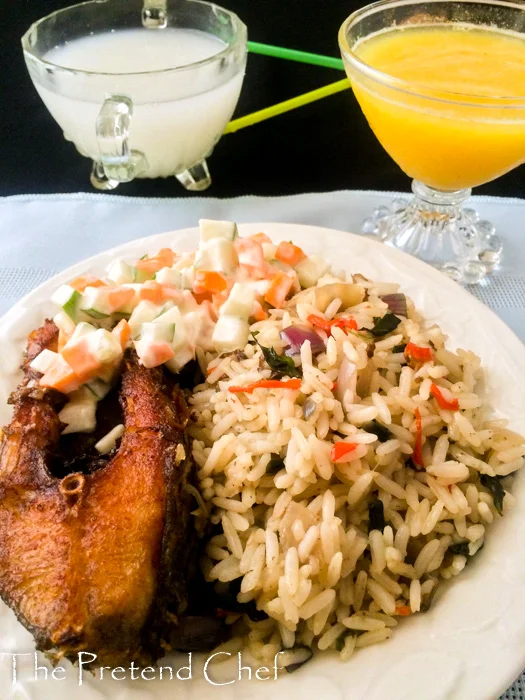
Fish curry leaf rice combines fried fish with rice cooked in an aromatic onion, curry leaf and chilli broth. It is a practical way to turn leftover cooked rice into a quick, flavourful meal.
Ingredients
- 1.5 kgfish
- 60 ml (¼ cup)vegetable oil
- 1 mediumonion, chopped
- 120 ml (½ cup)whole curry leaves
- 2 clovesgarlic, crushed
- 2seasoning cubes
- 2Scotch bonnets, chopped
- to tastesalt
- 400 g (2 cups)cooked rice
Instructions
- 1
Clean the fish
Remove the scales and wash the fish. Cut it into pieces and season with salt and pepper.
- 2
Fry the fish
Set a saucepan over medium heat and add the vegetable oil. When it is hot, fry the fish on both sides until golden, then lift it out and set it aside.
- 3
Drain the oil
Pour off some of the oil from the pan.
- 4
Soften the onion
Add the onion and salt. Stir, then fry until the onion has softened.
- 5
Fry the leaves
Rinse the curry leaves, add them to the onion and fry briefly to dry them out a little.
- 6
Add the aromatics
Add the garlic, seasoning cubes and Scotch bonnet. Stir and fry until fragrant.
- 7
Make the broth
Pour in ¼ cup water and bring the mixture to a boil.
- 8
Warm the fish
Carefully return the fried fish to the broth. Spoon broth over it and cook for 2 minutes, then remove the fish pieces.
- 9
Cook the rice
Add the rice, stir and cook over medium-low heat for 3 minutes, until it is dry.
- 10
Serve the dish
Serve the rice with the fish and slaw.
What is fish curry leaf rice?
This is a fish-and-rice dish built around curry leaves, onion, garlic and Scotch bonnet. Its flavour profile draws on ingredients used in cooking across several regions, so it is best understood as a home-style, broadly global recipe rather than a single defined regional style.
Here, the fish is fried first, then briefly warmed in a seasoned broth while the rice takes on the aromatic cooking liquid. That two-part approach gives the fish a browned exterior and lets the rice absorb the curry leaf flavour.
Nutrition and macros by portion
The nutrition label shows one serving as written: 620 calories, 78g protein, 29g carbs, 22g fat.
| Portion | Adjustment | kcal | Protein | Carbs | Fat |
|---|---|---|---|---|---|
| Lighter | Use less frying oil | 434 kcal | 55g | 20g | 15g |
| This serving | As written | 620 kcal | 78g | 29g | 22g |
| Hungry | Add extra cooked rice | 930 kcal | 117g | 44g | 33g |
The rice supplies most of the carbohydrate, while the fish is the main source of protein. The vegetable oil contributes much of the fat, and the fish's size means its cut and type will affect the nutrition substantially. Serve with slaw to add fresh crunch and make the plate more varied.
Choosing the fish
Fish: Use pieces sturdy enough to handle frying and a brief return to the broth. If the fish is delicate, turn it gently and avoid stirring it once it is in the pan.
Seasoning: Salt and pepper go on the fish before frying; the seasoning cubes and chilli flavour the broth. Since seasoning cubes can vary in saltiness, taste the broth before adding much extra salt.
Building the curry leaf flavour
Curry leaves: Rinsing them first removes any grit, while frying them with the softened onion helps their aroma infuse the oil.
Aromatics: Add the garlic, cubes and Scotch bonnet after the leaves, and cook just until fragrant. Keep the heat moderate so the garlic does not brown too quickly.
Frying and handling the fish
Golden surface: Let the oil heat before adding the fish so it starts frying rather than sitting in lukewarm oil. Fry in batches if the pan is crowded, and lift the pieces out once both sides are golden.
Gentle return: Spoon broth over the fish for its brief 2-minute cook, then remove it before adding the rice. This helps keep the pieces intact while they pick up some of the broth's flavour.
Getting the rice texture right
Cooked rice: Leftover rice is convenient here, and rice that is cool and separate is easier to stir through the broth without turning mushy.
Dry finish: Cook the rice for 3 minutes over medium-low heat, stirring so it meets the seasoned liquid. Stop when it looks dry rather than leaving it to fry for longer.
Adjusting the heat
Scotch bonnet: Two chopped chillies can make the dish quite hot, depending on their size and strength. For a milder result, remove the seeds and membranes before chopping, or use less chilli.
Broth: The measured ¼ cup of water creates the cooking liquid for the fish and rice. Keep the pan at a gentle boil rather than reducing the liquid aggressively.
Serving the meal
Slaw: Serve the rice and fish with slaw, as suggested in the method. Its crisp texture makes a fresh contrast to the warm, aromatic rice.
Portions: Share the fish across the four plates and serve it alongside the rice. If you have extra slaw, add it to the plate for more crunch and variety.
Recipe notes & tips
- Pat the fish dry after washing so it fries more evenly.
- Heat the oil before adding the fish, but avoid letting it smoke.
- Fry the fish in batches if the pieces do not fit comfortably in one layer.
- Rinse the curry leaves and shake off excess water before adding them to the pan.
- Taste the broth before adding more salt because the seasoning cubes may already be salty.
- Use rice that is cooked and cooled so it is easier to stir without breaking.
Variations
- Milder chilli: Use one Scotch bonnet or remove its seeds and membranes before chopping.
- Different fish: Choose another firm fish that holds together during frying and simmering.
- More greens: Serve with extra slaw for added crunch alongside the rice.
- Fresh herbs: Finish with a small handful of chopped fresh herbs if you have them to hand.
- Less oil: Fry the fish with a thinner film of oil in a good non-stick pan.
Common mistakes to avoid
- Crowding the pan: The fish can steam instead of browning; fry it in batches.
- Moving the fish too soon: It may break apart; wait for a golden surface before turning.
- Burning the garlic: It can taste bitter; add it after the onion and curry leaves and fry only until fragrant.
- Adding wet leaves: Water can make the hot oil splatter; shake off excess water after rinsing.
- Overcooking the fish: It may become dry or fall apart; return it to the broth for only 2 minutes.
- Using very wet rice: It can turn soft as it cooks; use cooked rice that is cool and reasonably separate.
How to store
Refrigerate leftovers in a covered container and use within 2 days. Reheat until piping hot, adding a small splash of water if the rice has dried out; handle the fish gently to keep it in pieces.
Frequently asked questions
Can I use leftover rice?
Yes. The recipe is designed for cooked rice, and chilled leftover rice is convenient. Break up any large clumps before adding it to the pan.
Which fish works best?
Choose a firm fish that can be cut into pieces and withstand frying and a short simmer. The method does not specify a particular type.
How can I make it less spicy?
Use less Scotch bonnet, or remove the seeds and membranes before chopping. The heat varies between individual chillies.
Do I need to remove the fish before adding the rice?
Yes. The method has you simmer the fish in the broth for 2 minutes, remove it, and then stir in the rice.
What should I serve with it?
The recipe suggests slaw. Serve it alongside the fish and rice for a crisp contrast.
Can I make it with freshly cooked rice?
Yes, as long as the rice is cooked before it goes into the pan. Let it cool and drain off excess moisture first so the finished rice is less likely to turn soft.
Cook it from the original
This recipe comes from thepretendchef.com. Their page has the author’s own photos, notes and tips — the best place to cook it from.
Open the recipe on thepretendchef.com