
Instant Pot Chicken Filled Arepas (Gluten Free)
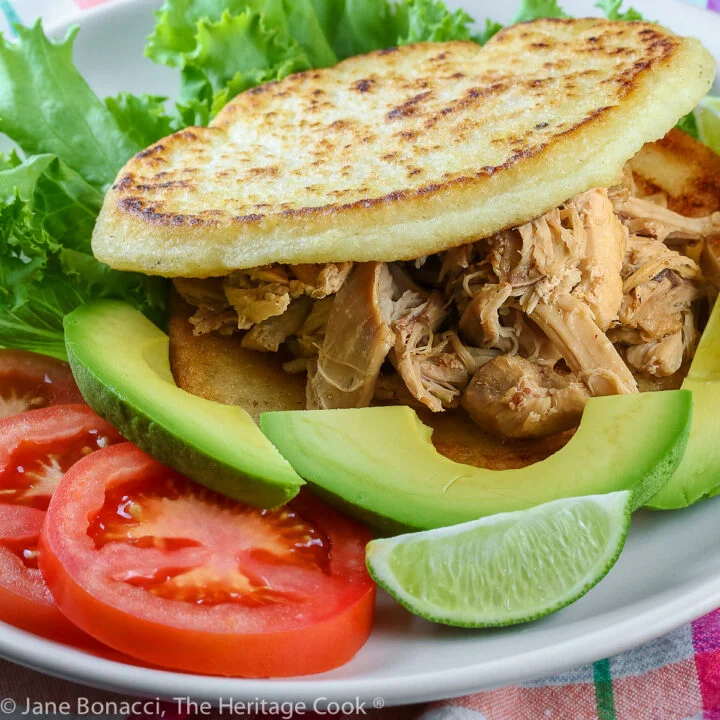
These gluten-free arepas pair golden, corn-based cakes with tender pressure-cooked chicken and fresh toppings. They make a hands-on meal with a choice of salsa, cheese, avocado and herbs at the table.
Ingredients
- 473 ml (2 cups)masarepa (speciality arepa flour, such as P.A.N. Harina Blanca, a very finely ground corn flour that is gluten-free)
- Zest of 1lime
- 651 ml (2¾ cups)warm water
- 1 tsp, or to tastesalt
- 28 g (2 tbsp)butter
- 25 g (2 tbsp)vegetable oil
- To tastecrumbled queso fresco, cotija or ricotta salata
- To tastesalsa, avocado slices, chopped green onions and cilantro
- 2 tspchilli powder
- 1 tspkosher or fine sea salt
- ½ tspgarlic powder
- ½ tsponion powder
- ½ tspground cumin
- 907 g (2 lb)boneless, skinless chicken breasts or thighs, not frozen
- 130 g (½ cup), optionalhomemade or shop-bought salsa
Instructions
- 1
Preheat the oven
Heat the oven to 177°C (350°F).
- 2
Set up the cooker
Place a trivet in the bottom of the Instant Pot or electric pressure cooker’s inner pot and add 1 cup of water.
- 3
Season the chicken
Mix the seasonings in a small bowl. Sprinkle the mixture over both sides of the chicken, then arrange the pieces in a single layer on the trivet.
- 4
Pressure-cook chicken
Lock the lid and cook at high pressure for 7 minutes for breasts or 10 minutes for thighs. Allow a 4-minute natural release, then release the remaining pressure quickly. Once the pin drops, carefully open the lid and check that the chicken has reached at least 74°C (165°F) with an instant-read thermometer. If it has not, remove the trivet, return the chicken to the pot and sauté for a few minutes; check again and repeat if needed.
- 5
Shred the chicken
Transfer the chicken to a bowl and shred it with two forks. If using the optional salsa, pour it over the chicken and toss to coat. Otherwise, return the shredded chicken to the cooking juices in the pot. Cover and keep warm.
- 6
Mix the dough
In a large bowl, stir together the masarepa, warm water, lime zest and salt. Mix well and leave for 5 minutes so the flour can absorb the water.
- 7
Heat the pan
Set one or more large non-stick frying pans or a griddle over medium heat. Melt the butter and oil together.
- 8
Shape the arepas
With wet hands, fold the dough edges over themselves around the bowl, patting the top flat before each fold. Continue for about 3 minutes until the mixture is uniform, with no dry pockets, re-wetting your hands as needed. Divide the dough into 4 pieces, roll them into balls and flatten each in your palm to about 2 cm (¾ inch) thick; the patties will be soft.
- 9
Cook and bake
Cook the arepas in the pan or pans until golden underneath, about 5 to 8 minutes, raising the heat if needed. Flip and brown the other side for another 5 to 8 minutes. Transfer them to a baking sheet and bake for about 15 to 20 minutes, until cooked through and slightly puffed. Remove from the oven and leave to cool.
- 10
Fill and serve
Once cool enough to handle, split each arepa horizontally and fill it with chicken. Add the garnishes you like and serve straight away.
What are chicken-filled arepas?
Arepas are corn cakes associated with the food traditions of Venezuela and Colombia. This version uses masarepa, a flour made specifically for arepas, and fills the cakes with seasoned shredded chicken.
The method combines pressure-cooked chicken with pan-browned, oven-finished cakes. Lime zest in the dough and optional salsa and fresh toppings bring brightness to the rich, savoury filling.
Nutrition and macros by portion
The nutrition label shows one serving as written: 344 calories, 26g protein, 7g carbs, 24g fat.
| Portion | Adjustment | kcal | Protein | Carbs | Fat |
|---|---|---|---|---|---|
| Lighter | Use less butter and oil | 241 kcal | 18g | 5g | 17g |
| This serving | As written | 344 kcal | 26g | 7g | 24g |
| Hungry | Add extra chicken filling | 516 kcal | 39g | 11g | 36g |
The masarepa supplies most of the carbohydrates, while the butter and vegetable oil contribute much of the fat. Chicken provides most of the protein, with additional fat from the chicken and cheese if used. Add a generous side of vegetables or salad to round out the plate.
Choose the right corn flour
Masarepa: Use flour labelled for making arepas, rather than assuming any finely ground corn flour will behave the same way. For a gluten-free meal, check the flour and other packaged ingredients for suitable labelling.
Water: Warm water helps the masarepa hydrate; the five-minute rest gives it time to absorb the liquid before shaping.
Season and pressure-cook the chicken
Seasoning: The chilli powder, garlic, onion and cumin form a savoury coating for the chicken. Arrange the pieces in one layer on the trivet so they cook in the pressure cooker above the water.
Doneness: Use the recipe’s different cooking times for breasts and thighs, then check the thickest part reaches 74°C. If it needs longer, sauté the chicken in the pot and check again.
Get an even, workable dough
Mixing: After the initial rest, fold the dough around the bowl with wet hands until it feels uniform and has no dry pockets. Re-wet your hands if the dough starts sticking.
Shaping: The patties are meant to be soft and about 2 cm thick. Handle them gently as you flatten them, since they may feel more delicate than a firm bread dough.
Brown first, then bake
Pan stage: Give each side about 5 to 8 minutes to develop a golden surface. If the arepas are not browning, raise the heat as directed, while keeping an eye on them.
Oven stage: Baking for a further 15 to 20 minutes finishes the centres; a slight puff is a useful visual cue. Let the cakes cool enough to handle before splitting them.
Fill and serve to order
Chicken: Toss the shredded meat with salsa for a saucier filling, or keep it in its cooking juices until serving. Either way, keep it covered and warm while the cakes finish.
Toppings: Crumbled queso fresco, cotija or ricotta salata, avocado, salsa, green onions and cilantro are listed options. Let everyone add their preferred combination just before eating.
Recipe notes & tips
- Use chicken that is fully thawed, as the recipe specifies that it should not be frozen.
- Keep the chicken in a single layer on the trivet for pressure cooking.
- Wet your hands again while folding and shaping if the dough begins to stick.
- Make sure the dough has no dry pockets before dividing it.
- Check the chicken with an instant-read thermometer rather than relying on cooking time alone.
- Split the arepas only once they are cool enough to handle.
Variations
- Choose thighs: Use boneless, skinless thighs and pressure-cook them for 10 minutes as directed.
- Add salsa: Toss the shredded chicken with the optional salsa for a moister filling.
- Change the cheese: Top with queso fresco, cotija or ricotta salata.
- Use fresh toppings: Add avocado, green onions and cilantro for a fresh contrast.
- Adjust the chilli: Use a little less chilli powder for a milder seasoning.
Common mistakes to avoid
- Using the wrong flour: Choose masarepa made for arepas rather than an unspecified corn flour.
- Skipping the rest: Give the dough 5 minutes to absorb the water before shaping.
- Leaving dry pockets: Fold the dough thoroughly around the bowl and check the texture before dividing it.
- Cooking by time alone: Check the chicken reaches 74°C, and continue cooking if necessary.
- Splitting too soon: Let the arepas cool enough to handle so they are easier to open.
- Overfilling the cakes: Add the chicken in a manageable amount so the arepas can be served without spilling.
How to store
Refrigerate leftover chicken and arepas separately in covered containers and use within 3 days. Reheat the chicken until piping hot and warm the arepas in a frying pan or oven; add fresh toppings just before serving.
Frequently asked questions
Can I use chicken breasts or thighs?
Yes. The recipe gives 7 minutes at high pressure for breasts and 10 minutes for thighs, followed by a 4-minute natural release and a quick release.
Can I use frozen chicken?
The recipe specifies chicken that is not frozen, so thaw it fully before cooking.
What flour should I use for the arepas?
Use masarepa, a flour made for arepas. The recipe describes it as very finely ground corn flour and notes that it is gluten-free.
How do I know the chicken is cooked?
Check the internal temperature with an instant-read thermometer; it should be at least 74°C. If it is below that, continue cooking in the pot and test again.
Can I make the chicken filling without salsa?
Yes. The salsa is optional. Without it, return the shredded chicken to its cooking juices and keep it covered and warm until serving.
Why are my arepas soft before cooking?
The shaped dough is meant to be very soft and pancake-like. Wet hands make it easier to fold and shape without sticking.
Cook it from the original
This recipe comes from theheritagecook.com. Their page has the author’s own photos, notes and tips — the best place to cook it from.
Open the recipe on theheritagecook.com