
Soft and Gooey Cinnamon Rolls
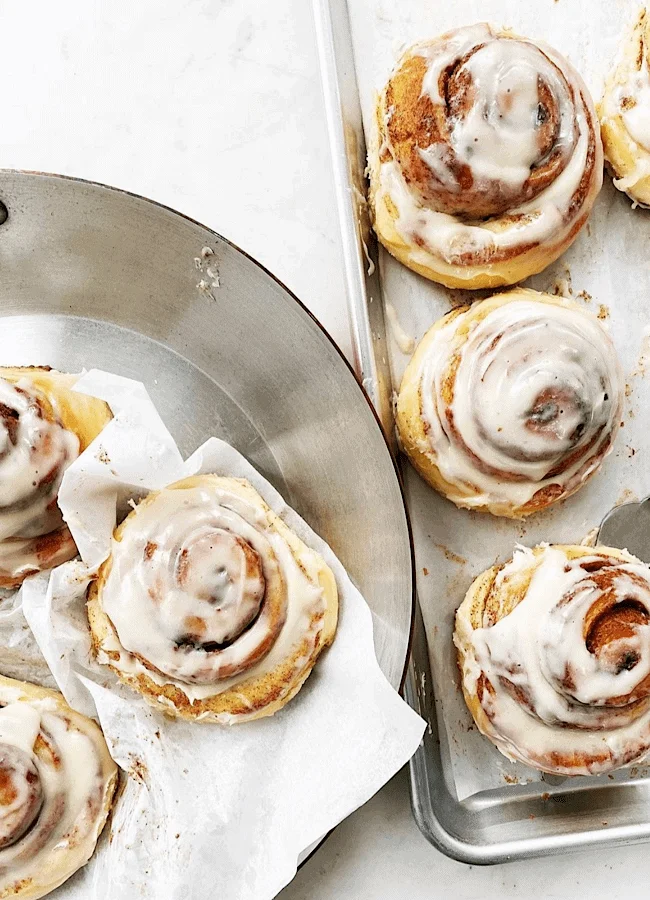
These American-style cinnamon rolls have a soft, enriched dough, a buttery cinnamon-sugar swirl and cream cheese icing. Spread some icing over the rolls while they are warm for a gooey finish, or wait until they cool for more defined edges.
Ingredients
- 4 largeeggs, at room temperature
- 180 ml (¾ cup), warm, 35–42°Cwhole milk
- 85 g (¼ cup)honey
- 568 g (4 cups)plain flour
- 2¼ teaspoonsinstant yeast
- 2 teaspoonssalt
- 142 g (10 tablespoons or 1¼ sticks), at room temperature, cut into 2.5 cm piecesunsalted butter
- 100 g (½ cup), packedbrown sugar
- 1 tablespoonground cinnamon
- A pinchsalt
- 29 g (2 tablespoons), melted and cooledunsalted butter
- 113 g (8 tablespoons or 1 stick), at room temperatureunsalted butter
- 114 g (4 ounces), at room temperaturecream cheese
- 1 teaspoonpure vanilla extract
- ¼ teaspoonsalt
- 120 g (1 cup)icing sugar
Instructions
- 1
Grease the bowl
Grease a large bowl.
- 2
Mix the liquids
In a large liquid measuring jug, combine the eggs, warm milk and honey.
- 3
Make the dough
Fit a stand mixer with the paddle attachment. Mix the flour, yeast and salt on low to combine, then add the egg mixture and mix on low. With the mixer still on low, add the butter one piece at a time. Once it is all in, increase the speed to medium and beat for 1 minute, until the small pieces of butter are incorporated. Scrape the very sticky dough into the prepared bowl with a spatula.
- 4
Fold and chill
Cover the bowl with cling film and leave the dough to rise for 30 minutes. Slide your fingers or a spatula under it, gently lift and fold it over itself; turn the bowl and repeat until the dough has been folded over itself 6 to 8 more times. Cover again and leave for 30 minutes, then repeat the folding sequence 3 more times, for 2 hours of rising and 4 folding sessions in total. Cover tightly and refrigerate overnight or for up to 72 hours.
- 5
Bring dough to room temperature
Flour a work surface and knead the cold dough 10 to 12 times. Shape it into a ball, dust the top lightly with flour, cover with a tea towel and leave until it reaches room temperature.
- 6
Prepare the tin
Grease a 23 by 33 cm tin; line it with baking parchment if you like for easier cleaning.
- 7
Mix the filling
In a small bowl, mix the brown sugar, cinnamon and pinch of salt.
- 8
Shape the rolls
Roll the dough into a 30.5 by 40.5 cm rectangle. Brush it with the melted butter, then scatter the cinnamon-sugar mixture evenly over the surface and press it lightly into the butter. Starting from a long side, roll the dough into a tight cylinder. Pinch the seam closed and set the cylinder seam-side down. Cut it into 12 equal pieces with scissors or a sharp knife, then arrange them cut-side up in the prepared tin. Cover loosely with cling film and leave to rise until doubled, 1 to 1½ hours.
- 9
Bake the rolls
Set an oven rack in the middle and heat the oven to 180°C. Remove the cling film and bake the rolls for 27 to 32 minutes, rotating the tin halfway through, until golden brown. Make the icing while they bake.
- 10
Ice and serve
Put the tin on a wire rack and leave the rolls to cool for 5 minutes. Spread on a thin layer of icing, using about one-third of it. Leave the rolls to cool for another 15 to 20 minutes, then add the remaining icing and serve.
- 11
Beat the icing
With the paddle attachment, beat the butter and cream cheese on medium until smooth and creamy. Add the vanilla and salt and mix on low to combine. Add the icing sugar and mix on low until incorporated. Scrape down the bowl, then beat on medium for 3 to 4 minutes, until the icing is light and fluffy.
- 12
Prepare overnight rolls
Shape, fill and cut the rolls and arrange them in the prepared tin, but skip the 1 to 1½-hour rise. Cover loosely with cling film and refrigerate for up to 18 hours. When ready to bake, heat the oven and let the covered rolls stand at room temperature for 30 to 45 minutes. Bake as directed; they may need slightly longer.
What are cinnamon rolls?
Cinnamon rolls are a familiar American sweet bake: enriched dough is rolled around a cinnamon-sugar filling, sliced into spirals and baked in a tin. Their appeal comes from the contrast between tender bread and a sweet, buttery centre.
This version uses a slow, folded dough and cream cheese icing. A thin coating of icing on the warm rolls melts into their tops, while the rest goes on after a short cooling spell.
Nutrition and macros by portion
The nutrition label shows one serving as written: 700 calories, 14g protein, 99g carbs, 29g fat.
| Portion | Adjustment | kcal | Protein | Carbs | Fat |
|---|---|---|---|---|---|
| Lighter | Use less icing | 490 kcal | 10g | 69g | 20g |
| This serving | As written | 700 kcal | 14g | 99g | 29g |
| Hungry | Serve two rolls | 1050 kcal | 21g | 149g | 44g |
Most of the carbohydrates come from the flour, honey, brown sugar and icing sugar; butter and cream cheese contribute much of the fat, while eggs, milk and cream cheese provide some protein. Pair a roll with fruit and plain yoghurt for a plate with a fresh side and an additional source of protein.
An enriched, sticky dough
Eggs, milk, honey and butter make the dough rich and soft, but also sticky to handle. Use a spatula to transfer it to the greased bowl rather than adding extra flour at this stage.
Instant yeast is mixed directly with the flour and salt. The repeated folds help organise the soft dough during its long rise.
Folding and chilling
The folds: after each 30-minute rest, lift the dough from underneath and fold it over itself around the bowl, repeating until the whole dough has been folded. The method calls for four folding sessions over two hours.
The chill: refrigerating the covered dough overnight, or for up to 72 hours, is part of the recipe. Cold dough can be firm, so knead it 10 to 12 times before shaping, then let it come to room temperature.
Getting an even swirl
The filling: combine the brown sugar, cinnamon and pinch of salt before sprinkling it across the buttered dough. Press it gently into the butter so it stays in place as you roll.
The cylinder: roll from a long edge and keep the roll snug without squeezing out the filling. Seal the seam underneath before cutting the cylinder into 12 equal pieces.
Watch the final rise
Leave the shaped rolls covered until doubled; the recipe gives a range of 1 to 1½ hours. Rise time can vary, so look for the change in size rather than relying only on the clock.
For the overnight option, refrigerate the shaped rolls for up to 18 hours instead of giving them the usual rise. Let them stand, still covered, at room temperature for 30 to 45 minutes before baking.
Bake and ice for softness
Bake at 180°C for 27 to 32 minutes, turning the tin halfway through. The rolls are ready when golden brown; overnight rolls may need a little more time.
Use about one-third of the icing after the rolls have cooled for 5 minutes, then wait another 15 to 20 minutes before adding the rest. For more distinct edges, leave the rolls to cool before icing them all at once.
Serving ideas
These rolls are rich and sweet, so serve one with coffee or tea for breakfast or an afternoon treat. Fresh fruit alongside adds a bright, juicy contrast.
The recipe cuts the dough into 12 rolls while listing 10 servings. For a plate with more balance, pair a roll with plain yoghurt and fruit rather than adding another sweet topping.
Recipe notes & tips
- Measure the butter for the dough in pieces before adding it gradually to the mixer.
- Use a spatula to handle the sticky dough instead of working in extra flour.
- Press the cinnamon-sugar filling lightly into the melted butter so it adheres.
- Use a sharp knife or scissors to cut the rolled dough into even pieces.
- Set a timer to turn the tin halfway through baking.
- Keep the icing covered while the rolls bake so it is ready to spread.
Variations
- More cinnamon: Add a little extra ground cinnamon to the filling.
- Citrus icing: Add finely grated orange zest to the cream cheese icing.
- Nutty filling: Scatter chopped pecans over the cinnamon-sugar layer before rolling.
- Raisin swirl: Sprinkle raisins over the filling before rolling the dough.
- Less icing: Spread only a thin coating over the rolls for a less heavily topped finish.
Common mistakes to avoid
- Adding flour to sticky dough: Use a spatula to transfer it rather than changing the dough with extra flour.
- Skipping the folds: Complete all four folding sessions during the two-hour rise.
- Loose rolling: Roll the dough into a snug cylinder and pinch the seam closed.
- Cutting uneven pieces: Divide the cylinder into 12 equal sections for more even baking.
- Icing too soon: Apply the first third after the rolls cool for 5 minutes, then wait another 15 to 20 minutes before adding the rest.
- Overbaking: Begin checking at 27 minutes and take the rolls out when golden brown.
How to store
Store cooled rolls in an airtight container in the fridge for up to 3 days. Reheat individual rolls briefly in the microwave until warm; the icing will soften as it warms.
Frequently asked questions
Can I make the dough ahead?
Yes. After its rise and folding sessions, cover it tightly and refrigerate overnight or for up to 72 hours before shaping.
Can I refrigerate the shaped rolls overnight?
Yes. Cover them loosely and refrigerate for up to 18 hours, then let them stand covered at room temperature for 30 to 45 minutes before baking.
Why is the dough so sticky?
This enriched dough contains eggs, milk, honey and butter, so it is expected to be sticky. Scrape it into the greased bowl with a spatula rather than adding flour.
How do I get a gooey topping?
Spread about one-third of the icing over the rolls after they have cooled for 5 minutes. It will melt into the warm tops; add the rest after another 15 to 20 minutes.
How many rolls does the recipe make?
The dough is cut into 12 equal rolls. The listed serving count is 10, so the number of rolls and servings does not match exactly.
Can I freeze the baked rolls?
Yes. Freeze them in an airtight container and thaw before reheating. The icing may soften after thawing.
Cook it from the original
This recipe comes from thevanillabeanblog.com. Their page has the author’s own photos, notes and tips — the best place to cook it from.
Open the recipe on thevanillabeanblog.com