
Vegan Peanut Sauce
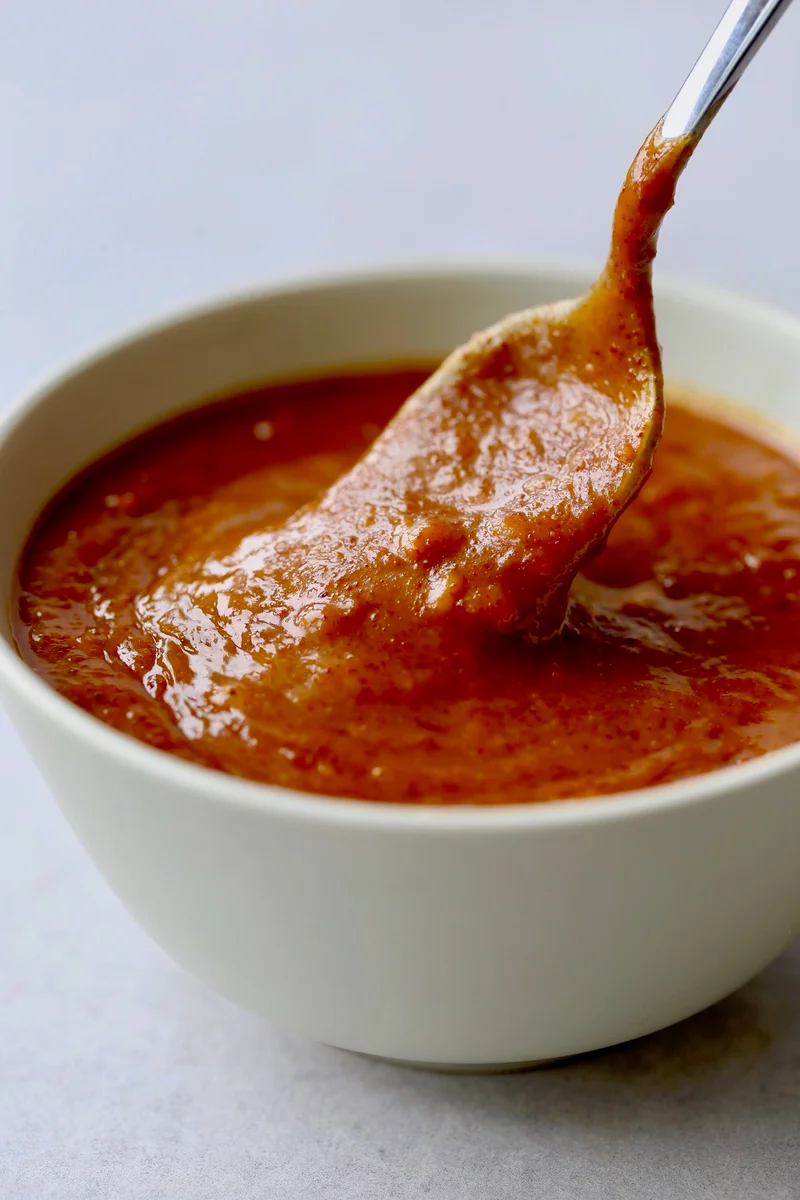
This quick, creamy vegan peanut sauce combines peanut butter with soy sauce, rice vinegar, maple syrup, garlic and ginger. Make it in 10 minutes to serve with spring rolls or satay skewers, or spoon over rice and noodles.
Ingredients
- 125 g (½ cup)natural peanut butter
- 22.5 ml (1½ tablespoons)dark soy sauce (or tamari if gluten-free)
- 30 ml (2 tablespoons)rice vinegar
- 15 ml (1 tablespoon)maple syrup (or agave; honey if not vegan)
- 2 small clovesgarlic, minced
- 1 teaspoonfresh ginger, grated
- as neededwater, to thin
Instructions
- 1
Whisk the ingredients
In a mixing bowl, whisk together all the ingredients except the water until they form a thick paste.
- 2
Thin the sauce
Whisk in water a tablespoon or two at a time until the sauce reaches your preferred consistency.
- 3
Serve the sauce
Use it as a dip for spring rolls or vegan satay skewers, or drizzle it over rice and noodles.
What is vegan peanut sauce?
Peanut sauce is a creamy, savoury-sweet condiment found in a range of Asian-inspired dishes. This version brings together peanut butter, soy sauce, vinegar, maple syrup, garlic and ginger, with water added to adjust the consistency.
Its appeal is the contrast between rich peanuts, tangy vinegar and savoury soy. The quick whisking method makes it easy to prepare without cooking.
Nutrition and macros by portion
The nutrition label shows one serving as written: 107 calories, 4g protein, 6g carbs, 8g fat.
| Portion | Adjustment | kcal | Protein | Carbs | Fat |
|---|---|---|---|---|---|
| Lighter | Use less peanut butter | 75 kcal | 3g | 4g | 6g |
| This serving | As written | 107 kcal | 4g | 6g | 8g |
| Hungry | Serve with rice and vegetables | 161 kcal | 6g | 9g | 12g |
The peanut butter contributes most of the fat and some of the protein, while the maple syrup and soy sauce provide some of the carbohydrates. Serve the sauce with vegetables and a source of protein, alongside rice or noodles, for a more balanced plate.
Choosing the ingredients
Peanut butter: Natural peanut butter gives the sauce its main flavour and creamy body. Stir it well before measuring if the oil has separated.
Soy sauce: Dark soy sauce adds savoury depth, while tamari is offered as the gluten-free alternative. Check the product label if gluten avoidance is important.
Sweet and sharp: Maple syrup balances the salty soy, and rice vinegar provides acidity. Garlic and fresh ginger bring pungent, aromatic notes.
Whisking to a smooth paste
Start by mixing everything except the water until the ingredients form a thick paste. This gives the peanut butter time to combine with the soy sauce, vinegar and syrup before you adjust the texture.
If the mixture looks a little stiff at first, keep whisking until it is evenly combined, then begin adding water.
Adjusting the consistency
Add water gradually, a tablespoon or two at a time, whisking after each addition. This makes it easier to stop when the sauce is right for your intended use.
Keep it thicker for dipping, or thin it further if you want to drizzle it over noodles or rice. The recipe leaves the water quantity flexible so you can choose.
Serving ideas
For dipping: Set the sauce out with spring rolls or vegan satay skewers. A thicker consistency helps it cling to each bite.
For a meal: Drizzle it over rice or noodles for a quick, flavourful finish. Add vegetables or another protein alongside to make the plate more substantial.
Timing and preparation
The sauce takes 10 minutes to prepare and does not require cooking. Have the garlic minced and ginger grated before you start whisking.
Because the water goes in gradually, allow a moment to taste and adjust the consistency before serving. You can stop as soon as it suits your dish.
Recipe notes & tips
- Stir separated natural peanut butter thoroughly before measuring.
- Add water in small amounts so the sauce does not become thinner than you want.
- Whisk the mixture until the soy sauce and syrup are evenly incorporated.
- Grate the ginger finely so it blends into the sauce.
- Taste the sauce before serving and adjust its thickness to suit dipping or drizzling.
Variations
- Use tamari: Swap in tamari for the dark soy sauce as the recipe suggests.
- Choose agave: Replace the maple syrup with agave for another plant-based option.
- Use honey: Substitute honey for maple syrup if the sauce does not need to be vegan.
- Make it thicker: Add less water for a sauce that clings well to spring rolls.
- Make it pourable: Whisk in more water gradually for drizzling over rice or noodles.
Common mistakes to avoid
- Adding all the water at once: The sauce may turn too thin; whisk it in a tablespoon or two at a time.
- Skipping the initial paste: Whisk the non-water ingredients together first so the mixture is combined before thinning.
- Using separated peanut butter: Stir the jar before measuring so you do not take only the oil or the solids.
- Over-thinning for dipping: Stop adding water once the sauce coats a spoon or your preferred dipping consistency is reached.
- Leaving garlic in large pieces: Mince it finely so it is better distributed through the sauce.
How to store
Keep leftover sauce in a covered container in the fridge and use within 4 days. Stir before serving; if it has thickened, whisk in a little water to loosen it.
Frequently asked questions
Can I make this sauce gluten-free?
The recipe suggests using tamari instead of dark soy sauce. Check the labels on the other ingredients as well.
How much water should I add?
There is no fixed amount: whisk in a tablespoon or two at a time until the sauce reaches the consistency you want.
Can I use this as a dip?
Yes. The recipe suggests serving it with spring rolls or vegan satay skewers, and you can keep it thicker for dipping.
How can I make the sauce vegan?
Use maple syrup or agave rather than honey, and check that your soy sauce and other ingredients are suitable for your needs.
Can I serve it with noodles?
Yes. Drizzle it over noodles or rice, thinning with water as needed to make it easier to coat them.
Cook it from the original
This recipe comes from theconscientiouseater.com. Their page has the author’s own photos, notes and tips — the best place to cook it from.
Open the recipe on theconscientiouseater.com