
Turkey Breast with Pomegranate Glaze (Gluten Free)
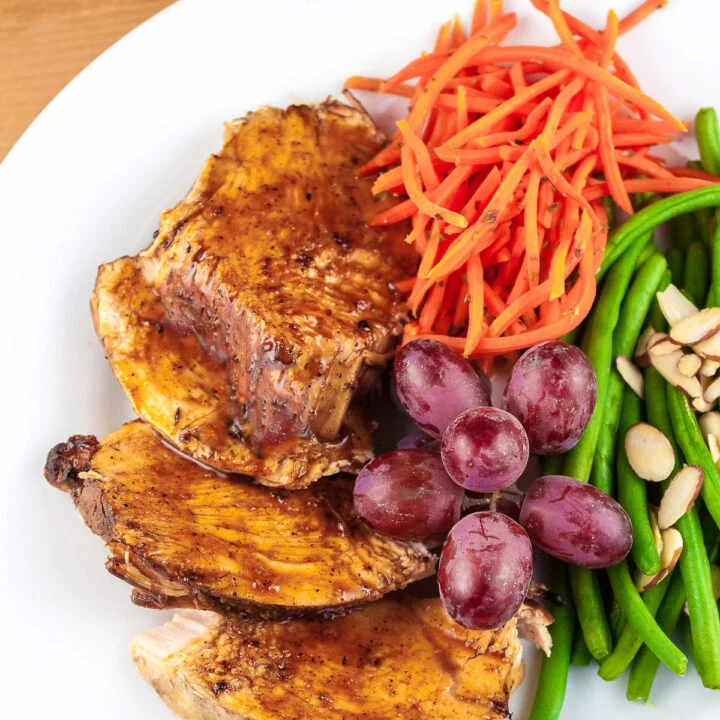
A bone-in turkey breast is coated with sage and thyme butter, then cooked on the grill or in the oven and finished with a reduced pomegranate glaze. It suits a smaller Thanksgiving meal and leaves more oven space available if you choose the grill.
Ingredients
- 118 ml (1/2 cup)orange juice, preferably freshly squeezed
- 59 ml (1/4 cup)pomegranate molasses
- 1 tbsphoney mustard
- 1/2 tspkosher salt
- 1/2 tspfreshly ground black pepper
- 1 half turkey breast, about 1.36 kg (3 lb)turkey breast, on the bone
- 85 g (3/4 stick; 6 tbsp)salted butter, softened to room temperature
- 2 tspdried, rubbed sage
- 1 tspdried thyme leaves, crushed
- 3/4 tsponion powder
- 1/4 tspgarlic powder
Instructions
- 1
Mix the herb butter
Mash the butter in a medium bowl with a fork. Add the sage, thyme, onion powder and garlic powder, then mix thoroughly.
- 2
Butter the turkey
Gently loosen the skin from the turkey breast to make a pocket. Press three-quarters of the herb butter into the pocket and over the meat; spread the remaining butter over the outside. Set the turkey aside to warm slightly while you prepare the grill or oven.
- 3
Mix the glaze
Whisk the orange juice, pomegranate molasses, honey mustard, salt and pepper in a measuring jug until combined and the mustard and molasses have dissolved. Pour half into a small saucepan for reducing later, and keep the rest in the jug for basting during cooking.
- 4
Prepare the turkey
For the barbecue, spray a large disposable aluminium pan with high-heat vegetable oil spray. Put the turkey breast in it, meat-side up, brush a little of the glaze from the jug over the top and cover the pan with foil.
- 5
Start grilling
Heat the grill on HIGH for 10 to 15 minutes, or prepare a medium-hot two-tier charcoal fire. Set the pan on the hot part of the grill and cook for 15 minutes. Wearing oven mitts, remove the foil carefully to avoid the steam, baste with more glaze and cover again.
- 6
Finish grilling
Turn the grill down to medium-low, or move the pan to the cooler side of a charcoal grill. Cook for another 30 to 40 minutes, basting once or twice more, until an instant-read thermometer inserted into the breast without touching bone reads 163°F (72°C). Discard any glaze that has been touched by the basting brush. Cooking time varies with the breast size and grill heat.
- 7
Roast in oven
Alternatively, heat the oven to 191°C (375°F) and lightly butter the bottom of a 23 x 33 cm (9 x 13-inch) baking pan. Put the buttered turkey breast in the pan and brush lightly with glaze from the jug, not the saucepan. Roast for about 15 to 20 minutes per pound, basting a couple more times, until a thermometer inserted into the meat without touching bone reads about 163°F (72°C). A boneless breast cooks more quickly than a bone-in one.
- 8
Reduce the glaze
While the turkey cooks, simmer the glaze in the saucepan over medium heat until it has reduced to about 60 ml (1/4 cup).
- 9
Remove from heat
When the turkey is cooked, carefully take the pan off the grill or out of the oven and place it on a heatproof surface.
- 10
Glaze and rest
Use tongs, carving forks or turkey lifters to transfer the turkey to a cutting board. Brush it generously with the reduced glaze, tent loosely with foil and leave to rest for 20 minutes.
- 11
Slice and serve
Brush on any remaining reduced glaze, slice the turkey and serve straight away.
What is turkey breast with pomegranate glaze?
Roast turkey is a familiar American holiday centrepiece, but a breast makes a more manageable choice for a smaller gathering. This version combines savoury herb butter with a sweet-tart glaze made from pomegranate molasses and orange juice.
Herb butter under the skin seasons the meat, while the glaze is divided so some can be used for basting and the rest can be reduced for a finishing coat.
Nutrition and macros by portion
The nutrition label shows one serving as written: 412 calories, 69g protein, 14g carbs, 7g fat.
| Portion | Adjustment | kcal | Protein | Carbs | Fat |
|---|---|---|---|---|---|
| Lighter | Less butter, more vegetables | 288 kcal | 48g | 10g | 5g |
| This serving | As written | 412 kcal | 69g | 14g | 7g |
| Hungry | Add potatoes and stuffing | 618 kcal | 104g | 21g | 11g |
Turkey provides most of the protein, while the orange juice and pomegranate molasses contribute most of the carbohydrate. Butter supplies much of the fat. Pair a serving with vegetables and a moderate portion of potatoes or stuffing for a balanced plate.
Why use butter under the skin?
Under the skin: loosening it gently creates a pocket for most of the sage and thyme butter, putting the seasoning directly against the meat.
On the outside: the remaining butter coats the skin. Work carefully so the skin stays intact and the butter is spread evenly.
How to manage the glaze
Two portions: keep half of the glaze in the measuring jug for basting and put the other half in the saucepan to reduce. Keep them separate so the finishing glaze is not exposed to the basting brush.
During cooking: brush on the reserved glaze as directed, and discard any that has been dipped into with the brush. The saucepan portion is reduced while the turkey cooks.
Grill or oven?
Grill: the recipe starts the covered pan over high heat, then moves to medium-low heat for the longer part of cooking. On a charcoal grill, use the cooler side after the initial stage.
Oven: roast at 191°C (375°F), basting a couple more times. The listed time is an estimate; the thermometer reading is the doneness cue for either cooking method.
How to judge doneness
Thermometer placement: insert an instant-read thermometer into the thickest part of the breast without touching bone. The target in this method is 163°F (72°C).
Resting: leave the cooked breast loosely tented with foil for 20 minutes before slicing. This gives the juices time to redistribute through the meat.
What to serve alongside
Classic sides: serve slices with potatoes and stuffing for a Thanksgiving-style plate. The recipe description also suggests gravy made from separately roasted turkey wings and legs.
For balance: add a vegetable side, such as green beans or roasted vegetables, to complement the rich butter and sweet-tart glaze.
Recipe notes & tips
- Let the salted butter soften so it is easier to mix and spread.
- Loosen the skin gently to avoid tearing it when making the pocket.
- Keep the glaze for basting separate from the portion in the saucepan.
- Use an instant-read thermometer and avoid touching the bone when checking the temperature.
- Allow the turkey to rest for the full 20 minutes before carving.
Variations
- Fresh herbs: use finely chopped fresh sage and thyme in place of the dried herbs.
- Citrus twist: add orange zest to the glaze for a more pronounced orange aroma.
- Charcoal grill: cook over a two-tier fire, moving the pan to the cooler side for the longer stage.
- Oven method: roast in a buttered 23 x 33 cm (9 x 13-inch) pan if you are not using the grill.
- Gravy: roast extra turkey wings and legs ahead, then use their pan drippings to make gravy.
Common mistakes to avoid
- Tearing the skin: loosen it slowly with your fingers to make the pocket without ripping it.
- Touching bone with the thermometer: reposition the probe in the meat for a useful reading.
- Using all the glaze for basting: reserve half in the saucepan for the final reduction.
- Reusing brushed glaze: discard any glaze touched by the basting brush.
- Skipping the rest: tent the turkey loosely with foil and leave it for 20 minutes before slicing.
How to store
Refrigerate leftover turkey in a covered container once it has cooled. Reheat gently until hot throughout, adding a little of the reserved glaze if you have any left.
Frequently asked questions
Can I cook this without a grill?
Yes. The recipe includes an oven method: roast at 191°C (375°F) in a lightly buttered 23 x 33 cm (9 x 13-inch) pan.
How long will a full turkey breast take?
The stated grilling times are for a half breast, and a full or double breast needs more cooking time. Check doneness with an instant-read thermometer rather than relying on time alone.
Can I use a boneless turkey breast?
Yes, but the recipe notes that a boneless breast cooks more quickly than a bone-in one. Start checking its temperature earlier.
Why is the glaze split between a jug and a saucepan?
The jug portion is used for basting during cooking. The saucepan portion is reduced separately and brushed over the turkey at the end.
Can I make gravy to go with it?
The recipe suggests roasting extra turkey wings and legs ahead of time, then using their pan drippings to make gravy.
Cook it from the original
This recipe comes from theheritagecook.com. Their page has the author’s own photos, notes and tips — the best place to cook it from.
Open the recipe on theheritagecook.com