
Ragù Bolognese Sauce
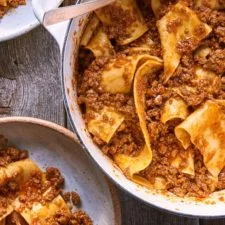
Ragù Bolognese is a slowly simmered meat sauce made with beef, pork, pancetta, vegetables, milk, wine and tomato. The gentle cooking gives it a deep, rounded flavour and a tender texture that works especially well with pappardelle.
Ingredients
- 30 g (2 tbsp)unsalted butter
- 30 ml (2 tbsp)olive oil
- 60 g (2 oz)diced pancetta
- 1onion
- 1carrot
- 1celery stick
- 250 g (½ lb)ground beef, about 80% lean
- 250 g (½ lb)ground pork
- to tastesalt
- to tasteblack pepper
- 236 ml (1 cup)whole milk
- 1 pinchground nutmeg
- 1 dried leaf or 2 fresh leavesbay leaf
- 236 ml (1 cup)dry white wine
- 60–70 g (heaped ¼ cup)tomato paste
- 236–472 ml (1–2 cups)good-quality chicken stock
- 800 g (28 oz), optionalwhole peeled plum tomatoes in purée, passed through a food mill
- to tastesalt, for the pasta water
- 450 g (1 lb)homemade pappardelle
- 1 small pat, optionalbutter, to finish the pasta
- to servefreshly grated Parmesan cheese
Instructions
- 1
Warm the fat
In a heavy-based pot or Dutch oven, warm the butter and olive oil over medium-low heat.
- 2
Chop the vegetables
Pulse the pancetta, onion, carrot and celery in a food processor until finely chopped, without processing them into a wet mixture. Alternatively, chop them by hand.
- 3
Soften the base
Add the chopped mixture to the pot and sauté, stirring occasionally, for 10–15 minutes, until lightly golden. Add a little more oil or butter if it seems dry.
- 4
Cook the meat
Add the beef and pork, then use a fork to break them up and combine them. Season with salt and black pepper, and cook only until the meat has lost its pink colour; do not brown it.
- 5
Simmer with milk
Add the milk, nutmeg and bay leaf. Simmer until the milk has almost evaporated, up to 20 minutes or longer depending on the pot and how much liquid the meat releases.
- 6
Add wine and tomato
Pour in the wine and simmer until it has almost evaporated. Stir in the tomato paste until dissolved, then add 1 cup of stock and the tomatoes, if using. Stir well.
- 7
Cook the ragù
Turn the heat to low and cook with the lid ajar for about 1–2 hours. Keep the sauce at a very gentle simmer rather than a rapid boil. If it reduces too quickly, add more stock or canned tomatoes; add more tomato paste for extra colour if desired. The finished sauce should be thick but not overly dense. Skim off surface fat and adjust the salt if needed.
- 8
Cook the pasta
Bring a large pot of water to the boil and salt it generously. Add the pappardelle and cook until soft but al dente, 3–7 minutes depending on its thickness, tasting to check. Stir occasionally to prevent sticking. Use tongs to transfer the pasta directly into the sauce, add a small pat of butter if desired, and serve with Parmesan.
What is ragù Bolognese?
Ragù Bolognese is a slow-cooked meat sauce associated with Bologna in northern Italy. This version follows a traditional style that builds flavour with finely chopped vegetables, pancetta, beef and pork, then simmers the meat with milk, wine and tomato.
Milk is added before the wine and tomato, helping create the recipe’s soft, cohesive texture. The long, gentle simmer brings the ingredients together without turning the meat into browned, separate crumbles.
Nutrition and macros by portion
The nutrition label shows one serving as written: 850 calories, 43g protein, 76g carbs, 38g fat.
| Portion | Adjustment | kcal | Protein | Carbs | Fat |
|---|---|---|---|---|---|
| Lighter | Smaller pasta portion | 595 kcal | 30g | 53g | 27g |
| This serving | As written | 850 kcal | 43g | 76g | 38g |
| Hungry | Larger pasta portion | 1275 kcal | 65g | 114g | 57g |
The pappardelle supplies most of the carbohydrates, while the beef, pork and pancetta contribute protein and much of the fat. Butter, olive oil, Parmesan and the meat also add fat; serve with a generous portion of vegetables or salad to balance the plate.
Build a fine vegetable base
Pancetta and vegetables: pulse the onion, carrot, celery and pancetta only until finely chopped. Large pieces can interrupt the sauce’s smooth texture, while over-processing can make the mixture wet.
Gentle sauté: cook the mixture over medium-low heat for 10–15 minutes until lightly golden. If it looks dry before then, add a little more butter or oil rather than turning up the heat.
Keep the meat tender
Beef and pork: break the meat up with a fork and stop cooking once the pink colour has disappeared. The method deliberately avoids browning, which helps retain the soft texture this ragù is meant to have.
Milk first: let the milk reduce almost completely before adding the wine. The time can vary with the pot and the amount of liquid released by the meat, so judge it by how much remains rather than rushing to the next step.
Let the sauce simmer slowly
Low heat: once the stock and tomato are in, aim for an occasional gentle bubble, with the lid slightly ajar. A rapid boil can reduce the liquid too quickly and work against the mellow, tender result.
Check the texture: the finished sauce should be thick, but still spoonable. If it is reducing too fast during the 1–2 hour simmer, add more stock or canned tomatoes as directed.
Choose the tomato route
Tomato paste: the listed method uses a heaped ¼ cup, or 60–70 g, of paste with chicken stock. Stir the paste into the reduced wine before adding the stock.
Canned tomatoes: the recipe also includes an optional 800 g can of plum tomatoes for a more tomato-forward sauce. If you do not have tomato paste, the notes suggest leaving out the stock and starting with a 400 g can of chopped tomatoes, adding more as desired, or using 236–475 ml of bottled passata instead.
Finish the pappardelle well
Pasta timing: fresh pappardelle can cook in 3–7 minutes depending on thickness, so start checking early and taste for doneness. Stir it now and then so the strands do not clump together.
Sauce coating: transfer the pasta straight from the water into the ragù with tongs. This makes it easy to coat the noodles evenly; finish with a little butter if you like and serve with grated Parmesan.
Plan the cooking time
The total cooking time is about 190 minutes, including the long simmer. Pot size affects how quickly liquid evaporates, so a smaller pot may need more time and a doubled batch may need longer still.
Serve the ragù with the pappardelle as written, or use another substantial pasta shape such as homemade pasta or gnocchi. A simply dressed green salad can add a fresh contrast to the rich sauce.
Recipe notes & tips
- Use a heavy-based pot so the ragù heats steadily during its long simmer.
- Chop the vegetables and pancetta finely, but stop pulsing before the mixture becomes wet.
- Keep the sauce at a low simmer with the lid ajar rather than letting it boil rapidly.
- Check the sauce as it cooks and add stock or canned tomatoes if the liquid reduces too quickly.
- Taste fresh pappardelle as it cooks because its thickness affects how long it needs.
- Save the Parmesan for serving so each portion can be finished to taste.
Variations
- More tomato: include the optional plum tomatoes for a more tomato-forward sauce.
- No tomato paste: omit the stock and use chopped canned tomatoes or bottled passata as suggested in the recipe notes.
- Alternative pasta: serve the ragù with gnocchi instead of pappardelle.
- Hand-chopped vegetables: finely chop the pancetta, onion, carrot and celery by hand if you do not have a food processor.
- Fresh bay leaves: use 2 fresh bay leaves in place of 1 dried leaf.
Common mistakes to avoid
- Over-processing the vegetables: stop once they are finely chopped so they do not turn wet.
- Browning the meat: cook only until its pink colour disappears to keep the texture soft.
- Boiling the ragù hard: lower the heat until the sauce only simmers gently.
- Letting the sauce reduce too fast: add more stock or canned tomatoes if it is losing liquid quickly.
- Overcooking the pappardelle: begin tasting within the stated 3–7 minute range, according to thickness.
How to store
Refrigerate leftover ragù promptly in a covered container and use within 3–4 days; keep leftover pasta separately if possible. Reheat the sauce gently in a saucepan, loosening it with a splash of stock or water if needed, and warm the pasta in boiling water or with the sauce.
Frequently asked questions
Can I make the ragù without tomato paste?
Yes. The recipe notes suggest leaving out the chicken stock and using a 400 g can of whole peeled tomatoes to start, adding more if you want. Bottled passata is another suggested option.
Do I have to use the optional canned tomatoes?
No. The listed method uses tomato paste and stock, and the canned plum tomatoes are optional for a more tomato-forward sauce.
Why is the meat not browned?
The method cooks it only until it loses its pink colour, to preserve the soft texture intended for this ragù.
How do I know when the ragù is ready?
After its 1–2 hour gentle simmer, it should be thick but not overly dense. If it becomes too reduced before then, add more stock or canned tomatoes.
How long does fresh pappardelle take to cook?
The recipe gives a range of 3–7 minutes, depending on thickness. Taste a strand to check that it is soft but still al dente.
Can I double the recipe?
Yes, but allow for the cooking times to increase as needed, as noted in the recipe.
Cook it from the original
This recipe comes from theclevercarrot.com. Their page has the author’s own photos, notes and tips — the best place to cook it from.
Open the recipe on theclevercarrot.com