
Vegetable and Chickpea Mafé {A Senegalese Peanut Stew}
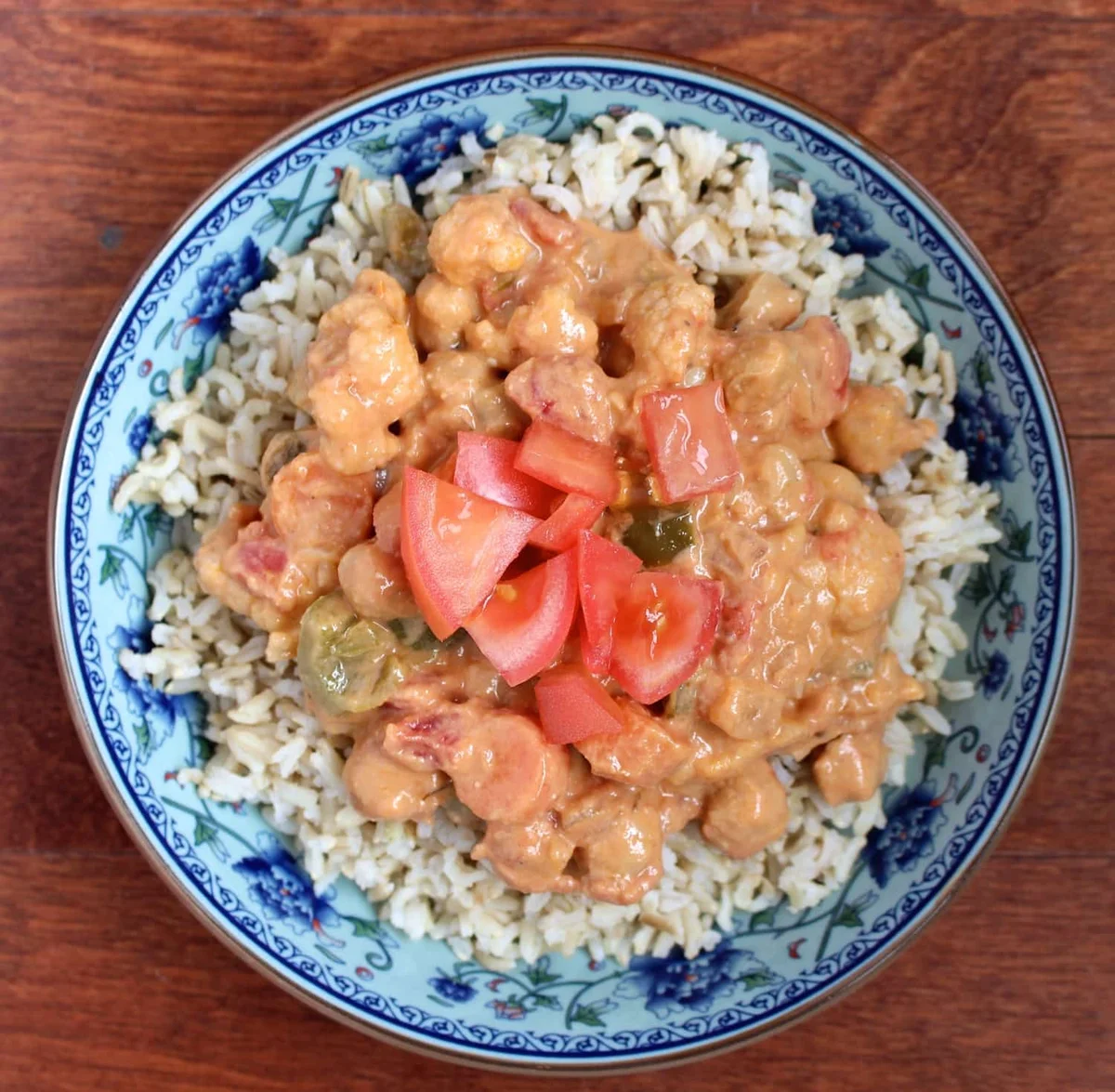
This Senegalese-inspired mafe is a hearty peanut stew with chickpeas, tomatoes and plenty of vegetables. It comes together in one pan and makes a satisfying meal served over warm rice.
Ingredients
- 129 g (½ cup)peanut butter
- 480 ml (2 cups)vegetable broth
- 160 g (1 cup), about ½ large onionchopped onion
- 4 cloves, mincedgarlic
- 1, seeded and choppedgreen bell pepper
- about 130 g (1 cup), peeled and choppedcarrot
- about 250 g (2 heaped cups), from ½ small headcauliflower florets
- 425 g (15 oz), drained and rinsedchickpeas
- 411 g (14.5 oz)diced tomatoes
- 5 ml (1 teaspoon)dried thyme
- 1bay leaf
- 2.5 ml (½ teaspoon)salt
- To tastefreshly ground black pepper
Instructions
- 1
Mix the sauce
Whisk the peanut butter and vegetable broth together until combined, then set aside.
- 2
Soften the vegetables
Set a skillet over medium heat. Sauté the onion, garlic, green pepper, carrot and cauliflower until the onion is translucent.
- 3
Add the sauce
Pour in the peanut butter and broth mixture and stir well.
- 4
Add remaining ingredients
Stir in the drained and rinsed chickpeas, diced tomatoes, thyme, bay leaf, salt and pepper.
- 5
Simmer the stew
Stir well and bring the mixture to a boil. Turn the heat to low and simmer, stirring often, until the sauce thickens and the cauliflower is cooked through and tender when pierced with a fork.
- 6
Adjust the seasoning
Take out the bay leaf, then add more salt and pepper to taste.
- 7
Serve with rice
Serve the stew over warm rice.
What is mafe?
Mafe, also called groundnut stew, is a West African dish associated with Senegal and other parts of the region. Its defining feature is a savoury sauce made with peanuts or peanut butter.
This vegetable-and-chickpea version pairs that rich sauce with tomatoes, aromatics and tender vegetables. Chickpeas make it substantial, while serving it over rice gives the thick stew a simple base.
Nutrition and macros by portion
The nutrition label shows one serving as written: 295 calories, 13g protein, 36g carbs, 13g fat.
| Portion | Adjustment | kcal | Protein | Carbs | Fat |
|---|---|---|---|---|---|
| Lighter | Less rice, extra vegetables | 207 kcal | 9g | 25g | 9g |
| This serving | As written | 295 kcal | 13g | 36g | 13g |
| Hungry | A larger rice portion | 443 kcal | 20g | 54g | 20g |
The chickpeas and rice provide most of the carbohydrates, while the peanut butter contributes much of the fat and some protein. Chickpeas also add protein, with smaller contributions from the vegetables. Serve a measured portion over rice and add extra vegetables alongside if you want a plate with more volume.
Why peanut butter works
Smooth peanut butter blends readily with vegetable broth, creating a creamy base without needing a separate sauce-making stage. Whisking the two together first helps loosen the peanut butter before it goes into the pan.
Choose plain peanut butter if possible, so its sweetness and salt do not compete with the tomatoes and seasoning.
Build flavour with the vegetables
Aromatics: cooking the onion and garlic with the pepper first softens their sharp edges and forms the savoury start of the stew.
Cauliflower and carrot: the cauliflower absorbs the sauce as it cooks, while carrot adds a gentle sweetness. Cut the florets into similar-sized pieces so they become tender at roughly the same time.
Get the texture right
The stew is ready when the sauce has thickened and a fork slips easily into the cauliflower. Stir often as it simmers, paying particular attention to the bottom of the pan where the peanut-rich sauce can catch.
If the sauce thickens before the cauliflower is tender, lower the heat and continue cooking gently. The method does not specify a simmering time, so use these texture cues rather than a fixed timer.
Season and serve
The bay leaf adds background flavour during the simmer; remove it before serving. Taste the finished stew and adjust the salt and freshly ground pepper as needed.
Warm rice is the suggested accompaniment, providing a mild contrast to the rich, savoury sauce. Spoon the stew over the rice so the grains can catch the sauce.
Plan the cooking order
Mix the peanut butter and broth before heating the vegetables, then have the chickpeas, tomatoes and seasonings ready to add together. This keeps the stages straightforward once the vegetables have softened.
The stated total time is 35 minutes, but the final simmer is governed by how quickly the cauliflower turns tender and the sauce thickens.
Recipe notes & tips
- Whisk the peanut butter and broth until smooth before setting the mixture aside.
- Cut the cauliflower into evenly sized florets to help them cook at a similar rate.
- Drain and rinse the chickpeas well before adding them to the skillet.
- Stir regularly during the simmer to help prevent the thick sauce catching on the pan.
- Remove the bay leaf before serving and taste before adding extra salt.
Variations
- Add greens: stir in a handful of spinach near the end and cook just until wilted.
- Use sweet potato: swap in chopped sweet potato for some of the carrot and simmer until tender.
- Make it hotter: add chilli to taste with the garlic and vegetables.
- Try a different legume: replace the chickpeas with drained, rinsed butter beans.
- Add fresh herbs: finish with chopped coriander or parsley just before serving.
Common mistakes to avoid
- Skipping the initial whisk: peanut butter can stay in lumps, so blend it with the broth before adding it.
- Cooking too fast: a vigorous simmer can make the thick sauce catch; keep the heat low and stir often.
- Using uneven florets: large pieces may stay firm while small ones soften; cut them to a similar size.
- Leaving the bay leaf in: remove it before serving so nobody bites into it.
- Seasoning too early: taste after simmering, then adjust salt and pepper to suit the finished sauce.
How to store
Cool leftovers promptly and store them in a covered container in the fridge for up to 3 days. Reheat gently in a saucepan, stirring often; add a splash of water or broth if the sauce has thickened. Store rice separately where possible.
Frequently asked questions
Can I make this stew ahead?
Yes. Cook the stew, cool it and refrigerate it in a covered container for up to 3 days. Reheat it gently, stirring often, and loosen the sauce with a little water or broth if needed.
Can I use crunchy peanut butter?
Yes, though the sauce will have small pieces of peanut rather than a completely smooth texture. Whisk it with the broth as directed.
How do I know when the cauliflower is done?
Pierce a floret with a fork; it should be tender without falling apart. The sauce should also have thickened during the simmer.
What can I serve with mafe besides rice?
The recipe suggests warm rice. You could also serve it with another mild grain or bread to scoop up the sauce.
Can I use tinned tomatoes?
Yes. The recipe calls for diced tomatoes, and tinned diced tomatoes are suitable; add them with the other ingredients at the same stage.
Is this recipe vegan?
The listed ingredients are plant-based, including the vegetable broth. Check the labels on your peanut butter and broth if you need to confirm that they contain no animal-derived ingredients.
Cook it from the original
This recipe comes from theconscientiouseater.com. Their page has the author’s own photos, notes and tips — the best place to cook it from.
Open the recipe on theconscientiouseater.com