
Hong Kong Coconut Tarts
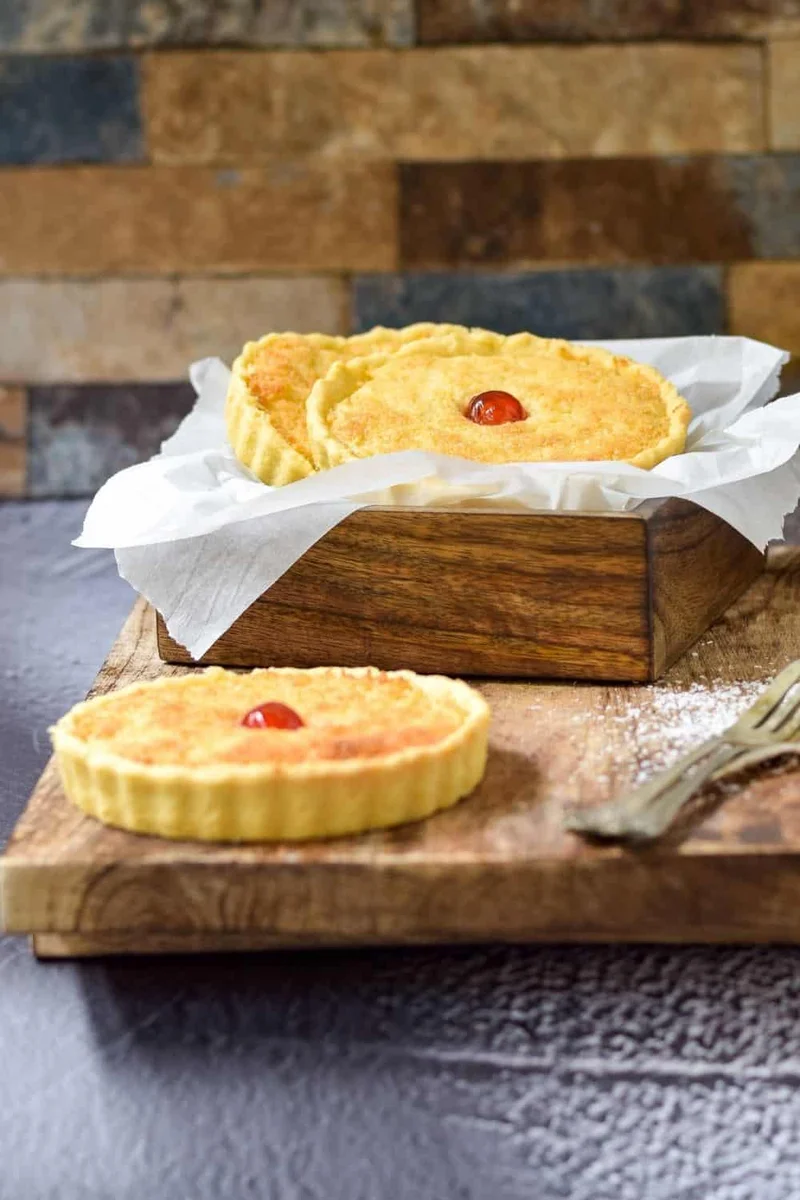
Hong Kong coconut tarts pair a tender, buttery pastry shell with a sweet, fragrant coconut filling. They make a lovely small-batch bake for sharing with tea or serving as a simple dessert.
Ingredients
- 100 gsoftened butter
- 2½ tbspgranulated sugar
- 1egg yolk, at room temperature
- 1 tspvanilla extract
- 200 mlcake flour or plain flour
- 100 g (1¼ cup)desiccated coconut
- 1 tbspplain flour
- ½ tspbaking powder
- 65 g (⅓ cup)granulated sugar
- 60 ml (¼ cup)milk or fresh cream, at room temperature
- 1 tspvanilla extract
- 30 g (2 tbsp)melted butter
- 1egg, at room temperature
- A pinchsalt
Instructions
- 1
Mix the butter
In a medium bowl, mix the softened butter with 2½ tbsp sugar. Add the egg yolk and 1 tsp vanilla extract, then mix again.
- 2
Make the pastry
Add the 200 ml flour and mix until a soft dough forms. It should be pliable; add a little more flour if needed. Wrap the dough in cling film and chill for 30 minutes.
- 3
Shape the shells
Roll out the dough and cut it into 6 rounds. Fit them into six 11 cm tart tins with removable bases.
- 4
Chill the shells
Set the tart tins on a baking tray and chill them while you prepare the filling.
- 5
Combine dry ingredients
Put the desiccated coconut, 1 tbsp flour and baking powder in a bowl.
- 6
Mix the filling
In another bowl, whisk together the remaining ingredients. Add the dry mixture and stir until combined.
- 7
Fill the tarts
Divide the filling between the 6 tart shells and smooth it out with the back of a spoon.
- 8
Bake until golden
Bake at 160°C for 20–30 minutes.
- 9
Cool before unmoulding
Leave the tarts to cool for 10 minutes before removing them from their tins.
What are Hong Kong coconut tarts?
These are individual pastries with a buttery shell and a sweet coconut filling, a familiar style of bakery treat in Hong Kong. Their appeal is the contrast between the tender crust and the softly textured, fragrant centre.
This version keeps the filling straightforward, using desiccated coconut, egg, milk or cream, sugar and vanilla. Chilling the pastry helps it hold its shape while the filling bakes.
Nutrition and macros by portion
The nutrition label shows one serving as written: 427 calories, 5g protein, 37g carbs, 29g fat.
| Portion | Adjustment | kcal | Protein | Carbs | Fat |
|---|---|---|---|---|---|
| Lighter | Smaller tart portion | 299 kcal | 4g | 26g | 20g |
| This serving | As written | 427 kcal | 5g | 37g | 29g |
| Hungry | Two tarts per person | 641 kcal | 8g | 56g | 44g |
The flour and sugar provide most of the carbohydrates, while butter and coconut contribute much of the fat; the egg and dairy provide some protein. Serve a tart with fresh fruit, or pair it with a lighter main meal to balance the plate.
The pastry ingredients
Soft butter: mixing it with sugar first helps make a cohesive pastry dough. The egg yolk and vanilla add richness and flavour.
Flour: cake flour or plain flour is listed for the shell. Mix just until the dough comes together, and add extra flour only if it is too sticky to handle.
Building the coconut filling
Desiccated coconut: this gives the filling its distinctive texture and flavour. Tossing it with the flour and baking powder helps distribute those dry ingredients evenly.
Wet ingredients: whisk the egg, milk or cream, melted butter, sugar, vanilla and salt together before adding the coconut mixture. Use room-temperature ingredients so the filling combines smoothly.
Chilling and shaping
First chill: give the wrapped dough the full 30 minutes in the fridge so it is easier to roll and handle. If it becomes very firm, let it sit briefly until it rolls without cracking.
Tart shells: press or fit each round into an 11 cm tin without stretching the dough. Chilling the lined tins while you make the filling helps the pastry stay neat in the oven.
How to tell they are baked
Colour: the recipe gives a baking range of 20–30 minutes at 160°C. Start checking at 20 minutes and look for a set filling with a lightly golden surface.
Cooling: leave the tarts in their tins for 10 minutes before removing them. The shells are delicate while hot and firm up as they cool.
Serving the tarts
These tarts are rich and sweet, so serve one alongside tea or coffee for a small treat. Fresh fruit can add a bright contrast to the buttery pastry and coconut filling.
For a dessert spread, arrange them with other small pastries rather than adding a large, heavy accompaniment. Let them cool completely if you want the filling to hold its shape when served.
Recipe notes & tips
- Measure the flour consistently, as the recipe gives it by volume rather than weight.
- Keep the dough cool while rolling so it is easier to fit into the tart tins.
- Use a whisk to combine the wet ingredients before folding in the coconut mixture.
- Check the tarts from the 20-minute mark, as ovens and tart tins can vary.
- Allow the tarts to cool for the full 10 minutes before lifting them from their removable bases.
Variations
- Use cream: choose fresh cream instead of milk for a richer filling.
- Add citrus: mix a little finely grated lemon or orange zest into the filling for a fresh note.
- Boost the vanilla: add a little extra vanilla to bring out the coconut aroma.
- Serve with fruit: offer berries or sliced citrus alongside each tart for a bright contrast.
Common mistakes to avoid
- Overworking the pastry: mix only until a soft dough forms so the shells stay tender.
- Skipping the chill: refrigerate the dough for 30 minutes and the lined tins while making the filling to help the pastry keep its shape.
- Stretching the dough: fit each round gently into the tin so it is less likely to shrink during baking.
- Overfilling the shells: divide the mixture evenly among all 6 tins and smooth it without packing it down.
- Unmoulding too soon: wait 10 minutes after baking so the shells have time to firm up.
How to store
Once completely cool, store the tarts in an airtight container in the fridge for up to 3 days. Bring them to room temperature before serving, or warm briefly in a low oven until just heated through.
Frequently asked questions
Can I use milk instead of fresh cream?
Yes. The recipe lists milk or fresh cream; either should work in the filling.
How do I know when the tarts are ready?
Bake for 20–30 minutes at 160°C, checking from 20 minutes. The filling should look set and the surface lightly golden.
Can I make the pastry ahead?
Yes. Wrap the dough and keep it chilled; allow it to soften slightly if it is too firm to roll.
Why does the pastry need chilling?
Chilling makes the soft dough easier to roll and shape. Chilling the lined tins also helps the shells hold their form as they bake.
Can I freeze the baked tarts?
They can be frozen once fully cool in a well-sealed freezer container. Thaw in the fridge, then bring to room temperature or warm gently before serving.
Cook it from the original
This recipe comes from tamarindnthyme.com. Their page has the author’s own photos, notes and tips — the best place to cook it from.
Open the recipe on tamarindnthyme.com