
Crispy Eggplant Katsu (Fried or Baked)
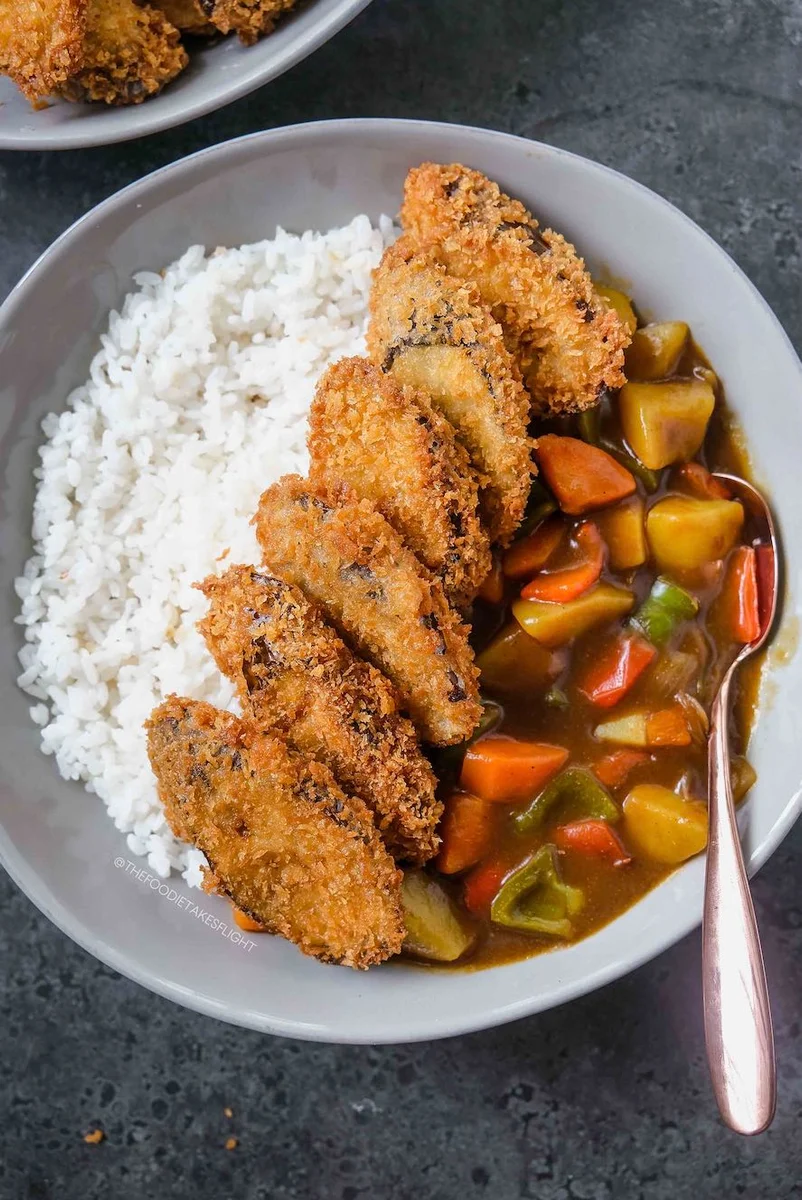
Crispy eggplant katsu pairs a crunchy breadcrumb coating with soft, silky aubergine, served with Japanese curry and short-grain rice. Choose frying, baking or air-frying to suit your kitchen.
Ingredients
- 496 g (17.5 oz)Chinese, American or other aubergine
- As neededNeutral oil, for frying or spraying
- 60 g (1/2 cup)Plain flour, or another flour such as buckwheat or gluten-free flour
- 1 1/2 tbspCornflour
- 1 tspBaking powder
- 1 tspSalt
- 150 ml (1/2 cup plus 2 tbsp), with an additional 15–30 ml (1–2 tbsp) if neededRoom-temperature water
- 120 g (2 cups), or more if neededBreadcrumbs, preferably Japanese breadcrumbs
- To tasteJapanese curry or another curry of your choice
- To tasteSteamed short-grain rice
Instructions
- 1
Slice the aubergine
Cut the aubergines into pieces about 2–2.5 cm (3/4–1 inch) thick; slicing them at an angle is an option.
- 2
Mix the batter
In a bowl, mix the flour, cornflour, baking powder, salt and water until smooth. Put the breadcrumbs in a separate shallow bowl. If the batter is too thick, mix in 1 tbsp more water; aim for the consistency of thick pancake batter.
- 3
Coat each piece
Dip each aubergine piece in the batter, then cover it with breadcrumbs. Using one hand for the wet batter and the other for the dry crumbs helps keep your fingers from getting coated.
- 4
Finish coating
Repeat until all the aubergine pieces are coated.
- 5
Heat the oil
Set a large frying pan or wok over medium-high heat and add enough oil to submerge the aubergine. If using a thermometer, heat the oil to 180°C (350°F). For baking or air-frying, use the corresponding method below instead.
- 6
Fry until crisp
Check the oil by dipping in a chopstick or adding a breadcrumb: bubbles or an immediate sizzle indicate it is hot enough. Add the aubergine and fry for 2–3 minutes per side, turning once, until golden and crisp.
- 7
Drain the pieces
When golden all over, lift the aubergine out and drain it on a strainer or cooling rack. Turn off the heat, and leave the pieces uncovered so they do not become soggy.
- 8
Serve with curry
Serve the aubergine with Japanese curry and steamed short-grain rice.
- 9
Add a side
The katsu also goes well with tonkatsu sauce, shredded cabbage and rice.
- 10
Serve with dip
Alternatively, enjoy the aubergine on its own or with a dipping sauce such as teriyaki.
- 11
Prepare to bake
For the baking option, heat the oven to 180°C (350°F) and arrange the coated aubergine on a lined baking tray. Brush the pieces with oil.
- 12
Bake until crisp
Bake for 35–40 minutes, turning the pieces halfway through, until lightly browned and crisp. They may not brown as deeply as fried katsu.
- 13
Load the air fryer
For the air-fryer option, arrange the pieces in the basket and spray or brush both sides generously with oil.
- 14
Air-fry until golden
Air-fry at 200°C for 30–35 minutes, turning halfway through, until golden and crisp. Air-fryer settings can vary.
What is eggplant katsu?
Katsu is a Japanese-style dish of food coated in breadcrumbs and cooked until crisp. This version uses aubergine in place of meat, with a crunchy outside and a tender centre.
Aubergine katsu is served here with Japanese curry and short-grain rice. The contrast between the crisp coating, soft aubergine and comforting curry makes the bowl satisfying.
Nutrition and macros by portion
The nutrition label shows one serving as written: 313 calories, 10g protein, 61g carbs, 3g fat.
| Portion | Adjustment | kcal | Protein | Carbs | Fat |
|---|---|---|---|---|---|
| Lighter | Use less rice | 219 kcal | 7g | 43g | 2g |
| This serving | As written | 313 kcal | 10g | 61g | 3g |
| Hungry | Add more rice | 470 kcal | 15g | 92g | 5g |
The rice and breadcrumb coating provide most of the carbohydrates, while the frying oil or oil brushed on for baking and air-frying contributes fat. Aubergine and the flour-based coating provide some protein, but the bowl is not especially protein-led; serve it with a protein-rich side if you want a more balanced plate.
The coating that works
Batter: Mix the flour, cornflour, baking powder, salt and water until smooth. It should cling to the aubergine, with a thickness similar to pancake batter.
Breadcrumbs: Japanese breadcrumbs give the coating its characteristic crisp texture. Press them onto the wet batter so the pieces are covered all over.
Cutting and coating
Even pieces: Slice the aubergine about 2–2.5 cm thick so the pieces cook at a similar rate. Angled slices are fine, as long as they are reasonably even.
Clean hands: Use one hand for the batter and the other for the breadcrumbs. This helps prevent wet crumbs from clumping on your fingers.
Choosing how to cook it
Frying: Heat the oil to 180°C if you have a thermometer, or check that a breadcrumb sizzles as soon as it goes in. Fry for 2–3 minutes on each side until golden and crisp.
Baking or air-frying: Brush or spray the pieces generously with oil, then follow the stated temperature and time. Turn them halfway through; air-fryer performance can vary.
Getting the texture right
Golden coating: Look for an evenly crisp, golden outside when frying, and a tender aubergine centre. Drain fried pieces on a strainer or cooling rack to let excess oil run off.
Keep it crisp: Do not cover the cooked pieces, as trapped steam softens the breadcrumb coating. Serve them soon after cooking for the best contrast.
What to serve alongside
Curry and rice: Spoon Japanese curry over or alongside the katsu and serve with steamed short-grain rice. Keeping the katsu separate until serving helps preserve its crunch.
Other accompaniments: Try tonkatsu sauce and shredded cabbage, or serve the pieces with a dipping sauce such as teriyaki.
Recipe notes & tips
- Keep the aubergine slices similar in thickness so they cook evenly.
- Add the extra water a tablespoon at a time if the batter feels too thick.
- Keep one hand for the batter and one for the breadcrumbs to avoid clumpy fingers.
- Check that the oil is hot before adding the first pieces.
- Drain fried katsu on a rack or strainer rather than covering it.
- Serve the curry alongside the katsu if you want the coating to stay crisp.
Variations
- Try another aubergine: Chinese, American or another variety can be used.
- Change the flour: Use buckwheat or a gluten-free flour instead of plain flour.
- Swap the curry: Serve with another curry of your choice.
- Add tonkatsu sauce: Pair the katsu with sauce and shredded cabbage.
- Choose a dip: Serve the pieces with teriyaki or another dipping sauce.
Common mistakes to avoid
- Batter too thick: Mix in an extra tablespoon of water until it resembles thick pancake batter.
- Oil not hot enough: Wait until a breadcrumb sizzles immediately before frying.
- Uneven pieces: Slice the aubergine to a similar thickness so pieces finish cooking together.
- Coating turns soggy: Drain the cooked pieces and leave them uncovered.
- Air-fryer browning varies: Check the pieces as they cook and follow your appliance's settings.
How to store
Store leftover cooked katsu in a covered container in the fridge and eat within 2 days. Reheat in an oven or air fryer until hot and crisp; avoid covering it while it reheats. The coating will soften in storage, so it is best freshly cooked.
Frequently asked questions
Can I bake the aubergine katsu instead of frying it?
Yes. Arrange the coated pieces on a lined tray, brush them with oil and bake at 180°C (350°F) for 35–40 minutes, turning halfway through. They may be less deeply browned than fried pieces.
How do I make this in an air fryer?
Spray or brush both sides generously with oil and air-fry at 200°C for 30–35 minutes, turning halfway through. Check for crispness, as settings vary between air fryers.
How can I tell whether the frying oil is ready?
Dip in a chopstick and look for bubbles, or add a breadcrumb and check that it sizzles immediately. A thermometer reading of 180°C is another guide.
Why has my katsu gone soggy?
Steam can soften the coating if the pieces are covered after cooking. Drain them on a strainer or cooling rack and leave them uncovered.
What can I serve with eggplant katsu?
Japanese curry and steamed short-grain rice are suggested here. Tonkatsu sauce, shredded cabbage or a dipping sauce such as teriyaki are other options.
Can I use a different type of aubergine?
Yes. The recipe allows Chinese, American or another aubergine; cut it into pieces around 2–2.5 cm thick.
Cook it from the original
This recipe comes from thefoodietakesflight.com. Their page has the author’s own photos, notes and tips — the best place to cook it from.
Open the recipe on thefoodietakesflight.com