
Homemade Guacamole
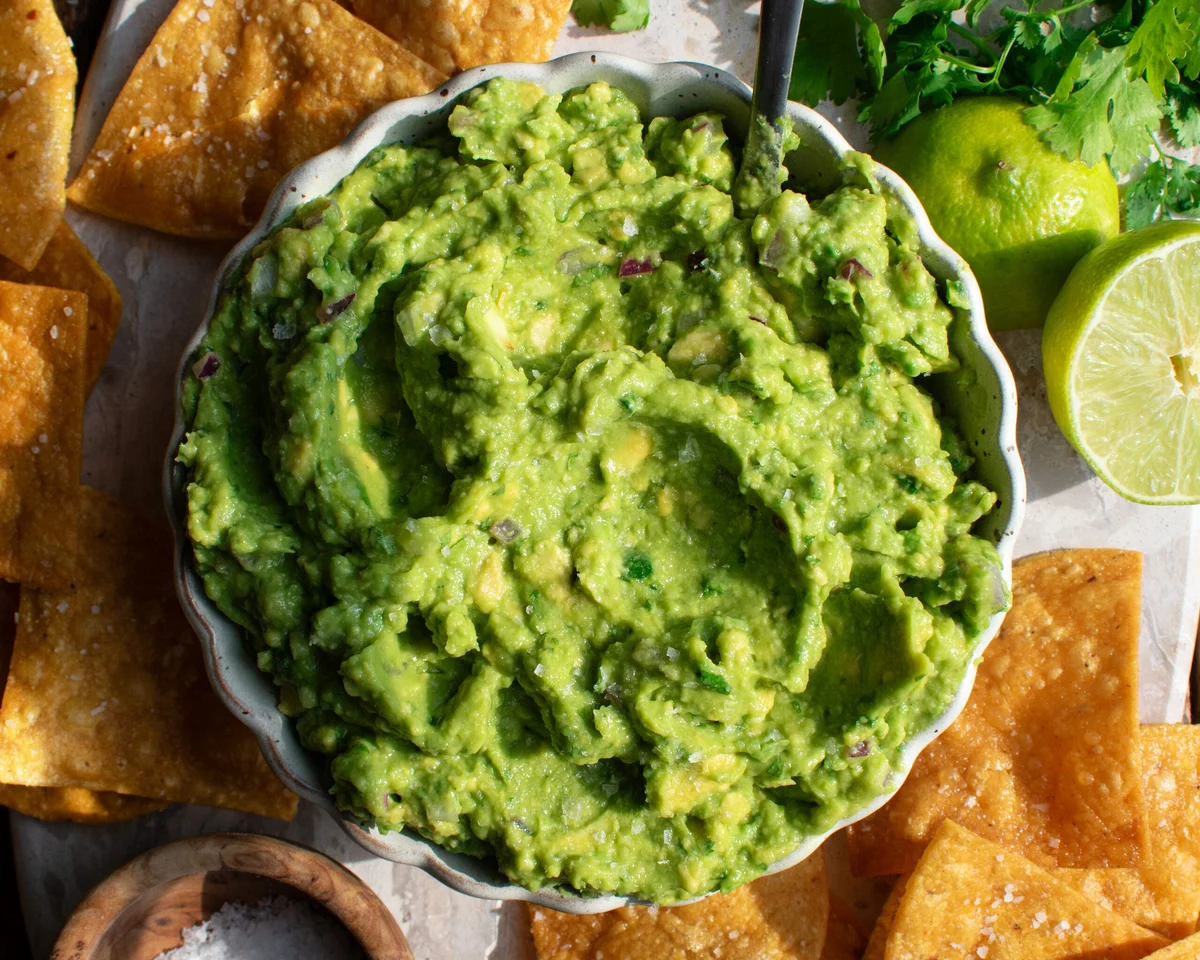
Homemade guacamole combines creamy ripe avocado with lime, fresh coriander, onion, jalapeño and garlic. It is quick to make, easy to adjust to taste and ready to serve with tortilla chips.
Ingredients
- 8 mediumripe avocados, halved and pitted
- 75 g (½ cup)diced red onion
- 2jalapeños, stalks removed and finely chopped
- 4 clovesgarlic, minced
- 15 g (¼ cup)fresh coriander, chopped
- 4limes, juiced
- 7.5 ml (1½ tsp)kosher salt
- to servetortilla chips
Instructions
- 1
Mash the avocado
Scoop the avocado flesh into a bowl and discard the skins. Roughly mash it with a large fork until nearly smooth but still textured.
- 2
Mix and season
Stir in the red onion, jalapeños, garlic, coriander, lime juice and salt. Taste, then add more lime or salt if you like.
- 3
Serve the guacamole
Spoon the guacamole into a serving bowl and serve with tortilla chips.
What is guacamole?
Guacamole is a Mexican avocado dip, commonly served with tortilla chips or alongside other dishes. Its familiar combination of avocado, lime, chilli and herbs is simple, with the ingredients mixed rather than cooked.
This version keeps the avocado chunky and brings brightness from lime, bite from red onion and heat from jalapeño. Garlic and coriander add extra savoury and herbal notes.
Nutrition and macros by portion
The nutrition label shows one serving as written: 650 calories, 8g protein, 36g carbs, 53g fat.
| Portion | Adjustment | kcal | Protein | Carbs | Fat |
|---|---|---|---|---|---|
| Lighter | Use fewer tortilla chips | 455 kcal | 6g | 25g | 37g |
| This serving | As written | 650 kcal | 8g | 36g | 53g |
| Hungry | Serve a larger portion | 975 kcal | 12g | 54g | 80g |
Most of the energy and fat come from the avocado, while the avocado also provides some fibre. The onion, jalapeños and lime contribute relatively little; the tortilla chips add carbohydrates, and the recipe has little protein overall. To balance the plate, serve a moderate amount of guacamole with a protein-rich dish such as beans or eggs.
Choose ripe avocados
Ripe avocados: choose fruit that yields gently when pressed, without feeling mushy. Unripe avocados are difficult to mash and lack the soft texture this dip needs.
Red onion: its crisp bite and mild sharpness contrast with the creamy avocado. Dice it finely so it is easy to scoop up with a chip.
Keep some texture
Fork mashing: work the avocado until it is nearly smooth, but stop while small pieces remain. A fork gives you more control than blending and helps avoid a completely uniform purée.
Gentle mixing: fold in the other ingredients after mashing. This distributes them through the dip while preserving some of the avocado's texture.
Adjust the heat and acidity
Jalapeños: finely chop them so their heat is spread through the bowl. Their strength can vary, so taste the finished mixture before deciding whether to add more.
Lime and salt: taste after mixing, as the avocado and the other ingredients affect the balance. Add extra lime or salt a little at a time.
Serve it fresh
Timing: this dip takes only a few minutes to assemble, but it is best served soon after mixing, while the avocado is bright and fresh.
To serve: tortilla chips make an easy pairing. You can also put the guacamole on a table with tacos or other Mexican-inspired dishes.
Make it easy to scoop
Serving bowl: transfer the guacamole to a bowl that leaves room for dipping. A shallow bowl makes it easier to reach the dip without crushing the chips.
Chip choice: sturdy tortilla chips are useful for a chunky dip. Serve them alongside rather than stirring them into the bowl, so they stay crisp.
Recipe notes & tips
- Use avocados that yield gently to pressure for a creamy mash.
- Chop the onion and jalapeños finely for an even mix.
- Mash with a fork and stop before the avocado loses all its texture.
- Taste after adding the lime and salt, then adjust gradually.
- Serve with sturdy tortilla chips so they can scoop up the chunky dip.
Variations
- Milder dip: use one jalapeño instead of two for less chilli heat.
- Extra lime: squeeze in a little more juice after tasting for a sharper finish.
- Chunkier texture: mash the avocado less and leave larger pieces.
- Smoother texture: mash the avocado more thoroughly before mixing in the other ingredients.
- More coriander: add extra chopped coriander for a stronger herbal flavour.
Common mistakes to avoid
- Using hard avocados: they will not mash easily; choose fruit that gives slightly when pressed.
- Over-mashing: the dip can lose its character; stop when it is nearly smooth but still textured.
- Uneven chopping: large onion or chilli pieces can dominate a bite; mince or dice them finely.
- Adding too much salt at once: season gradually and taste before adding more.
- Leaving it uncovered: the surface can discolour; cover it closely if you need to store it.
How to store
Guacamole is best eaten freshly made. Refrigerate leftovers in an airtight container, pressing food-safe film directly against the surface to limit contact with air, and use within 1–2 days; stir before serving.
Frequently asked questions
How do I know when an avocado is ripe?
It should yield gently when pressed, without feeling soft or mushy. If it is hard, give it more time to ripen before making the dip.
Can I make guacamole less spicy?
Yes. Use one jalapeño instead of two, or remove its seeds and inner membranes before chopping. Add it gradually and taste as you go.
Can I make it ahead?
It is best made shortly before serving, but you can prepare it a little ahead and refrigerate it in an airtight container. Press film directly onto the surface to help limit browning.
Why has my guacamole turned brown?
Avocado flesh darkens when exposed to air. Lime adds acidity, but close contact with film and an airtight container are the most useful steps for storing leftovers.
Can I use a blender?
You can, but it may make the guacamole much smoother than intended. A fork is the simplest way to keep some texture.
What can I serve with guacamole besides tortilla chips?
Serve it alongside tacos or other Mexican-inspired dishes, or use it as a dip for raw vegetables.
Cook it from the original
This recipe comes from theoriginaldish.com. Their page has the author’s own photos, notes and tips — the best place to cook it from.
Open the recipe on theoriginaldish.com