
Feeding Sourdough Starter: My Best Tips & Tricks
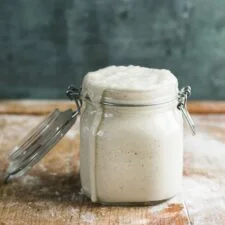
A simple routine for refreshing a sourdough starter with equal weights of starter, flour and water. It helps keep the culture active and ready to bake with, while leaving you free to adjust the quantities to suit what is in your jar.
Ingredients
- As neededSourdough starter
- 1Jar with lid
- 1Digital kitchen scale
- Equal in weight to the starter kept in the jarBread flour or plain flour
- Equal in weight to the starter kept in the jarFiltered water or good-quality tap water
Instructions
- 1
Discard half
Remove and discard half of the sourdough starter in the jar.
- 2
Feed the starter
Weigh the starter left in the jar, then add the same weight of flour and the same weight of water, using a 1:1:1 ratio. For example, feed 60 g of starter with 60 g flour and 60 g water, or 30 g of starter with 30 g of each. Mix thoroughly with a fork, scraping down the sides as needed, then cover the jar with its lid. You can seal it or rest the lid loosely on top; if sealed, watch for pressure building up.
- 3
Let it rise
Leave the starter at room temperature, ideally above 24°C (75°F), until bubbly, active and doubled in size. This can take 2–12 hours, depending on warmth. Use it at its peak height; once it falls, it has become inactive again and needs another feeding before use.
What is a sourdough starter?
A sourdough starter is a living mixture of flour and water used to leaven bread. It is maintained through regular feedings, rather than relying on packaged yeast for each bake.
This American home-baking guide focuses on a straightforward equal-weight feeding. Keeping the ratio consistent makes it easy to scale up or down according to how much starter you have.
Nutrition and macros by portion
The nutrition label shows one serving as written: 328 calories, 12g protein, 68g carbs, 2g fat.
| Portion | Adjustment | kcal | Protein | Carbs | Fat |
|---|---|---|---|---|---|
| Lighter | Keep less starter | 230 kcal | 8g | 48g | 1g |
| This serving | As written | 328 kcal | 12g | 68g | 2g |
| Hungry | Feed a larger amount | 492 kcal | 18g | 102g | 2g |
Most of the energy and carbohydrates in a feeding come from the flour, while the starter contributes flour and water from its existing mixture. Protein comes mainly from the flour; the added water contributes no macros. This is a baking ingredient rather than a meal, so pair the bread you make with a source of protein and vegetables for a more balanced plate.
Choosing flour and water
Flour choice: Bread flour or plain flour can both be used for this feeding. Whichever you choose, use the same type consistently if you want the starter to behave predictably from one feeding to the next.
Water choice: Filtered water or good-quality tap water works here. Measure it by weight, just like the flour, rather than estimating by volume.
Why the scale matters
Equal weights: The 1:1:1 ratio means one part starter, one part flour and one part water by weight. A scale keeps those proportions accurate whether you are feeding a small amount or a larger jar.
Flexible amounts: The 60 g example is only an illustration, not a required batch size. Weigh the starter you keep after discarding, then match that weight with flour and water.
Mixing and covering the jar
Thorough mixing: Stir with a fork until the flour and water are incorporated, and scrape down the sides so the mixture is not left in a thick ring above the starter.
Lid choice: The lid can be airtight or loosely placed on top. A sealed jar can build pressure as the starter becomes active, so keep an eye on it to prevent the jar from bursting.
Reading the rise
Ready cues: Look for bubbles, visible activity and a starter that has doubled in size. Height is useful to track, so you can mark the level on the jar before leaving it to rise.
Timing: At room temperature, the rise may take 2–12 hours, and warmer conditions generally make it faster. The starter is ready to use at its peak; after it falls, repeat the feeding process before using it.
Picking a jar
Room to grow: Choose a clean jar with enough space for the starter to double without reaching the lid. A transparent jar makes it easier to see bubbles and track the rise.
Easy to stir: A wide opening helps with mixing and scraping down the sides. Use a lid that fits the jar, whether you prefer to seal it or set it on loosely.
Using the starter
At its peak, the starter is ready to use in a bread recipe. Plan your feeding so the rise has time to happen before you need it.
This starter is not a plated meal, so there is no traditional side dish to serve with it. Its practical use is as an ingredient in bread and other sourdough bakes.
Recipe notes & tips
- Weigh the starter after discarding half, then use that weight to calculate the flour and water.
- Mark the starter's starting height on the jar so it is easier to tell when it has doubled.
- Use a fork to break up any lumps and scrape starter from the sides back into the mixture.
- Leave enough headroom for the starter to rise without reaching the lid.
- Check the jar regularly if you have sealed it, as pressure can build while the starter is active.
- Look for bubbles and a doubled volume rather than relying on the clock alone.
Variations
- Use bread flour: Feed with bread flour for a different flour choice while keeping the same weight ratio.
- Use plain flour: Swap in plain flour without changing the equal-weight proportions.
- Change the batch size: Keep less starter after discarding and match it with equal weights of flour and water.
- Choose filtered water: Use filtered water instead of tap water while keeping the same measured amount.
- Use a loose lid: Rest the lid on top rather than sealing the jar, as long as it remains covered.
Common mistakes to avoid
- Guessing the ratio: Weigh the starter, flour and water so the feeding stays 1:1:1.
- Measuring by volume: Use the scale for both flour and water, since the recipe specifies weights.
- Missing the peak: Check for bubbles and doubled height, and use the starter before it falls.
- Filling the jar too high: Leave space for the starter to expand as it rises.
- Sealing and forgetting: Monitor an airtight jar because pressure can build up quickly.
- Leaving flour on the sides: Scrape the jar down after mixing so the starter is gathered together.
How to store
Keep the starter covered in its jar at room temperature while it rises, and use it at peak height. Once it falls and becomes inactive, repeat the feeding process before using it; the recipe does not specify longer-term storage or reheating.
Frequently asked questions
How much flour and water should I add?
Add the same weight of flour and water as the weight of starter remaining after you discard half. For example, 30 g of starter gets 30 g flour and 30 g water.
How long does a feeding take to rise?
The stated range is 2–12 hours at room temperature. A warmer room generally speeds the rise, so use the starter's bubbles and doubled size as your cues.
What does a ready starter look like?
It should be bubbly, active and about double its starting size. Use it when it reaches its peak height, before it falls.
Can I seal the jar?
Yes, the lid can be airtight or placed loosely on top. If you seal it, check it regularly because pressure can build up.
Can I use tap water?
Yes, the recipe allows filtered water or good-quality tap water. Measure either by weight.
What should I do when the starter falls?
It has become inactive again, so repeat the feeding process before using it.
Cook it from the original
This recipe comes from theclevercarrot.com. Their page has the author’s own photos, notes and tips — the best place to cook it from.
Open the recipe on theclevercarrot.com