
How To Cook Perfectly Tender Dried White Beans From Scratch
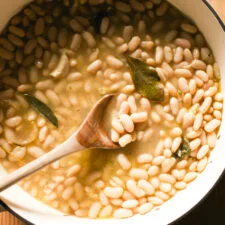
These stovetop white beans are gently simmered with garlic, fresh herbs and olive oil until soft and buttery. Soaking them first helps them cook evenly, while a pinch of bicarbonate of soda encourages a tender texture.
Ingredients
- 454 g (2½ cups)dried Great Northern beans or cannellini beans
- 1garlic clove
- 1fresh bay leaf
- 2fresh sage leaves
- 2fresh thyme sprigs
- 1 tbspolive oil
- ¼ tspbicarbonate of soda
- to tastesalt
Instructions
- 1
Soak the beans
Soak the beans using either the overnight method or the one-hour quick-soak method.
- 2
Prepare to cook
Drain and rinse the soaked beans in a colander, then put them in a large pot.
- 3
Add aromatics
Add the garlic, bay leaf, sage, thyme and olive oil to the pot.
- 4
Cover with water
Pour in enough water to cover the beans by about 5 cm, then put the lid on.
- 5
Bring to a boil
Bring the beans to a gentle boil, then lower the heat to medium-low and stir in the bicarbonate of soda.
- 6
Simmer until tender
Simmer for 1–3 hours with the lid slightly ajar, adding water as needed to keep the beans covered. Stir occasionally and taste for doneness; they are ready when soft and buttery, with tender skins.
- 7
Season with salt
Add salt to taste.
- 8
Serve the beans
Add the beans to soups or stews, blend them into a dip, or serve warm with a drizzle of extra-virgin olive oil and sourdough bread or focaccia.
What are home-cooked white beans?
White beans are a staple in many Italian home kitchens, where they are used in soups, stews, purées and simple sides. This version cooks dried beans slowly with a few fresh herbs and garlic, letting their mild flavour and creamy texture take centre stage.
Great Northern beans and cannellini beans both suit the method. Soaking first and simmering gently gives the beans time to soften without breaking apart too quickly.
Nutrition and macros by portion
The nutrition label shows one serving as written: 335 calories, 21g protein, 60g carbs, 5g fat.
| Portion | Adjustment | kcal | Protein | Carbs | Fat |
|---|---|---|---|---|---|
| Lighter | Use less olive oil | 234 kcal | 15g | 42g | 4g |
| This serving | As written | 335 kcal | 21g | 60g | 5g |
| Hungry | Serve with sourdough bread | 503 kcal | 32g | 90g | 8g |
Most of the carbohydrates, fibre and protein come from the white beans, while the olive oil supplies most of the fat. Serve a bowl with vegetables or a salad alongside, and add bread if you want a more substantial meal.
Choosing and soaking the beans
Bean choice: Great Northern beans and cannellini beans both work here. Use one type for an even batch, and remember that older dried beans can take longer to become tender.
Soaking: The recipe calls for an overnight soak or a one-hour quick soak. Follow your preferred soaking method before draining and rinsing; the cooking instructions begin with soaked beans.
The aromatic cooking liquid
Herbs and garlic: A bay leaf, sage, thyme and garlic gently season the beans as they cook. Keep the herbs whole so they can be lifted out easily if desired.
Olive oil: The tablespoon of oil adds a little richness to the pot. Add extra-virgin olive oil at the table if you want a more pronounced finish.
Why add bicarbonate of soda?
Small amount: The recipe uses just ¼ teaspoon for the whole pot. Stir it in after bringing the beans to a gentle boil, as directed.
Watch the texture: Bicarbonate of soda can help beans soften, but the cooking time still depends on the beans themselves. Check them by tasting rather than relying on the clock alone.
Managing the simmer
Gentle heat: Once the water boils, reduce the heat to medium-low and keep the lid slightly ajar. A steady, gentle simmer is easier on the beans than a vigorous boil.
Water level: Keep the beans covered during the 1–3 hours of cooking, topping up with water as needed. Stir occasionally and check the pot more often as the beans near doneness.
How to tell when they are done
Texture: A cooked bean should be soft and buttery inside, with tender skin. If it is still firm or chalky in the centre, continue simmering and taste again later.
Timing: The stated range is 1–3 hours, but bean age affects how quickly they cook. Avoid seasoning with salt until the end, as the recipe specifies.
Ways to serve the beans
For a meal: Stir the beans into soups or stews, or purée them into a dip. Their mild flavour pairs well with the fresh herbs used in the cooking pot.
For a simple plate: Serve them warm with sourdough bread or sourdough focaccia and a drizzle of extra-virgin olive oil. They can also sit alongside a main dish as a hearty side.
Recipe notes & tips
- Soak the beans before starting the cooking steps.
- Use a large pot so the beans have room to simmer.
- Keep the water level high enough to cover the beans throughout cooking.
- Stir occasionally, taking care not to crush the beans.
- Taste more than one bean near the end to check that the batch is tender throughout.
- Season with salt only once the beans are cooked.
Variations
- Herb swap: Use another combination of fresh herbs if sage or thyme is unavailable.
- Soup addition: Stir the cooked beans into a vegetable soup near the end of cooking.
- Creamy dip: Purée the beans with a little of their cooking liquid until smooth.
- Olive oil finish: Add a fresh drizzle of extra-virgin olive oil just before serving.
- Bread pairing: Serve with sourdough focaccia instead of sourdough bread.
Common mistakes to avoid
- Skipping the soak: Start with soaked beans, using either the overnight or one-hour option.
- Boiling too hard: Reduce the heat after the gentle boil so the beans simmer rather than tumble vigorously.
- Letting the pot run dry: Add water as needed to keep the beans covered.
- Trusting the timer alone: Bean age changes cooking time, so taste for tenderness.
- Adding salt too early: Follow the method and season once the beans are soft.
How to store
Cool the beans and their cooking liquid, then store them together in a covered container in the fridge for up to 4 days. Reheat gently in a saucepan, adding a splash of water if needed.
Frequently asked questions
Can I use cannellini beans instead of Great Northern beans?
Yes. The recipe allows either type, and both can be cooked using the same method.
How long do the beans need to cook?
Allow 1–3 hours at a gentle simmer. The age of the dried beans affects the timing, so check their texture as they cook.
Do I need to soak the beans first?
Yes, the method calls for soaking before cooking. Choose an overnight soak or the one-hour quick-soak option.
When should I add the bicarbonate of soda?
Add the ¼ teaspoon after bringing the beans to a gentle boil and reducing the heat to medium-low.
How can I tell when the beans are cooked?
Taste them: they should be soft and buttery, with tender skins. If they are still firm, keep simmering and check again.
What can I do with the cooked beans?
Add them to soups or stews, purée them into a dip, or serve them warm with bread and olive oil.
Cook it from the original
This recipe comes from theclevercarrot.com. Their page has the author’s own photos, notes and tips — the best place to cook it from.
Open the recipe on theclevercarrot.com