
Make-Ahead Honey Coriander Glazed Salmon
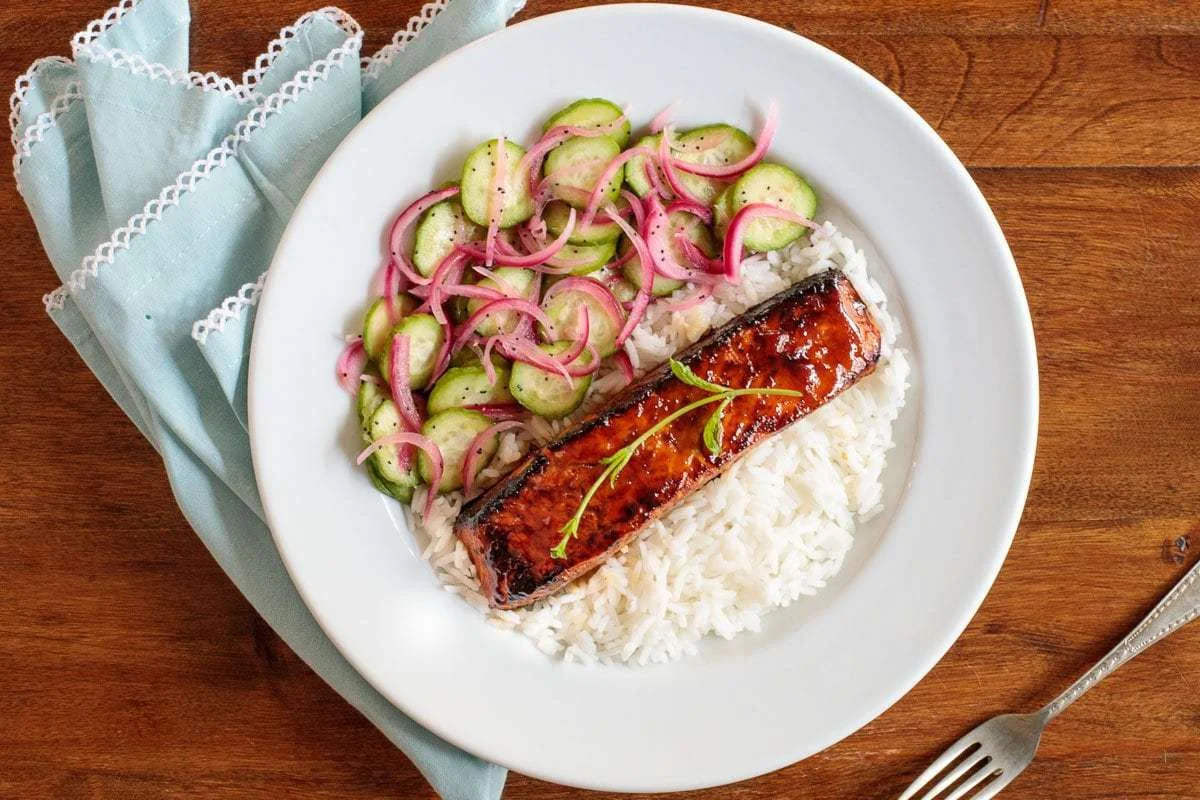
This make-ahead salmon is seared for a golden crust, then baked with a sweet, savoury honey and coriander glaze. Marinating and preparing the glaze in advance makes it practical for a weeknight and smart enough for a dinner party.
Ingredients
- 60 ml (¼ cup)low-sodium soy sauce
- 60 ml (¼ cup)honey
- 1 tablespoonfinely grated fresh ginger
- 1½ teaspoonsground coriander
- 1 teaspoonchilli garlic sauce
- 2 cloves, finely mincedgarlic
- 4 × 142 g (5 oz)salmon fillets, with or without skin
- 1 teaspoonolive oil
- To tastekosher salt
- To tastefreshly ground black pepper
Instructions
- 1
Mix the marinade
Put the soy sauce, honey, ginger, ground coriander, chilli garlic sauce and garlic in a medium bowl. Whisk until well combined.
- 2
Marinate the salmon
Put the salmon fillets and 60 ml (¼ cup) of the marinade in a large sealable bag. Turn the bag to coat the fish, then refrigerate for at least 30 minutes and up to 12 hours.
- 3
Season the fillets
Lift the salmon out of the bag and discard the marinade it was in. Season the fillets lightly with kosher salt and freshly ground black pepper.
- 4
Sear the salmon
Heat a medium sauté pan over a medium heat and add the olive oil. Add the salmon skin-side up if it has skin, and sear for about 1–2 minutes, until a deep golden crust forms. Use tongs to turn the fillets onto their sides and sear each side for about 30 seconds. Transfer to a clean plate, cover with cling film and refrigerate for up to 8 hours, until ready to bake.
- 5
Reduce the glaze
Strain the reserved sauce through a fine sieve into the sauté pan and bring it to the boil. Lower the heat and simmer for 3–4 minutes, until slightly reduced and beginning to turn syrupy. Transfer to a small bowl or glass jar, cover and refrigerate until ready to bake the salmon.
- 6
Prepare the oven
Thirty minutes before dinner, heat the oven to 180°C (350°F). Line a baking tray, or a smaller shallow pan, with foil. Arrange the salmon skin-side down if it has skin; otherwise, place the unseared side down.
- 7
Bake and glaze
Brush the salmon lightly with glaze and bake for 10 minutes. Remove it from the oven and brush with a little more glaze, then bake for another 8–12 minutes, until golden brown and the internal temperature reaches 60–63°C (140–145°F). Thicker fillets may need a little longer; thinner pieces will cook sooner.
- 8
Serve the salmon
Slide a metal spatula just above the skin to lift the salmon away, leaving the skin on the foil. Drizzle with a little more glaze when serving.
- 9
Bake without chilling
If you want to bake the salmon straight after searing, heat the oven to 180°C (350°F) before you sear it and skip the refrigeration. Continue with the baking instructions in step 6.
What is honey coriander glazed salmon?
This is an Asian-inspired salmon dish with a soy, honey, ginger, garlic and coriander glaze. Its mix of savoury, sweet and gently spicy flavours makes it feel special while using familiar ingredients.
The make-ahead approach separates the work: the fish marinates and is seared in advance, while the reserved sauce is reduced to a glaze. A final bake brings the salmon to doneness shortly before serving.
Nutrition and macros by portion
The nutrition label shows one serving as written: 279 calories, 29g protein, 19g carbs, 9g fat.
| Portion | Adjustment | kcal | Protein | Carbs | Fat |
|---|---|---|---|---|---|
| Lighter | More greens, less rice | 195 kcal | 20g | 13g | 6g |
| This serving | As written | 279 kcal | 29g | 19g | 9g |
| Hungry | Larger salmon portion | 419 kcal | 44g | 29g | 14g |
The salmon provides most of the protein and some of the fat, while honey supplies most of the carbohydrates; the soy sauce also contributes sodium. Serve with a green vegetable and a measured portion of rice or another grain to make a balanced plate.
The marinade and glaze
Soy sauce: low-sodium soy sauce brings savouriness without making the glaze as salty as a standard version might. Honey softens its savoury edge and helps the sauce become glossy as it reduces.
Aromatics: fresh ginger, garlic, ground coriander and chilli garlic sauce add warmth and a mild kick. Whisk everything thoroughly so the honey and seasonings are evenly distributed.
Marinate safely and efficiently
Timing: give the salmon at least 30 minutes in the marinade, or leave it for up to 12 hours in the fridge. This gives you flexibility to prepare the fish well before dinner.
Keep the sauces separate: use only 60 ml (¼ cup) of the mixture to marinate the salmon, then discard that portion. Strain and cook the reserved sauce separately for brushing and serving.
Searing for a golden crust
Pan heat: warm the pan over a medium heat before adding the oil and salmon. The short sear builds colour; it does not need to cook the fillets through.
Turn gently: sear the broad side for 1–2 minutes, then the edges for about 30 seconds each. Tongs help you turn the fish without breaking the fillets.
How to judge doneness
Temperature: the recipe’s target is 60–63°C (140–145°F) at the thickest part. Check the thickest fillet first, as fillets of different sizes may finish at different times.
Timing: after the first 10 minutes, brush on more glaze and bake for a further 8–12 minutes. Use the temperature and the fillets’ thickness as your guide, rather than relying on time alone.
Serving and make-ahead timing
Advance preparation: the seared salmon can be covered and chilled for up to 8 hours, and the reduced glaze can be refrigerated until baking time. This leaves the final baking and serving close to dinner.
On the plate: serve with rice or another grain to complement the glaze, and add a green vegetable for freshness. Drizzle with the reserved glaze just before serving.
Recipe notes & tips
- Pat the salmon dry after removing it from the marinade so it can form a good crust.
- Use a thermometer at the thickest point of a fillet to check doneness.
- Strain the reserved sauce before reducing it for a smooth glaze.
- Keep the heat moderate when reducing the honey-based sauce so it does not scorch.
- For even cooking, arrange similarly sized fillets together in the baking tray.
Variations
- Adjust the heat: use a little more or less chilli garlic sauce to suit your preference.
- Add citrus: finish with a squeeze of lemon or lime at the table.
- Use skinless fillets: sear one broad side, then set the unseared side down for baking.
- Try another fish: use a similar-sized firm fish fillet and check it carefully for doneness.
- Serve with greens: pair the salmon with steamed or stir-fried vegetables.
Common mistakes to avoid
- Using the marinade twice: discard the portion that touched the raw salmon and cook only the reserved sauce.
- Overcooking the fish: begin checking after the first 10 minutes of baking and use a thermometer.
- Skipping the preheat: wait until the oven reaches 180°C (350°F) before baking.
- Burning the glaze: keep it at a simmer rather than a vigorous boil while reducing.
- Turning the fish roughly: use tongs and handle the fillets gently to help them stay intact.
How to store
Refrigerate cooked salmon in a covered container and eat within 2 days. Reheat gently in a low oven until warmed through, or enjoy it cold; avoid prolonged heating, which can dry it out.
Frequently asked questions
Can I marinate the salmon overnight?
Yes. The recipe allows 30 minutes to 12 hours in the fridge, so overnight fits within that window.
Can I prepare the salmon on the day before serving?
You can sear it and refrigerate it, covered, for up to 8 hours before baking. The reduced glaze can also be covered and chilled until needed.
Do I need to discard the marinade?
Discard the 60 ml (¼ cup) that was in the bag with the raw salmon. Strain and simmer the remaining reserved sauce separately for the glaze.
How can I tell when the salmon is ready?
Check the thickest part with a thermometer; the recipe gives a target of 60–63°C (140–145°F). Thicker fillets may take longer than thinner ones.
Can I bake it immediately after searing?
Yes. Preheat the oven to 180°C (350°F) before searing, skip the chilling step and continue with the baking instructions.
Can I use salmon with the skin on?
Yes. Sear it skin-side up, then bake it skin-side down. At serving, slide a metal spatula between the flesh and skin, leaving the skin on the foil.
Cook it from the original
This recipe comes from thecafesucrefarine.com. Their page has the author’s own photos, notes and tips — the best place to cook it from.
Open the recipe on thecafesucrefarine.com