
4 Ingredient Whole Wheat Artisan Bread Recipe
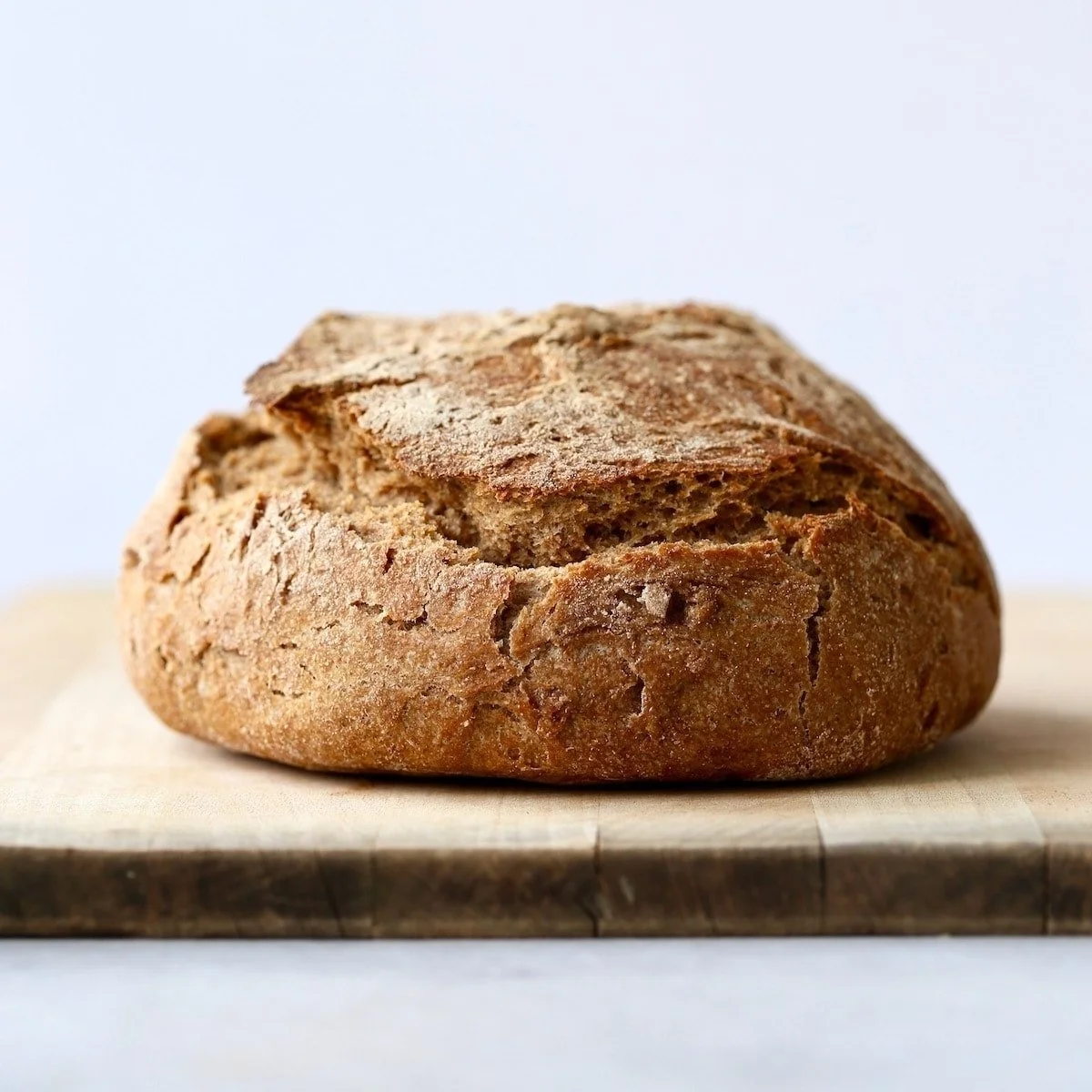
This whole wheat artisan loaf uses flour, salt, yeast and water, with a long, hands-off rise and a hot Dutch oven to develop a crisp crust. Start it the night before for fresh bread with little active preparation.
Ingredients
- 480 g (4 cups)wholemeal flour
- 10 g (2 teaspoons)salt
- 2.4 g (¾ teaspoon)active dried yeast
- 240–480 ml (1–2 cups)room-temperature water
Instructions
- 1
Mix the dry ingredients
Whisk the wholemeal flour, salt and yeast together in a large mixing bowl.
- 2
Make the dough
Pour in the room-temperature water and stir until an even dough forms, using your hands if needed. If using some white flour, begin with 240 ml water; otherwise, add enough from the stated range to bring the dough together. Shape it roughly into a ball and leave it in the same bowl. Cover with cling film and leave at room temperature for 12–18 hours; an overnight rise works well.
- 3
Heat the oven
Shortly before baking, heat the oven to 245°C (475°F), with a Dutch oven inside. When both are hot, carefully take out the pot and remove its lid.
- 4
Shape the dough
With floured hands, lift the risen dough from the bowl and shape it roughly into a ball again. Set it on baking paper and lower it into the hot Dutch oven. Put the lid on and return the pot to the oven.
- 5
Bake until crusty
Bake with the lid on for 30 minutes. Remove the lid and bake for a further 15 minutes, or until the loaf is golden and crusty.
- 6
Cool the loaf
Take the pot out of the oven and carefully lift the bread out. Place it on a wire rack to cool.
- 7
Slice and serve
Slice the cooled bread and enjoy.
What is whole wheat artisan bread?
This is a rustic, American-style home loaf made with whole wheat flour and a slow, no-knead rise. The artisan approach here is simple: time develops the dough, while baking in a covered Dutch oven helps the loaf form a browned crust.
Four everyday ingredients keep the flavour straightforward and nutty. The long rise makes this a good recipe to start the evening before you want bread.
Nutrition and macros by portion
The nutrition label shows one serving as written: 166 calories, 7g protein, 35g carbs, 1g fat.
| Portion | Adjustment | kcal | Protein | Carbs | Fat |
|---|---|---|---|---|---|
| Lighter | Serve a smaller slice | 116 kcal | 5g | 25g | 1g |
| This serving | As written | 166 kcal | 7g | 35g | 1g |
| Hungry | Add a larger slice | 249 kcal | 11g | 53g | 2g |
Most of the carbohydrates come from the wholemeal flour, which also supplies some protein; the recipe contains very little fat apart from naturally occurring amounts in the flour. Serve a slice with eggs, beans or another protein-rich topping and vegetables for a more balanced plate.
Choosing the ingredients
Wholemeal flour: it gives the loaf its hearty flavour and denser crumb. Its absorption can vary, so use the water range as a guide and add enough for the dough to come together.
Yeast and salt: the small amount of yeast works over the long rise, while salt seasons the dough. Measure both carefully so the balance stays true to the recipe.
Getting the dough consistency right
Water: start with the lower end of the range, then add more if the flour is not fully moistened. The finished dough should be cohesive and rough rather than dry and crumbly.
Handling: there is no kneading step; stir until the ingredients come together, then leave the dough to rise. A little stickiness is normal, so flour your hands when shaping.
Making the most of the long rise
Timing: let the covered bowl stand at room temperature for 12–18 hours. The recipe is designed for an overnight rise, but the full range gives you flexibility.
Before baking: heat the oven and Dutch oven shortly before the dough is ready. Having the pot hot means the loaf can go straight in after shaping.
Baking for a crisp crust
Covered bake: the loaf spends its first 30 minutes in the lidded Dutch oven. Keep the lid on for this stage, then remove it to let the crust colour.
Doneness: bake uncovered for another 15 minutes, watching for a golden, crusty exterior. Handle the pot carefully when taking it out of the oven.
Serving the bread
Cooling: transfer the loaf to a wire rack after baking and give it time to cool before slicing. This makes it easier to cut neatly.
Pairings: serve slices with soup, eggs or a simple salad, or use them for sandwiches. The loaf also works well with butter or a savoury spread.
Recipe notes & tips
- Use a large bowl so the dough has room to rise.
- Add the water gradually, since wholemeal flour can absorb different amounts.
- Flour your hands before lifting and shaping the sticky dough.
- Preheat the Dutch oven fully before transferring the dough.
- Use baking paper to help lower the dough into the hot pot.
- Let the loaf cool on a wire rack before slicing.
Variations
- Seeded crust: sprinkle seeds over the shaped loaf before lowering it into the pot.
- Mixed flour: replace some wholemeal flour with white flour and begin with 240 ml water, as the method suggests.
- Herb flavour: mix dried herbs into the flour before adding the water.
- Garlic note: stir a little finely chopped garlic into the dry ingredients.
- Cheesy loaf: add grated hard cheese to the flour mixture for a savoury variation.
Common mistakes to avoid
- Adding all the water at once: wholemeal flour varies in absorption, so add it gradually until the dough comes together.
- Using a cool pot: preheat the Dutch oven with the oven so it is hot when the dough goes in.
- Skipping the covered bake: keep the lid on for the first 30 minutes as directed.
- Handling the dough with bare hands: flour your hands to make shaping easier.
- Slicing while hot: cool the loaf on a wire rack first for cleaner slices.
How to store
Once completely cool, store the loaf in a bread bag or wrapped at room temperature and use within a few days. Rewarm slices in a toaster or the oven; freeze sliced bread for longer storage and toast from frozen.
Frequently asked questions
Can I make the dough the night before?
Yes. The method allows a 12–18-hour rise at room temperature, and an overnight rise is specifically suggested.
How much water should I use?
The recipe gives a range of 240–480 ml. Add enough to make a uniform dough, adjusting for how much water your flour absorbs.
Do I need to knead the dough?
No. Stir until the ingredients form a dough, then leave it to rise. Shape it into a rough ball before baking.
Can I bake it without a Dutch oven?
The supplied method relies on a preheated Dutch oven and its lid. For the intended result, use a pot that is oven-safe at 245°C.
How do I know when the loaf is done?
After the covered bake, remove the lid and bake for 15 more minutes, or until the outside is golden and crusty.
Can I freeze the bread?
Yes. Cool it fully, slice it and freeze in a well-sealed bag. Toast slices straight from the freezer.
Cook it from the original
This recipe comes from theconscientiouseater.com. Their page has the author’s own photos, notes and tips — the best place to cook it from.
Open the recipe on theconscientiouseater.com