
Roasted Beets with Blood Oranges & Yogurt
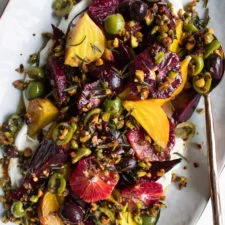
Roasted red and golden beets are served with blood oranges, Greek yoghurt and a warm topping of pistachios, olives, honey and fried rosemary. It makes a colourful centrepiece for a lunch or a generous side dish, with earthy, sweet, tangy and briny flavours in every bite.
Ingredients
- 6 smallred beetroots, scrubbed
- 6 smallgolden beetroots, scrubbed
- To taste; 45 ml for frying, plus a little to finisholive oil
- To tastekosher salt
- 1 sprigrosemary
- 120 g (1 cup), choppedpistachios
- 180 ml (¾ cup), halvedCastelvetrano olives
- 15 ml (1 tbsp)white wine vinegar
- 15 ml (1 tbsp)honey
- 454 g (16 oz)Greek yoghurt
- 2blood oranges, peeled and sliced
Instructions
- 1
Prepare the beetroots
Heat the oven to 220°C (425°F). Put the red beetroots in the middle of a piece of foil, drizzle with olive oil and season with a pinch of salt. Fold the foil into a pouch, leaving a small opening at the top.
- 2
Roast and quarter
Make a second foil pouch for the golden beetroots and place both pouches on a baking tray. Roast for about 45 minutes, until a fork slides easily into the beetroots. Let them cool slightly, then pinch and pull away the skins by hand. Cut into quarters, drizzle with a little olive oil, season with a pinch of salt and set aside.
- 3
Fry the rosemary
Add 45 ml (3 tbsp) olive oil to a medium frying pan and heat over medium heat. When hot, add the rosemary and turn the heat to low. Fry until slightly golden and crisp on both sides, then remove and set aside.
- 4
Make the topping
Add the pistachios to the oil and toast for about a minute. Stir in the olives, white wine vinegar and honey, then cook for a couple more minutes.
- 5
Assemble the plate
Spoon the Greek yoghurt onto a plate and pile the beetroots and blood orange slices on top. Spoon over the pistachio mixture and finish with the fried rosemary leaves.
What is this beetroot and blood orange dish?
This is a composed salad-style plate rather than a single traditional preparation: tender roasted beetroots and citrus sit over cool yoghurt, finished with a warm, savoury-sweet topping. The ingredients draw on familiar Mediterranean flavours, but the recipe does not specify a particular regional origin.
The contrast is what makes the combination work. Earthy red and golden beetroots meet bright blood orange, creamy yoghurt and salty olives, while rosemary and toasted pistachios add fragrance and crunch.
Nutrition and macros by portion
The nutrition label shows one serving as written: 585 calories, 22g protein, 55g carbs, 38g fat.
| Portion | Adjustment | kcal | Protein | Carbs | Fat |
|---|---|---|---|---|---|
| Lighter | Use less oil and pistachio | 410 kcal | 15g | 39g | 27g |
| This serving | As written | 585 kcal | 22g | 55g | 38g |
| Hungry | Serve with lentils and bread | 878 kcal | 33g | 83g | 57g |
The beetroots, blood oranges, honey and pistachios supply much of the carbohydrate, while pistachios, olive oil and full-fat Greek yoghurt contribute most of the fat. The yoghurt and pistachios provide the main protein, though the dish is not especially protein-heavy. For a balanced plate, serve it with a protein-rich main or add a side of lentils.
Roast the colours separately
Red beetroots: wrap them in their own foil pouch so their colour does not stain the golden beetroots. Keep the pouch slightly open at the top, as directed, and check tenderness with a fork after about 45 minutes.
Golden beetroots: give these their own pouch as well, then roast alongside the red ones. Small beetroots can vary in size, so use tenderness rather than the clock alone as your cue.
Peel while slightly warm
Hands-on peeling: let the beetroots cool just enough to handle, then pinch and pull the skins away. If they are still too hot, wait a little longer; gloves can help avoid staining your hands.
Keep the rosemary crisp
Low heat: once the rosemary goes into the hot oil, turn the burner down. Fry it until lightly golden and crisp on both sides, taking care not to let the leaves darken too much.
Warm topping: toast the pistachios briefly in the rosemary oil, then add the olives, vinegar and honey. The short cook warms the ingredients and brings their flavours together without losing all the pistachios’ texture.
Balance the dressing and textures
Yoghurt base: spread the yoghurt across the plate before adding the toppings, so each serving gets some of its cool creaminess. Plain Greek yoghurt gives the dish a thick base that holds the beetroots and citrus.
Finishing touches: the oranges bring fresh juiciness, while olives add saltiness and pistachios give crunch. Spoon the warm topping over just before serving to keep the contrast between warm vegetables and cool yoghurt.
Serve it as a centrepiece or side
For a meal, serve the plate with crusty bread or alongside a grain such as couscous. It also works as a side with simply cooked fish, chicken or lentils; keep additional salty accompaniments modest because the olives already bring plenty of savouriness.
Recipe notes & tips
- Use separate foil pouches to keep the red beetroots from colouring the golden ones.
- Check the largest beetroot with a fork before taking the tray out of the oven.
- Let the beetroots cool slightly before peeling, but do not wait until they are completely cold.
- Keep the rosemary frying over low heat so it turns crisp without burning.
- Add the warm pistachio mixture just before serving for the best contrast of textures.
- Taste the topping before adding extra salt, as the olives are already briny.
Variations
- Citrus swap: Use another sweet orange if blood oranges are unavailable.
- Nut swap: Try chopped walnuts in place of pistachios and toast them briefly in the oil.
- Herb change: Use a small sprig of thyme instead of rosemary, frying it gently.
- Extra greens: Serve the beetroots and oranges over a bed of peppery leaves.
- More protein: Add cooked lentils alongside the beetroots for a heartier plate.
Common mistakes to avoid
- Mixing beetroot colours: Roast red and golden beetroots in separate foil pouches to limit staining.
- Overcooking the rosemary: Lower the heat after adding it and remove it when crisp and only slightly golden.
- Skipping the tenderness check: Test with a fork and continue roasting if the centre is still firm.
- Adding the topping too early: Spoon it over the yoghurt and beetroots close to serving so the nuts retain some crunch.
- Oversalting: Season the beetroots lightly and taste the olive mixture before adding more salt.
How to store
Store leftover beetroots, yoghurt and pistachio topping separately in airtight containers in the fridge for up to 3 days. Reheat the beetroots and topping gently, then assemble with fresh yoghurt and orange; the assembled plate is best eaten straight away.
Frequently asked questions
Can I roast the beetroots ahead of time?
Yes. Roast and peel them in advance, then refrigerate in a covered container for up to 3 days. Bring them closer to room temperature or warm them gently before assembling.
How do I know when the beetroots are done?
A fork should slide into the thickest beetroot without much resistance. If it still feels firm in the centre, reseal the pouch and roast for a little longer.
Can I use regular oranges instead of blood oranges?
Yes. Choose a sweet orange and peel it before slicing; the colour will differ, but it will still bring fresh citrus flavour.
Can I use ready-cooked beetroots?
You can, but they will not have the same roasted flavour. Skip the roasting and peeling, then warm the beetroots gently before continuing with the recipe.
Can I make this without Greek yoghurt?
A thick plain yoghurt is the closest substitute. If yours is runny, drain it briefly so it forms a sturdy base for the toppings.
What should I serve with it?
Crusty bread or couscous makes it more substantial. It also pairs well with simply cooked fish, chicken or lentils.
Cook it from the original
This recipe comes from theoriginaldish.com. Their page has the author’s own photos, notes and tips — the best place to cook it from.
Open the recipe on theoriginaldish.com