
Pork crackling
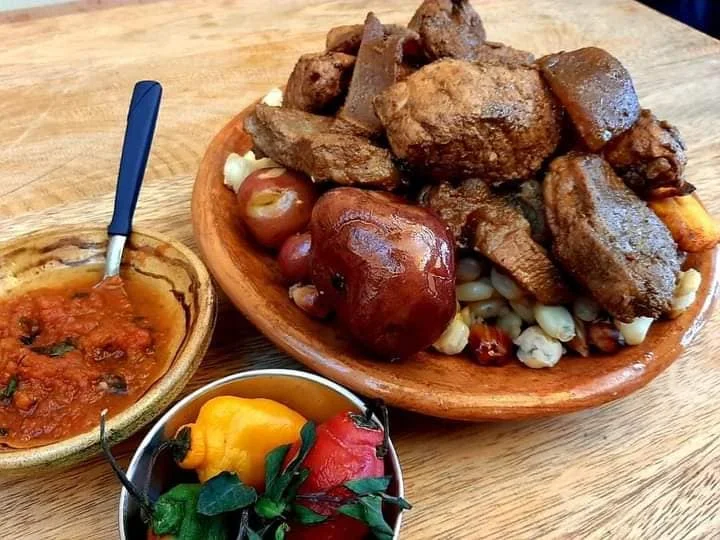
Bolivian-style pork crackling is pork cooked with rendered pork fat and fragrant herbs until tender and browned. It makes a hearty, savoury centrepiece, finished with a splash of chicha or beer for extra flavour.
Ingredients
- UnspecifiedPork, to trim
- UnspecifiedWater
- UnspecifiedPork fat, diced
- UnspecifiedPork, cut into pieces
- To tasteGarlic
- To tasteLemon juice
- To tasteBlack pepper
- To tasteBay leaf
- To tasteDried chilli pod
- To tasteSalt
- To tasteCumin
- UnspecifiedSprigs of mint
- UnspecifiedCelery
- UnspecifiedParsley
- To tasteChicha or beer
Instructions
- 1
Trim the pork
Clean the pork and remove its excess fat.
- 2
Render the fat
Set a paila over a medium heat. Add the water and diced pork fat, then cook until the water has reduced and the fat has rendered.
- 3
Reserve the fat
Separate out and set aside some of the rendered fat.
- 4
Cut the pork
Cut the pork into pieces.
- 5
Cook the meat
Add the pork to the paila with the rendered fat, stir briefly and cook for about 20 minutes.
- 6
Add the seasonings
Add the garlic, lemon juice, pepper, bay leaf, chilli pod, salt and cumin.
- 7
Cook until browned
Cook, stirring constantly, for about 30–40 minutes.
- 8
Add the herbs
Add the mint sprigs, celery and parsley, then cook for a little longer.
- 9
Finish with chicha
Once the meat is browned, splash over the chicha or beer to give it flavour.
- 10
Serve hot
Remove the herbs and serve while hot.
What is Bolivian pork crackling?
This Bolivian-style dish, known as chicharrón, is pork cooked in rendered fat until browned. The method combines slow cooking with a final browning stage, while herbs and seasonings bring fragrance to the rich meat.
Here, the pork fat is rendered first, then used to cook the meat. A finishing splash of chicha or beer adds a final savoury note.
Nutrition and macros by portion
The nutrition label shows one serving as written: 215 calories, 0g protein, 0g carbs, 0g fat.
| Portion | Adjustment | kcal | Protein | Carbs | Fat |
|---|---|---|---|---|---|
| Lighter | Trim more visible fat | 151 kcal | 0g | 0g | 0g |
| This serving | As written | 215 kcal | 0g | 0g | 0g |
| Hungry | Serve with a larger side | 323 kcal | 0g | 0g | 0g |
The pork and rendered pork fat provide most of the energy and fat, while the pork supplies the protein; the small amounts of herbs and seasonings contribute little. Balance a serving with vegetables or salad alongside, and choose a modest portion of any starchy side.
The pork and rendered fat
Trim first: remove excess fat from the pork as directed, while keeping the diced pork fat separate for rendering.
Render patiently: the water helps the fat cook down before the pork pieces go into the pan. Set aside some of the rendered fat, as the method specifies.
Seasoning the meat
Add after the first cook: garlic, lemon juice, pepper, bay leaf, chilli, salt and cumin go in after the pork has cooked for about 20 minutes.
Herbs at the end: mint, celery and parsley are added later and cooked only briefly, so their aromas remain noticeable.
Getting the texture right
Stir regularly during the longer cooking stage, as the method directs, so the pieces cook in the rendered fat rather than catching in one spot.
Look for browned meat before adding the chicha or beer. The recipe gives no precise doneness temperature or piece size, so use the browning cue and check that the pork is cooked through.
Timing and heat
The stated total time is 45 minutes, but the method lists about 20 minutes of initial cooking followed by another 30–40 minutes. Those stages alone take longer than 45 minutes, before trimming, rendering and preparation.
Treat the timings as approximate and allow enough time for the meat to brown. Use medium heat for rendering, as specified, and adjust the heat if the fat is smoking or the pork is catching.
Serving the pork
Serve it hot after removing the herbs. The rich, savoury meat pairs well with a simple fresh accompaniment or a starchy side, which can balance the plate without competing with the seasoning.
Because the recipe does not specify sides, choose them to suit the occasion and appetite.
Recipe notes & tips
- Cut the pork into similarly sized pieces so they cook at a more even rate.
- Render the diced pork fat before adding the meat, as this creates the cooking fat used in the next stage.
- Keep the pork moving during the 30–40 minute cooking stage to reduce the chance of it catching.
- Add the herbs near the end, following the method, rather than cooking them throughout.
- Add the chicha or beer only after the pork has browned.
Variations
- Choose beer: use beer instead of chicha for the final splash, as the method allows.
- Adjust the chilli: use less or more chilli to suit your preferred level of heat.
- Vary the herbs: keep the listed mint, celery and parsley, adjusting their proportions to your taste.
- Add a fresh side: serve with a crisp salad or vegetables to contrast with the rich pork.
Common mistakes to avoid
- Skipping the rendering stage: cook the diced pork fat with water first so it releases its fat before the meat goes in.
- Adding the seasonings too early: wait until after the initial 20-minute pork cook, as directed.
- Leaving the meat unstirred: stir regularly during the longer cook to help it brown evenly and avoid catching.
- Adding the herbs too soon: put in the mint, celery and parsley near the end so they cook only briefly.
- Pouring in the chicha too early: wait until the meat is browned before adding the finishing splash.
How to store
Refrigerate leftovers in a covered container and use within 3–4 days. Reheat thoroughly in a pan until piping hot; the pork may lose some crispness after chilling.
Frequently asked questions
How long does this recipe take?
The stated total time is 45 minutes, but the listed cooking stages add up to about 50–60 minutes, not including preparation. Allow extra time if needed.
Can I use beer instead of chicha?
Yes. The method specifically offers chicha or beer as the finishing splash.
When should I add the herbs?
Add the mint, celery and parsley near the end and cook them for just a little longer.
How do I know the pork is ready?
The method says to finish when the pork is browned. Check that the pieces are also cooked through before serving.
Can I make this without a paila?
Use a heavy, wide pan if you do not have a paila. It should be large enough to hold the pork while you stir it regularly.
What can I serve with it?
A fresh salad or vegetables make a simple contrast to the rich pork. Add a starchy side if you want a more substantial meal.
Cook it from the original
This recipe comes from saboresbolivianos.com. Their page has the author’s own photos, notes and tips — the best place to cook it from.
Open the recipe on saboresbolivianos.com